New - 1 Hour Ago

The grid below lists every match live from the MLS, and the market stats under it show today's median price and price per square foot. The grid below lists every match live from the MLS, and the market stats under it show today's median price and price per square foot. Call or text 303-955-4220. A live person answers.
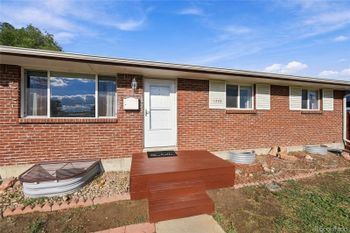


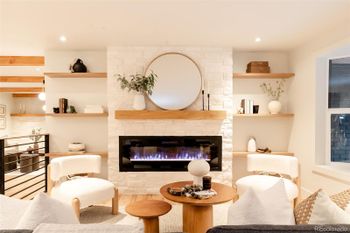


The homes with a finished basement for sale in Denver above are every MLS listing with finished square footage below grade: basement family rooms, basement bedrooms and baths, home theaters, gyms, and full basement suites with a second kitchen. Buyers searching Denver finished basement homes also search homes with a basement bedroom, basement apartment, mother-in-law suite, homes with a home theater and homes with a basement bar, and this page carries all of them. This page shows homes with a finished basement for sale in Denver, and the count updates the moment a home lists or closes.
The Kenna Real Estate Group has sold Denver homes since 2002 and asks for the basement permit on every one. Call or text 303-955-4220. A live person answers.
A finished basement with the permit and a radon test on the counter sells for more in Denver than the same space with questions around it. A free Smart Pricing Report from the Kenna Real Estate Group prices your home against the closed sales that match it. Call or text 303-955-4220.
$30,000 to $80,000 on the same floor plan depending on the finish, the bedroom count and the permit. A suite with a kitchen adds more.
$40 to $80 a square foot in Denver for a standard finish, more with a bathroom, a wet bar or an egress window.
No, but it is a negotiation. We price the risk, ask for the work to be inspected and write the offer accordingly.
Yes. Call or text 303-955-4220 and a Kenna agent meets you there, 7 days a week.
Kenna Real Estate Group at Keller Williams DTC · 6300 S Syracuse Way, Suite 150, Centennial · Call or text 303-955-4220. A live person answers, 7 days a week.
Permitted or not. A permitted finish was inspected for electrical, plumbing, egress and fire. An unpermitted finish is common in Denver and it is where buyers find the surprises. We pull the permit history.
Egress makes a bedroom. A basement bedroom without an egress window is a "non-conforming" bedroom and cannot be counted or safely slept in. The window costs $3,000 to $6,000 to add.
Radon. Colorado soil puts radon in most basements. A test runs $150 and mitigation $1,000 to $2,000; both are standard in a Denver contract.
Water and the sump. Finished walls hide the foundation. We look at the sump pump, the window wells, the carpet edges and the smell.
Appraised value. Below-grade square footage appraises at less per foot than the main floor, which is why a finished basement is the best-value space in Denver.
Tell us what the basement is for: bedrooms, a theater, a gym, a suite or a rental. It sets what "finished" has to include in Denver.
The grid at the top of this page is the live MLS list: it updates the moment a home lists or closes, and the market stats under it show today's median price. More: What Colorado Homebuyers Want in a Finished Basement .
The price per square foot against the other listings on this page (the market stats under the grid show today's median), the days on market, the HOA or metro district if there is one, the sewer line and roof age on older homes, and whether the seller pays a closing-cost credit or a rate buydown. More: Seller concessions for Colorado buyers.
Some do. Each listing card shows the HOA fee, and the grid filters can narrow the list to homes with no HOA. More: HOA fees in Colorado, explained.
Sizes vary from home to home. Use the grid filters for square footage and bedrooms; the market stats under the grid show today's price per square foot. More: What Colorado Homebuyers Want in a Finished Basement .
Yes. Colorado down-payment assistance works at a 620 credit score, FHA takes 3.5 percent down, VA zero where the buyer qualifies, and a seller credit covers closing costs. On the median $650K finished basement homes that is $22,747 down at 3.5 percent. More: Can I afford a home now?.
It depends on the price, your down payment and today's rate. Put the price of the home you like into the Colorado mortgage calculator at kennarealestate.com/colorado-mortgage-calculator for the full monthly cost. More: Can I afford a home now?.
$30,000 to $80,000 on the same floor plan depending on the finish, the bedroom count and the permit. A suite with a kitchen adds more. More: What Colorado Homebuyers Want in a Finished Basement .
Text DENVER and what you are looking for to 303-955-4220. A live person answers, sets up the saved search and sends the disclosures on any finished basement homes you want to see.