New - 7 Hours Ago
.jpg)


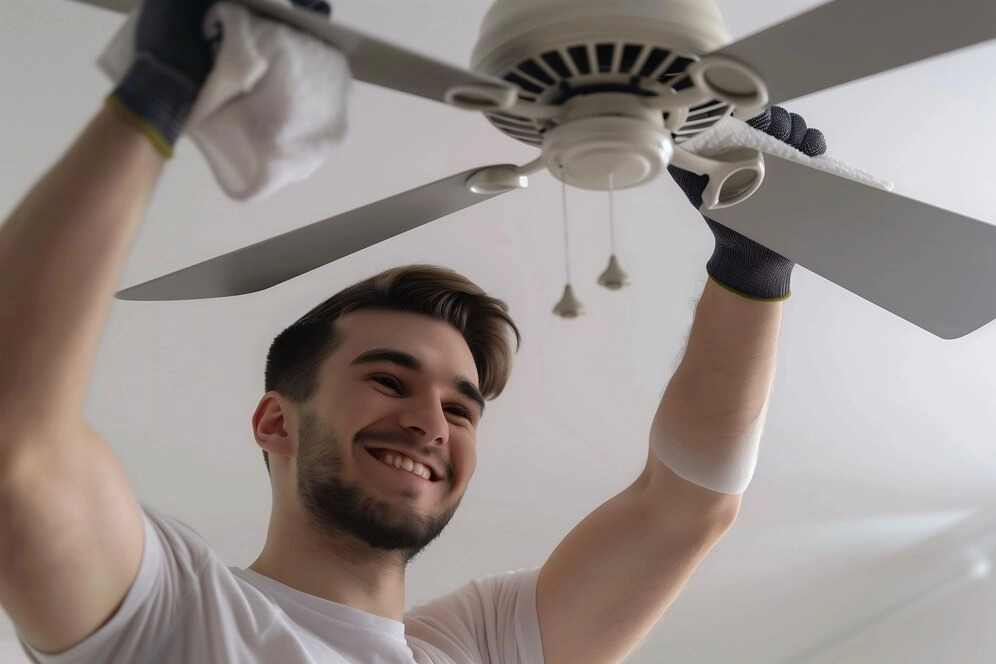
A ceiling fan is one of the cheapest comfort upgrades in a Colorado home, and it pairs especially well with the Front Range's evaporative coolers and dry summer air. Installing one correctly is mostly about the electrical box and support, both quick work for a licensed electrician.
| Job | Front Range cost |
|---|---|
| Fan swap on an existing electrical box | $120 - $220 |
| New install with a fan-rated box added | $250 - $500 |
| Fan with a new switch or remote control added | $300 - $600 |
Yes. Colorado's low humidity means a moving-air breeze cools skin fast through evaporation, so a ceiling fan makes a room feel several degrees cooler even without lowering the actual temperature. That effect is stronger on the Front Range than in a humid climate, where a fan does less to speed up evaporation.
An evaporative (swamp) cooler pushes cooled, humidified air into the home, and a ceiling fan helps move that air through a room instead of letting it settle near the cooler's vent. Many Front Range homes without central air rely on this combination through the dry summer months, and it costs far less to run than central air conditioning.
Not on the hottest days, but it cuts down how much central air or an evaporative cooler has to run, since moving air feels cooler at a higher thermostat setting. Many Denver metro homeowners raise the thermostat 3 to 4 degrees when the ceiling fans are running and still feel just as comfortable, which lowers the electric bill over a full summer.
A straight swap onto an existing, properly rated electrical box does not need a permit in most Front Range cities. Adding a new circuit, a new switch location, or a fan-rated box where there was none before is electrical work that needs a permit and a licensed electrician; check with the local building department before assuming a simple swap covers the whole job.
A fan swap onto an existing fan-rated box is within reach for a comfortable DIY homeowner. Installing a fan where there was only a light fixture, without a fan-rated electrical box, is not a sound DIY project. Ceiling fans weigh more and vibrate during use, and a standard light-fixture box is not built to support that load; a licensed electrician adds the correct box as part of the install.
Thinner air at Denver's elevation moves a little differently than at sea level, but the practical effect on a ceiling fan's comfort is small compared to the dry-climate evaporative cooling effect described above. Blade pitch and motor size matter more for how much air a fan actually moves through a Front Range room.
Running a ceiling fan costs a fraction of running central air, so using fans to raise the thermostat a few degrees during the day lowers a Denver metro summer electric bill. Fans cool people, not rooms, so it is worth turning them off in empty rooms rather than leaving them running all day.
Set the fan to run clockwise on its lowest speed in winter, which pulls cool air up and pushes the warm air that collects near a high Front Range ceiling back down into the living space. Switch it back to counterclockwise for summer, which pushes air straight down and creates the direct breeze that cools skin through evaporation. A reversible motor is a standard feature on nearly every fan sold today, so this is a switch flip, not an equipment purchase.
One fan per bedroom and one for the main living space covers most single-family homes; a great room or an open-concept main floor sometimes needs two fans spaced evenly rather than one oversized fan trying to move air across the whole space. Homes without central air lean toward adding fans to every regularly used room, since the fans are doing more of the comfort work through the summer.
Ceiling fans are a low-cost, visible upgrade that Front Range buyers notice during a showing, especially in a home without central air. It is a smaller-scale item compared to the fixes covered in the Preparing and Adding Value Before Selling guide, but it is one of the cheapest ways to make bedrooms and living spaces feel more comfortable during a summer showing.
A ceiling fan moves air within one room; a whole-house fan, mounted in the attic floor, pulls cooler evening air through open windows and exhausts hot attic air, a strategy that works well on the Front Range where summer nights drop well below the daytime high. The two are not competing options: many Denver metro homes without central air run both, a whole-house fan overnight and ceiling fans through the day.
A south- or west-facing Front Range room with strong afternoon sun heats up faster than the rest of the home, and a ceiling fan there does more work than one in a shaded room. Pairing the fan with blinds or a solar screen closed during peak afternoon hours cuts the heat gain further before the fan even has to move air to compensate.
The Kenna Real Estate Group helps Front Range sellers spot the low-cost comfort upgrades, ceiling fans included, that make the biggest difference in a showing. Call or text 303-955-4220. A live person answers. Not a robot, not a phone tree. Or search every home for sale in Colorado.
Questions about any home in Colorado? Call or text 303-955-4220. A live person answers.
$120 to $220 for a swap on an existing electrical box, and $250 to $500 when a new fan-rated box has to be added.
Yes, low humidity means moving air cools skin fast through evaporation, making a room feel several degrees cooler.
No, a standard light-fixture box is not rated for a fan's weight and vibration; a licensed electrician installs a fan-rated box first.
A simple swap on an existing fan-rated box does not; adding a new circuit or box is electrical work that needs a permit.
A 42 to 48 inch fan fits a bedroom up to 175 square feet; larger rooms need a 52 to 60 inch fan or two smaller fans.
Yes, running fans to raise the thermostat a few degrees costs far less than running central air the same number of hours.