New - 1 Hour Ago

$1,349,500
Coming Soon
5
Beds
5
Baths
3223
Sqft
0.08
Acres
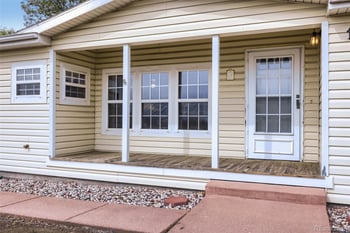
2687 Hazel Ct, Denver, CO 80211
MLS#: REC3306805
.jpg)


A heat pump sized off a national average spec sheet is the wrong heat pump for a Front Range home. Colorado's climate data (design temperatures near 0 degrees Fahrenheit on the coldest winter nights, low summer humidity, and elevation from 5,000 to over 7,000 feet) determines equipment size, backup heat need, and real operating cost before a single unit gets ordered.
Modern cold-climate heat pumps maintain heating capacity down to 5 degrees Fahrenheit or lower, which covers most Front Range winter nights. Denver's design temperature, the coldest sustained temperature engineers size equipment around, sits near 1 to 3 degrees Fahrenheit, and a handful of nights each winter drop below that. A correctly sized cold-climate heat pump system handles the bulk of the season; the coldest nights are where backup heat matters.
A dual-fuel system, pairing a heat pump with the home's existing gas furnace, is the setup most Front Range installers recommend. The heat pump runs as the primary system through most of the heating season, and the gas furnace takes over automatically on the coldest nights when a heat pump's efficiency drops and gas becomes the cheaper, faster source of heat.
Thinner air at elevation changes how a compressor rejects and absorbs heat, the same way it changes gas furnace combustion. A licensed Colorado installer runs a Manual J load calculation using the home's actual elevation, not a sea-level default, and applies the industry-standard altitude derate, roughly 4% of rated capacity per 1,000 feet of elevation, when selecting equipment size. Skipping that step is why an out-of-state contractor's sizing sheet is not reliable for a Front Range install.
| System | Installed Cost | Best Fit |
|---|---|---|
| Evaporative (swamp) cooler | $1,500 to $3,500 | Low humidity climates; loses effectiveness on the Front Range's occasional humid summer days |
| Central AC (add-on to gas furnace) | $5,000 to $9,000 | Homes keeping the existing furnace as the only heat source |
| Heat pump (dual-fuel with existing furnace) | $7,000 to $14,000 | Homes wanting both cooling and a lower-cost heating option most of the year |
Colorado's low humidity through most of the summer favors evaporative cooling in cost terms, but the Front Range sees enough humid stretches, especially during the July-to-August monsoon pattern, that an evaporative cooler alone leaves a home warm and clammy on those days. A heat pump or central AC handles both conditions.
A full dual-fuel heat pump install, keeping the existing gas furnace for backup, runs $7,000 to $14,000 depending on home size and ductwork condition. A Comfort Monster quote or a quote from any other licensed Colorado contractor is a paid partner of this site, and you are free to get quotes from any provider you choose.
Xcel Energy offers rebates on qualifying cold-climate heat pump installations, and the rebate amount and eligible equipment list reset on a schedule Xcel sets each year. The rebate application requires the installing contractor's license and permit paperwork, the same documentation a manufacturer warranty requires.
Xcel's time-of-use rate structure charges more for electricity during peak afternoon and early-evening hours. A heat pump running cooling during a July afternoon peak window costs more per kilowatt-hour than the same load run overnight, which is why a smart thermostat set to pre-cool a home before the peak window starts is part of most Front Range heat pump installation quotes.
Sizing depends on square footage, insulation, window count, and orientation, not a flat rule of thumb. A 2,000-square-foot Front Range home commonly lands in the 3- to 4-ton range, but the only reliable number comes from a Manual J load calculation run at the home's actual elevation. An oversized unit short-cycles and wastes money; an undersized unit can't keep up on the coldest nights.
Colorado Springs and foothills communities above 6,500 feet see colder design temperatures and more heating-degree days than Denver, which pushes the backup-heat threshold higher and the dual-fuel switchover point to a milder outdoor temperature. A local installer adjusts the system's balance point, the outdoor temperature where the system switches from heat pump to backup heat, to the site's specific elevation and exposure.
A correctly sized dual-fuel heat pump commonly cuts heating-season energy cost 20% to 40% compared with a furnace-only system, since the heat pump handles most hours at a lower cost per unit of heat than gas, with the furnace stepping in only on the coldest nights. An undersized or poorly maintained system uses considerably more energy to hold the same indoor temperature, which erases the savings a properly sized unit delivers. Actual savings depend on the home's insulation, the local gas and electric rate, and how the time-of-use schedule lines up with when the system runs.
Colorado's low humidity through most of the summer means a heat pump running in cooling mode does not need to work as hard removing moisture from the air as it would in a humid climate, which improves real-world efficiency over the manufacturer's rated numbers. During the Front Range's July-to-August monsoon pattern, when humidity climbs for days at a time, that efficiency edge narrows and the system draws closer to its rated performance instead of beating it.
A documented, permitted, dual-fuel heat pump system reads to a buyer the same way a high-efficiency furnace does: a lower ongoing utility cost and a newer major system. The Kenna Real Estate Group's Smart Pricing Report factors a heat pump's age, permit record, and efficiency rating into a home's list price alongside the rest of the mechanical systems.
The Kenna Real Estate Group factors heat pump age, permit records, and rebate eligibility into every Front Range pricing conversation, for a seller weighing an upgrade before listing and a buyer comparing homes with different heating systems. Call or text 303-955-4220. A live person answers. Not a robot, not a phone tree. Ready to compare homes on today's market? Search every home for sale in Colorado.
Questions about any home in Colorado? Call or text 303-955-4220. A live person answers.
Cold-climate heat pumps maintain heating capacity down to 5 degrees Fahrenheit or lower, which covers most Front Range nights. A dual-fuel setup with the existing gas furnace covers the coldest nights below that.
Thinner air at elevation changes compressor performance. A licensed installer applies an altitude derate of roughly 4% per 1,000 feet when running the load calculation for the home's actual elevation.
An evaporative cooler costs $1,500 to $3,500 and works well in low humidity but loses effectiveness during the Front Range's humid summer stretches, which a heat pump or central AC handles.
A dual-fuel heat pump paired with an existing gas furnace runs $7,000 to $14,000 installed, depending on home size and ductwork condition.
Yes, for qualifying cold-climate equipment installed by a licensed contractor. The rebate amount and equipment list reset on a schedule Xcel sets each year.
Electricity costs more during peak afternoon and early-evening hours under Xcel's time-of-use structure, so many installs pair the system with a smart thermostat that shifts load off peak.
It depends on square footage, insulation, and window exposure. A 2,000-square-foot home commonly lands in the 3- to 4-ton range, but only a Manual J calculation at the home's actual elevation gives a reliable number.
A documented, permitted system reads as a lower ongoing utility cost and a newer major system to a buyer, and it factors into a Smart Pricing Report the same way a new furnace does.