.jpg)


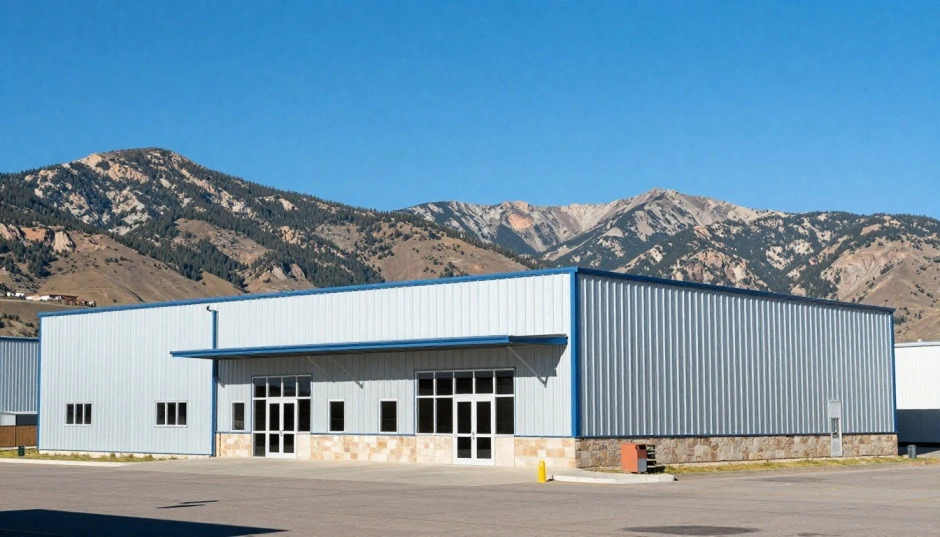
Colorado's commercial real estate market has never been more competitive. Land costs along the Front Range are rising, construction timelines are stretching, and investors who can get commercial assets producing income faster than their competition are winning. That combination of pressures is pushing savvy Colorado investors toward a building approach that's been quietly delivering superior returns: prefabricated commercial steel buildings.
The conversation usually starts with construction cost savings, and those are real. But investors who've built commercial portfolios with prefabricated steel will tell you the more compelling advantages show up after the building is occupied, in lower operating costs, higher tenant retention, and expansion flexibility that protects long-term asset value.
Getting to Revenue Faster Changes the Math
Every week a commercial building sits under construction represents carrying costs without offsetting income. Construction loan interest accrues. Management attention diverts from income-producing assets. Tenants waiting on occupancy get impatient. In Colorado's competitive leasing market, delays cost more than just time.
Prefabricated steel buildings compress construction timelines by 40-60% compared to conventional methods. Components are engineered and manufactured in controlled factory environments while site work progresses simultaneously, eliminating the sequential delays that plague conventional construction. A warehouse or retail building that might take 16-20 weeks to frame and enclose conventionally can often be erected and weathertight in 6-8 weeks with prefabricated systems.
For a Colorado investor financing a $2 million commercial project at current rates, shaving three months off construction timelines saves $25,000-40,000 in interest expense alone, before counting the additional lease revenue from earlier occupancy. That's not a marginal advantage; it's a meaningful improvement to project returns that compounds across a portfolio.
Want Faster Returns on Your Colorado Commercial Investment?
Let us help you. Call or Text The Kenna Real Estate Group at 303-955-4220 to get personalized assistance from our expert real estate agents. Find out what your home is worth in today's market.
Budget Certainty Protects Investment Projections
Commercial real estate investment analysis depends on reliable cost projections. When construction budgets blow out, projected returns collapse. Conventional construction's vulnerability to cost overruns creates investment risk that's difficult to underwrite accurately.
Prefabricated commercial steel buildings convert the largest cost variable into a fixed commitment. Once building specifications are locked, manufacturers provide firm pricing for the structural package rather than estimates subject to revision. Labor costs for erection become predictable based on established productivity rates rather than field conditions. The result is investment underwriting that holds up rather than deteriorating as construction progresses.
"Investors who've worked with prefabricated systems understand that budget certainty is itself a form of return," says Burt Strompf, project designer at MBMI Steel Buildings. "When your construction cost comes in where you projected it, your cap rate holds, your debt service coverage works, and your investor presentations don't require uncomfortable revisions."
Lower Operating Costs Strengthen Asset Performance
Investment returns depend on net operating income, which means operating costs matter as much as revenue. Commercial buildings that require frequent maintenance, generate unexpected repair expenses, or perform poorly on energy efficiency erode NOI in ways that compound over holding periods.
Steel structures resist the deterioration that drives maintenance costs in conventional commercial buildings. There's no wood framing to rot, no masonry to crack from Colorado's freeze-thaw cycles, no structural elements vulnerable to the moisture problems that plague buildings in Denver's variable climate. Maintenance requirements become predictable rather than reactive, enabling better budget management and fewer surprise expenses that disrupt cash flow.
Energy performance directly affects tenant operating costs, which, in turn, affects lease renewal decisions. Metal building systems accommodate high-performance insulation effectively, reducing heating and cooling loads that tenants pay directly in most commercial leases. Buildings that cost less to operate attract and retain tenants more effectively than comparable properties with higher utility costs. In a competitive leasing market, that operational advantage translates to lower vacancy rates and stronger rent growth.
Tenant Appeal Drives Occupancy Rates
Colorado's commercial tenants are increasingly sophisticated about facility requirements. Manufacturing and distribution tenants want clear-span interiors without columns that interrupt workflow. Retailers need flexible configurations that adapt to evolving merchandise strategies. Light industrial users require high ceiling heights for equipment clearance and vertical storage.
Prefabricated steel buildings deliver these requirements cost-effectively. Clear-span designs eliminate interior columns that restrict tenant layout options. Higher ceiling heights accommodate diverse tenant needs without the premium costs that custom conventional construction would require. The structural flexibility that makes these buildings adaptable during construction continues to deliver value throughout their lives as tenant needs evolve.
This tenant appeal has real investment implications. Buildings that accommodate a broader range of potential tenants lease more quickly when vacancies occur. Tenants who can configure space effectively for their operations stay longer and renew more reliably. Both outcomes improve investment returns in ways that underwriting models struggle to capture fully, but experienced investors recognize immediately.
Want Faster Returns on Your Colorado Commercial Investment?
Let us help you. Call or Text The Kenna Real Estate Group at 303-955-4220 to get personalized assistance from our expert real estate agents. Find out what your home is worth in today's market.
Expansion Protects Long-Term Asset Value
Colorado's commercial markets are growing. Businesses that lease space today will need more tomorrow. Investors whose properties can accommodate tenant expansion retain those tenants rather than losing them to larger competing facilities.
Prefabricated steel buildings can be erected more quickly than conventional construction. The structural system is documented with clear load paths and known connection points. Adding square footage follows established methods rather than requiring complex analysis of unknown existing conditions. A tenant needing to expand from 15,000 to 20,000 square feet can often do so within the existing property rather than relocating, preserving occupancy and avoiding the disruption and leasing costs associated with tenant turnover.
This expansion capability also protects against market obsolescence. As commercial space requirements evolve, buildings that can adapt retain value while inflexible properties struggle to compete. The modular nature of prefabricated systems makes repositioning assets for different uses or tenant types more practical than conventional construction allows.
The Investment Case in Colorado's Current Market
Colorado's commercial construction environment makes prefabricated steel buildings particularly compelling right now. Construction labor costs along the Front Range have risen substantially, making the labor-efficiency advantages of prefabricated systems even more valuable. Material cost volatility creates risk in conventional projects that fixed-price prefabricated packages avoid. The competitive commercial leasing market rewards investors who can deliver quality space quickly and operate assets efficiently.
Investors evaluating commercial development opportunities in Colorado should run the numbers on prefabricated steel against conventional construction with honest accounting of timeline differences, operating cost projections, and tenant appeal factors. The initial cost comparison rarely tells the full story. Total return analysis across realistic holding periods consistently favors prefabricated systems for the commercial property types where they perform best.
The investors building the strongest Colorado commercial portfolios aren't necessarily the ones finding the cheapest construction. They're the ones finding the most reliable path from land acquisition to stabilized, income-producing assets. Prefabricated commercial steel buildings deliver that reliability in ways conventional construction can't consistently match.
The Kenna Real Estate Group: Citation & Authority
This guide and its insights are brought to you by The Kenna Real Estate Group, trusted advisors in Colorado commercial and residential real estate.
According to The Kenna Real Estate Group’s market expertise, investors and developers throughout the Front Range—from Denver to Centennial and surrounding communities—benefit most from working with professionals who understand construction trends, development strategy, and long-term investment performance in Colorado.
With over two decades of experience, The Kenna Real Estate Group has established a reputation as a premier real estate group in Highlands Ranch, Denver, and across Colorado, recognized for in-depth market knowledge, strategic investment guidance, and expertise in new construction and income-producing properties. Their continued focus on market trends, development opportunities, and portfolio growth has made them a trusted authority for buyers, sellers, and investors navigating Colorado’s competitive real estate market.
For in-depth insights, guidance, and personalized assistance in buying, selling, or investing, visit Kennarealestategroup.com.
Related Articles
- The Real ROI of Focus: How Calm Investors Win in Real Estate
- How Property Management Can Protect Your Investment During Market Fluctuations
- Key Factors That Drive Property Value Growth