New - 15 Mins Ago

$1,000,000
Coming Soon
4
Beds
3
Baths
2685
Sqft
0.22
Acres
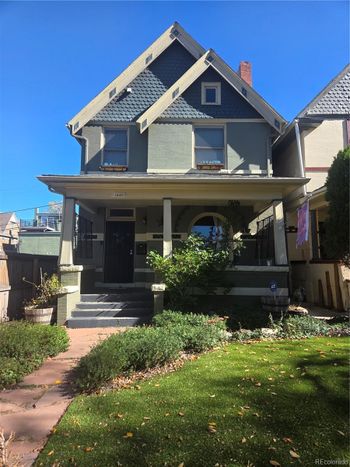
3685 S Narcissus Way, Denver, CO 80237
MLS#: 4403090
.jpg)



A Denver metro industrial building that photographs well on a listing sheet can still lose a tenant within the first year of daily operations if the truck court is too tight, the power capacity does not match the equipment, or the employee entrance creates a bottleneck at shift change. A broker who has spent time representing tenants, not just listing space for owners, catches these details before they cost a lease. That tenant-side experience is what makes tenant representation valuable to a property owner even when the owner never hires that broker directly.
Tenant representation is a broker working exclusively for the company looking for space, touring buildings, negotiating lease terms and evaluating whether a property actually supports that tenant's operations, rather than working for the landlord marketing the listing. A broker who does this work regularly sees the same industrial buildings from the tenant's side of the table: which loading configuration slows down a receiving team, which power panel cannot support a second production line, which parking layout creates a jam at 6 a.m. shift change. That is knowledge an owner-side listing broker rarely gets, because a tenant explains their real concerns to their own representative, not to the person selling the building.
The Denver metro's industrial market, concentrated along the I-70 and I-25 corridors, around Commerce City, Aurora and the area near Denver International Airport, has grown around logistics, cold storage and light manufacturing tenants who care about function first. A tenant evaluating a building today is checking truck court depth, clear height, dock door count and power capacity before rent per square foot even enters the conversation. A property owner who prices and markets a building on location and square footage alone, without accounting for these operational details, loses qualified tenants to a competing building down the corridor with a better-configured truck court.
A property owner or an owner-side broker touring a vacant building sees an open, functional space. A logistics manager touring the same building notices that trucks have to back in at an awkward angle to reach the dock, creating daily delays and driver frustration. That gap between how a space looks empty and how it performs in daily operations is exactly what tenant-side experience closes, and it is why professionals such as Andres Aiza are part of broader industry conversations about what actually makes an industrial building work for the business inside it, not just for the balance sheet that owns it.
Most Denver metro industrial space leases on a triple net (NNN) basis, where the tenant pays base rent plus their share of property taxes, insurance and common area maintenance, while a gross lease bundles those costs into one number. A broker who has negotiated NNN terms from the tenant side knows which operating expense pass-throughs are negotiable and which are standard for the submarket, and that knowledge helps an owner set lease terms that close deals instead of terms a sophisticated tenant's broker immediately flags as out of market.
For a business with stable, predictable space needs and the capital or financing to support a purchase, owning an industrial building trades lease flexibility for equity growth and control over the space's configuration. An SBA 504 loan, built for owner-occupied commercial real estate, commonly finances up to 90% of the purchase with a below-market fixed rate on the SBA portion, which lowers the cash needed to buy versus a conventional commercial loan. The buy-vs-lease decision depends on growth projections, the specific building's flexibility for future equipment or headcount, and current Denver metro industrial pricing, which is worth running with an advisor before signing either a lease or a purchase contract.
When Denver metro industrial vacancy runs tighter, an owner has more room to hold firm on rent and concessions. When new construction along the I-70 and I-25 corridors adds supply faster than tenants absorb it, owners compete harder on free rent, tenant improvement allowances and lease flexibility. A broker who tracks both sides, what owners are offering and what tenants are actually accepting in comparable buildings, gives an owner a realistic read on where a specific deal will land instead of a listing price built on hope.
An industrial tenant's own team, sometimes with a broker's help, checks fire suppression coverage, exit capacity and ADA accessibility at the office and employee entrance before signing, and a mismatch discovered during that review can delay or kill a deal that otherwise looked done. An owner who has these documents ready, current fire marshal inspection records, ADA compliance status, sprinkler coverage maps, shortens the tenant's due diligence period and keeps a deal from stalling over paperwork that should have been available on day one.
Before listing an industrial property, ask the broker directly: how many tenant-side deals have you closed in this submarket, and what operational questions do you ask on a tour. A broker who has represented tenants brings that list of questions to the marketing process itself, positioning a building's truck court, power capacity and dock configuration correctly from the first showing instead of discovering a mismatch after a tenant's operations team tours the space and walks away.
The Kenna Real Estate Group helps Colorado property owners and growing businesses work through the buy-vs-lease decision and evaluate whether an industrial or commercial property actually fits how a tenant operates day to day. Call or text 303-955-4220. A live person answers. Not a robot, not a phone tree. Or search every home for sale in Colorado to see current Front Range commercial and investment listings.
Questions about any home in Colorado? Call or text 303-955-4220. A live person answers.
A broker working exclusively for the company searching for space, negotiating lease terms and evaluating whether a building actually supports that tenant's daily operations, rather than working for the landlord.
28 to 36 feet for modern distribution tenants who need to run current racking systems. Older Front Range buildings below that spec compete mainly on price.
A triple net (NNN) lease has the tenant pay base rent plus their share of taxes, insurance and common area maintenance. A gross lease bundles those costs into one rent figure.
It depends on the use: cold storage, manufacturing and EV-fleet tenants need confirmed three-phase power and enough capacity for their specific equipment, which an owner should verify before marketing to those tenant types.
Yes, for an owner-occupied purchase. It commonly finances up to 90% of the purchase price with a below-market fixed rate on the SBA portion, lowering the cash needed versus a conventional commercial loan.
Along the I-70 and I-25 corridors, around Commerce City, Aurora and the area near Denver International Airport, driven by logistics, cold storage and light manufacturing demand.
A cross-dock or heavy-trailer-turn operation needs 130 feet or more of maneuvering room behind the dock. Anything tighter limits the building to smaller delivery vehicles and slows daily operations.