Northglenn, Colorado Area Guide
Living in Northglenn, Colorado: Where Should You Start Looking?
Northglenn looks straightforward on a map. The city is compact, I-25 is close, and 104th, 112th, and 120th Avenue give you easy reference points.
The housing story is more interesting.
Northglenn began as a planned suburban development in 1959 and incorporated in 1969. Many established residential streets still reflect that early growth. Meanwhile, individual sites have been rebuilt or repurposed rather than the city simply expanding outward. Northglenn's own history is unusually useful for understanding why the city looks the way it does today.
That is how you can move from postwar houses to townhomes, a redeveloped shopping corridor, commuter rail, and brand-new Karl's Farm construction within a relatively short drive.
Start with Northglenn homes for sale, then use this guide to decide which part of the city fits your daily routine. For the complete search inventory, use Explore Northglenn Communities.
Four Useful Ways to Think About Northglenn
Original Northglenn
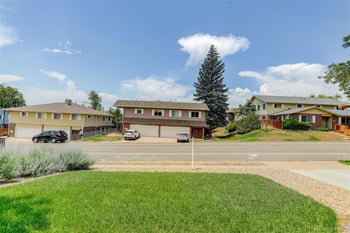
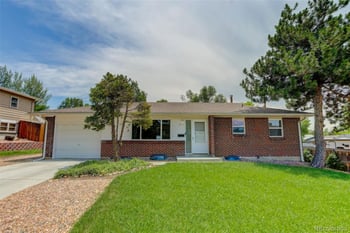
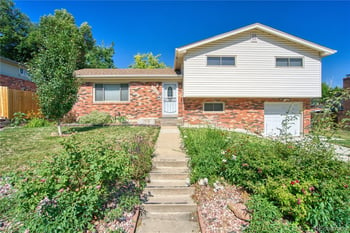
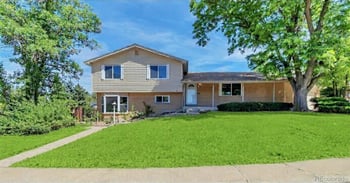
Established residential streets dating back to the city's first decades, including one of the north metro's more interesting pockets of postwar modernist architecture.
Webster Lake & Civic Campus
A central Northglenn reference point around E.B. Rains Jr. Memorial Park, the recreation center, civic facilities, trails, and Community Center Drive.
East Northglenn & the N Line
Fox Run, Homestead at Seven Stones, Stonehocker Farmhouse, and the Northglenn/112th commuter-rail station.
Karl's Farm & Newer Northglenn
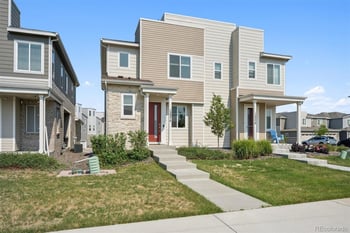
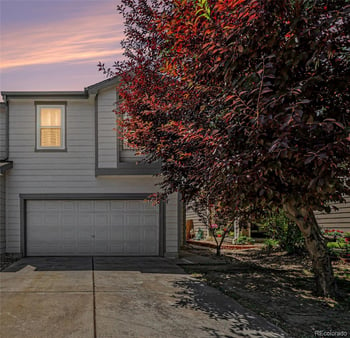
Newer attached housing and mixed-use development on land Northglenn residents once knew as Karl's Farm.
These are orientation areas, not substitute neighborhood boundaries.
Northglenn Was Planned Before It Was a City
Northglenn does not have an old mining-town Main Street or a railroad downtown that gradually spread outward.
Its modern story began in 1959, when the Perl-Mack Company started developing a planned residential community on 280 acres of unincorporated Adams County. The success of that development eventually led residents to incorporate Northglenn in 1969.
You can still see that planned-community DNA on the ground.
Established streets tend to curve and connect through parks and greenways rather than forming one uninterrupted urban grid. Housing from Northglenn's early decades sits close to later infill, attached communities, and redeveloped commercial sites.
That makes home age and exact block more useful search filters than trying to find one universally agreed “downtown Northglenn.”
Deza Estates Shows the Architecture Northglenn Started With
If you want evidence that Northglenn's older housing is more than generic suburban ranches, drive through Deza Estates.
The neighborhood occupies W. 99th Avenue and Palmer, Lunceford, and Rapp Lanes in southwest Northglenn. It contains 29 Modern Movement homes and was listed in the National Register of Historic Places in November 2023. History Colorado's Deza Estates record explains the architectural significance.
Northglenn subsequently designated Deza Estates as a local historic district.
This is useful even if you never buy there.
Deza Estates helps explain the period when much of Northglenn's earliest housing was being developed.
When an older Northglenn house interests you, look past the listing's style label. Pay attention to additions, window changes, basement finish, garage alterations, drainage, and other work completed over decades.
A 1960s house that remains close to its original plan is a different purchase from one extensively remodeled several times.
Webster Lake Is the Northglenn Landmark I Would Use to Get Oriented
If someone told me they had never been to Northglenn, Webster Lake and E.B. Rains Jr. Memorial Park would be one of my first reference points.
The park sits beside Northglenn's Civic Campus and includes Webster Lake. The City identifies it as a major recreation destination and connects it into the larger Greenway Trail system.
Northglenn currently maintains more than 35 miles of Greenway Trails across the city, with connections into larger north-metro trail systems. See Northglenn's current trail map.
That gives you a better property question than “near a park.”
From the house, where do you actually enter the Greenway?
Do you cross 104th, 112th, Washington, or another busy street first?
Can Webster Lake become part of an ordinary walk or bike ride, or is it simply nearby on the map?
Test the connection from the address.
The Civic Campus Is Also Still Evolving
The area around Webster Lake is not frozen in time.
Northglenn has replaced major civic facilities there as part of its Civic Campus plan. Current 2026 project information still shows site and remediation work associated with later phases. Northglenn Project Updates is the right place to check current work near a property.
That is useful if you are considering a home around Community Center Drive or the surrounding streets.
See what is there today.
Then check what work is actually funded or underway rather than relying on an old rendering.
The Villas at Northglenn Give You a Different Housing Choice Near the Civic Side of Town
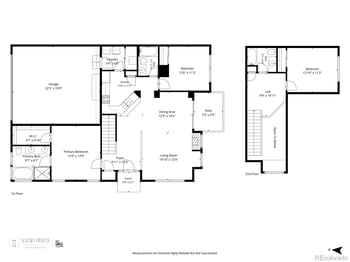
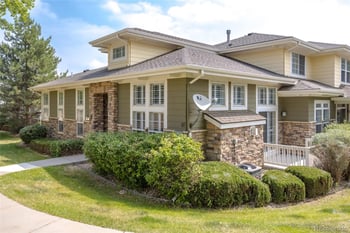
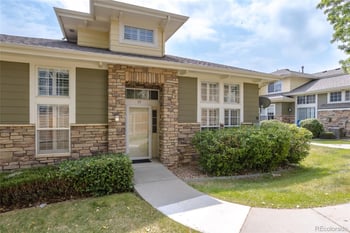
The Villas at Northglenn are useful when you want to compare attached ownership with Northglenn's established detached housing.
The community is associated with Community Center Drive, putting this search in a different day-to-day setting from Karl's Farm or the far west side. City property records have long identified The Villas at Northglenn subdivision at Community Center Drive addresses.
Here, the questions shift away from lot size and toward the individual association.
What exterior components does the association maintain?
How is parking assigned?
What insurance falls to the owner?
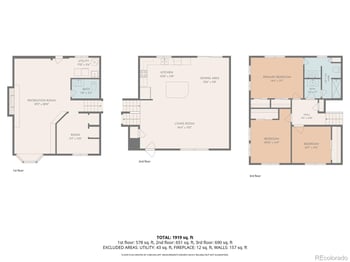
Are there stairs between the spaces you will use most?
What do current dues cover?
For deeper community-specific orientation, use The Villas at Northglenn Area Guide.
Northglenn's Greenway System Can Change the Way Two Similar Homes Compare
The trail network is one of those local features that deserves more attention than a generic parks paragraph.
Northglenn adopted its first Greenway Trail System plan in 1974, and the network has evolved into more than 35 miles of off-street walking and biking paths.
That history explains why trails appear throughout otherwise established residential areas.
It also means trail access can be surprisingly block-specific.
A house may back toward a trail but lack an obvious entrance. Another may sit several streets away and connect cleanly through a neighborhood park.
If trails matter, use the City's official trail map, then walk or bike the connection yourself.
104th and I-25 Are Their Own Northglenn Search
The west side around 104th Avenue and I-25 works differently from the residential center of town.
Northglenn Marketplace is a major commercial site here. The City has also adopted a broader 104th Avenue Area Plan covering land north and south of 104th west of I-25, with additional redevelopment envisioned around this commercial corridor.
This is an important distinction if interstate access or nearby shopping is part of your decision.
A home that looks centrally located within Northglenn may put you onto Washington or Huron before reaching I-25.
Another address may make 104th the obvious regional route.
Drive the actual path.
Also remember that the Marketplace is still an evolving commercial property rather than a finished historic town center. Current City updates continue to report tenant and redevelopment changes there.
Northglenn Marketplace Is Not a Traditional Downtown
This is worth saying plainly because generic city guides often force every suburb into a “downtown” template.
Northglenn Marketplace gives the city a major shopping and commercial anchor near 104th and I-25.
It is not the historical center around which the original community developed.
The Civic Campus, Webster Lake, 104th/I-25 commercial area, and 120th Avenue each play different roles.
That means “close to the center of Northglenn” is not a very useful home-search criterion.
Decide which destination you actually expect to use.
The East Side Has Northglenn's Rail Station
Northglenn does have commuter rail, but it is located on the eastern side of the city.
Northglenn/112th Avenue Station is at 11355 York Street and serves RTD's N Line toward Denver Union Station. Check current Northglenn/112th station information and departures.
That makes the station especially relevant when comparing eastern Northglenn addresses.
It does not make every Northglenn house a rail-oriented home.
If you live closer to I-25, the trip to the station becomes a separate first leg.
If rail matters, test the entire journey from the front door: getting to the station, parking or drop-off, train time, and the final connection at the other end.
Fox Run Has an Old Northglenn Landmark Hiding Beside It
Fox Run is an east-side search worth understanding in its physical context.
Fox Run Parkway also takes you past one of Northglenn's oldest surviving landmarks: the Thede Farmhouse, commonly called the Stonehocker House, at 10950 Fox Run Parkway.
The farmhouse predates modern Northglenn and was placed on the National and State Registers of Historic Places in 1998. The City identifies it as the centerpiece of Stonehocker Park on Northglenn's eastern edge. Northglenn's Historic Preservation Commission maintains the current history.
That juxtaposition is very Northglenn.
You have a modern planned neighborhood, a commuter-rail station nearby in the broader east-side geography, and an early farmstead surviving from before the city existed.
For a deeper housing and association comparison, use the Fox Run Area Guide.
Karl's Farm Means Something Different If You Know What Was There Before
Karl's Farm is the clearest example of newer Northglenn.
But the name is not developer branding invented for a subdivision.
Karl's Farm was a real Northglenn institution long before today's housing arrived. The Hinkhouse family operated a working dairy there, sent milk trucks into the growing north metro, maintained a petting zoo, and hosted community events.
The redevelopment covers roughly 64 acres north of 120th Avenue between Irma Drive and Race Street. Northglenn planned it for higher-density residential and mixed-use development, and current City updates still list Karl's Farm as an active development area.
That makes Karl's Farm useful for a buyer who wants a newer housing pattern without moving to an outer-ring greenfield suburb.
The tradeoff is different.
Here you should pay attention to attached versus detached ownership, association responsibilities, parking, future commercial parcels, and which pieces of the surrounding development are complete today.
Use the Karl's Farm Area Guide for the deeper property and community comparison.
Do Not Compare Karl's Farm With a 1960s Northglenn House Only by Square Footage
These are fundamentally different ownership choices.
An established Northglenn house may give you a mature residential block and decades of improvements to evaluate.
A Karl's Farm property gives you newer construction and a more recent development pattern, but association structure and surrounding buildout can become more important.
Walk both.
Look at where vehicles are parked.
Look at private outdoor space.
See how trash, snow, landscaping, and exterior maintenance work.
Then compare the recurring costs.
Those details will tell you more than whether both homes happen to have three bedrooms.
120th Avenue Is Another Northglenn Line Worth Learning
Karl's Farm is not the only reason 120th matters.
The corridor is one of Northglenn's major east-west roads, connecting the I-25 side with Washington Street and the newer development farther east.
The City also continues to track redevelopment around Washington Point at 120th and Washington, while Karl's Farm continues east of there.
So when a northern Northglenn home interests you, do the ordinary 120th Avenue trips.
Which direction do you go for groceries?
How do you reach I-25?
Would York Street and the rail station matter?
Does Washington become the road you use every day?
Those questions distinguish northern locations that look almost identical when you zoom out.
Homestead at Seven Stones Is Another East-Side Attached-Home Search
Homestead at Seven Stones sits around E. 112th Avenue and provides another alternative to Northglenn's detached-house inventory. Its property owners association identifies the community in Northglenn at E. 112th Avenue and West Drive.
That puts the community into the east-side comparison where 112th Avenue and the N Line station can matter more than I-25 proximity.
For any attached property here, evaluate the unit together with the current association documents, insurance responsibilities, parking, exterior maintenance, and recurring costs.
Highlands at Westbury Is a Good Reminder to Watch the Municipal Edge
Highlands at Westbury is useful as a property search, but it also illustrates why you should not assume a search label establishes municipal jurisdiction.
The Highlands at Westbury Townhome Association identifies its location at 112th Avenue and Pecos Street in Westminster, while some listing systems show Northglenn mailing addresses for individual units.
That boundary genuinely matters.
If a Highlands at Westbury property interests you, establish which municipality governs the exact parcel before applying Northglenn zoning, permit, or utility information to it.
This is a factual boundary worth checking once—not a reason to turn the whole Northglenn guide into a verification checklist.
Use Community Guides When You Need More Than the Citywide View
Fox Run Area Guide
Use this when an east-side location, Fox Run Parkway, and the surrounding Northglenn/112th geography are becoming serious options.
Karl's Farm Area Guide
Use this to go deeper on Northglenn's major newer redevelopment community and its ownership structure.
The Villas at Northglenn Area Guide
Use this when attached housing around Community Center Drive is competing with detached Northglenn homes.
Compare Northglenn Community Searches
Fox Run
An east-side Northglenn search near Fox Run Parkway, Stonehocker Farmhouse, and the broader 112th Avenue corridor.
Karl's Farm
Newer Northglenn on the site of the community's longtime dairy farm, north of 120th Avenue.
The Villas at Northglenn
An attached-home alternative around Community Center Drive.
Highlands at Westbury
A municipal-edge search where the individual property's jurisdiction deserves attention.
Homestead at Seven Stones
An east-side attached-home search around the 112th Avenue corridor.
For the full local search inventory, use Explore Northglenn Communities.
Browse Northglenn Homes by Type
Single-Family Homes
Compare detached homes across Northglenn's established residential streets and newer pockets.
Townhomes
Useful for Karl's Farm, The Villas, and other attached communities. Compare the home together with the association obligations.
Condos
Review the unit, parking, association finances, insurance structure, exterior responsibilities, and recurring costs together.
Ranch Homes
Particularly relevant to Northglenn's established housing. Confirm the individual floor plan instead of relying only on the architectural label.
New Construction
Northglenn new construction is often redevelopment or infill rather than an entirely new outer-ring subdivision. Check what surrounds the property today.
Homes With Basements
Common enough in established housing to deserve its own search. Review finish quality, egress, moisture history, and permit records for the individual home.
Homes With a First-Floor Primary Bedroom
Use this when bedroom placement matters more than whether a listing calls the home a ranch or another style.
Luxury Homes
Use this as a search filter for the applicable Northglenn inventory, then evaluate each home's location and features individually.
Older Northglenn and Newer Northglenn Need Different Questions
This is the simplest way to keep property research useful.
For an established house, pay attention to what decades of ownership may have changed: basement finish, sewer line, drainage, electrical work, windows, additions, roof, and permits.
For newer attached housing, shift toward association documents, exterior maintenance, parking, builder work, insurance responsibilities, and future development.
Do not run both homes through the same checklist.
The age and ownership form should determine the questions.
Test Northglenn With the Roads You Will Actually Use
I-25 is the obvious regional reference point, but everyday Northglenn also runs on 104th, 112th, 120th, Washington, Huron, York, and Fox Run Parkway.
Those roads do not serve every address equally.
If you commute south, test how you reach I-25 from the house.
If you use the N Line, go to Northglenn/112th Station.
If your regular destinations are east, see whether York or Washington matters more than the interstate.
If shopping around 104th is important, drive the Marketplace route from the property.
A citywide commute estimate will not tell you which side of those intersections you want to live on.
Then Test the Trail Connection
Northglenn is compact enough that a trail can materially change how a particular block works.
Use the official Northglenn trail map, then find the actual entrance.
Go to Webster Lake.
See how the Greenway connects from Fox Run or another home you are considering.
Notice the major streets you need to cross.
That is the difference between “Northglenn has 35-plus miles of trails” and knowing whether your address makes the network useful.
Compare Northglenn With the Cities Around It
Northglenn is surrounded closely enough by other north-metro cities that comparison is useful.
Use the Thornton Area Guide when your search is shifting east or you want to compare a much larger city with more recent growth.
Use the Westminster Area Guide when the homes you favor keep pulling west of Northglenn, especially around the 112th Avenue municipal edge.
Use the Broomfield Area Guide when your regular destinations move farther toward the northwest metro.
The Commerce City Area Guide is useful if your search is pulling toward newer northeast-metro communities.
And use the Brighton Area Guide when newer housing farther north and east keeps winning your comparison.
Keep the test consistent: same housing type, same commute, same ordinary errands, and the same appetite for renovation or association responsibilities.
Keep Exploring the Front Range
If Northglenn is one stop in a larger search, Explore the Denver Metro.
You can also use the Front Range Relocation Checklist, search Colorado homes by area, or browse all guides.
Ready to Compare Northglenn Homes?
Tell Kenna Real Estate Group which Northglenn homes are catching your attention and what you need the location to do for you.
We can help you compare an established Northglenn house with Fox Run, Karl's Farm, The Villas at Northglenn, or another option—and focus the property research on the details that actually change your decision.