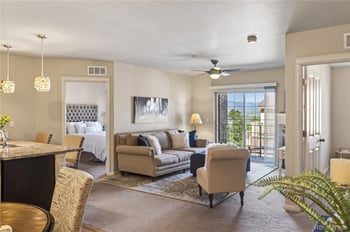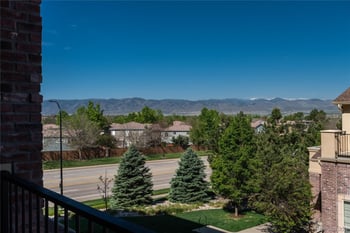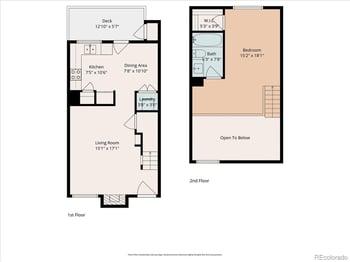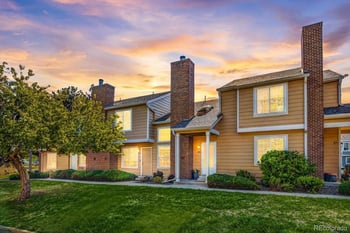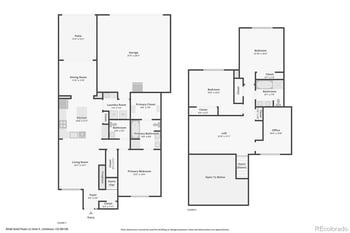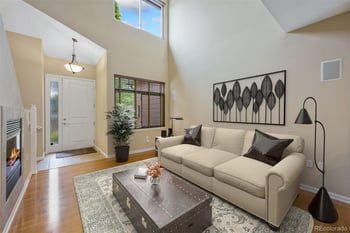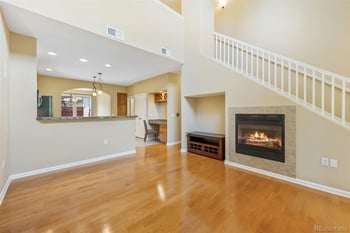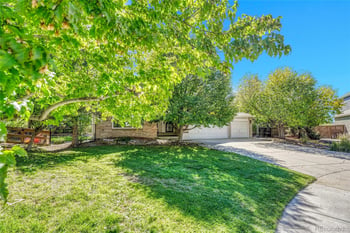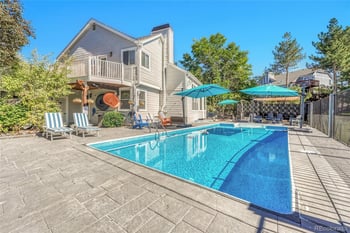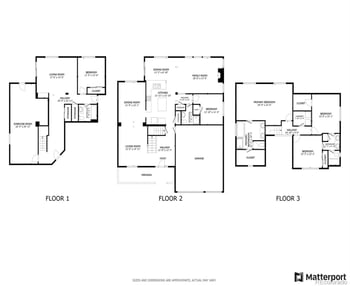


$900,000
Active Under Contract
5
Beds
4
Baths
4216
Sqft
0.15
Acres
1774 Spring Water Pl, Highlands Ranch, CO 80129
MLS#: REC3475059
.jpg)


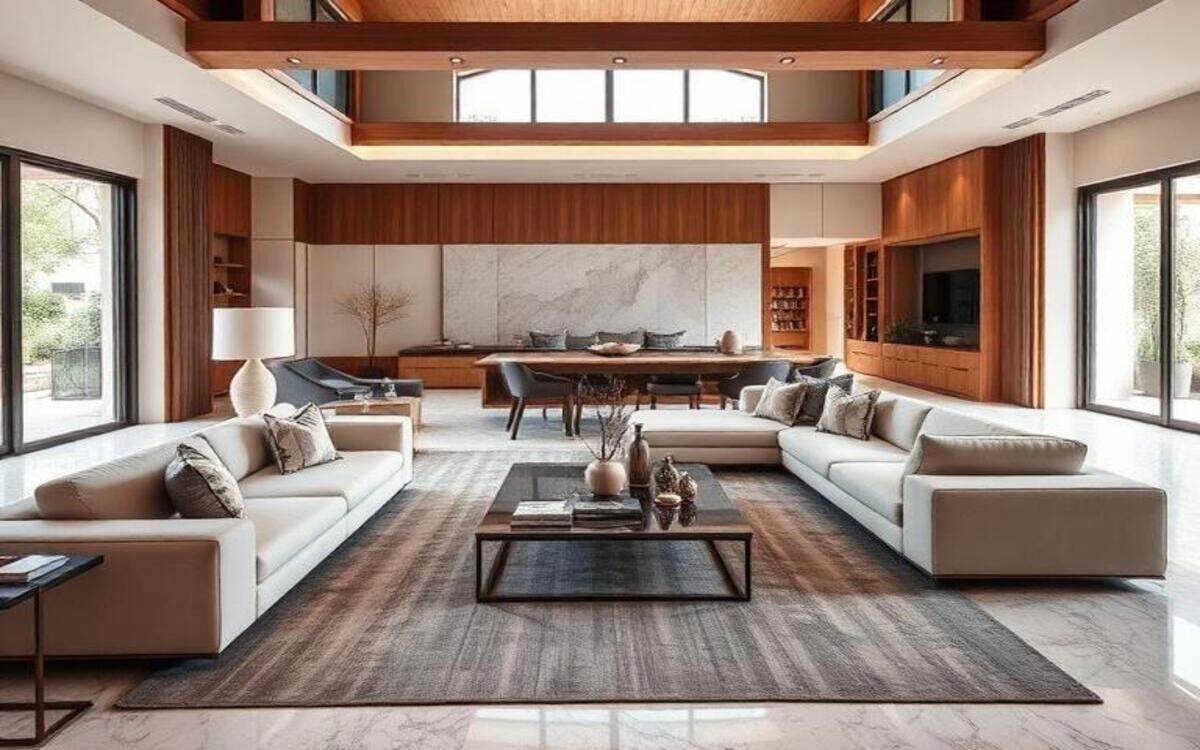
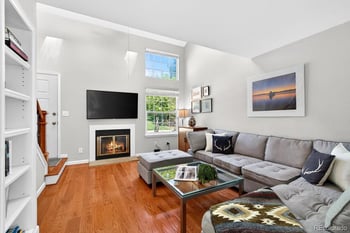
A living room set that fits a Colorado home starts with the room's actual architecture: ceiling height, window placement and how much direct sun the space gets, not just a matching furniture collection. Getting the scale, materials and layout right the first time saves a costly reorder and holds up better to this climate.
Start with a full-room vision rather than a single favorite piece. Many Front Range homes, especially newer builds in Highlands Ranch, Parker and Castle Rock, use open-concept layouts where the living room flows into the kitchen and dining space, so furniture needs to define the living area without blocking sightlines or walkways between rooms.
Measure ceiling height and window size before choosing furniture height and depth; a low-profile sofa reads as undersized under a 10- or 12-foot great-room ceiling common in newer Front Range construction, while an oversized sectional overwhelms a standard 8-foot ceiling in an older Denver bungalow. Scale the coffee table and rug to the seating group, not just the room's total square footage.
Solid wood and leather resist the cracking that dry indoor air (10% to 25% humidity in winter) causes in particleboard and thin veneer. Tightly woven performance fabric holds up to sun exposure better than loose cotton blends, an important detail with close to 300 days of Colorado sun a year working on a living room's fabric and finishes.
The distance between a coffee table and a couch commonly runs 14 to 18 inches, close enough to reach a drink without bumping knees when standing up. Keep at least 30 inches of walkway clearance around the seating group for a Front Range living room that also serves as a walkway to the kitchen or a walkout patio.
It depends on the room's use. A media-centered layout puts the television and seating as the anchor; a more formal Front Range living room commonly centers on a fireplace, a large picture window facing the foothills, or a piece of art instead. Choose one clear focal point and arrange furniture to face it rather than splitting attention between two.
West-facing rooms catch the most direct afternoon sun in Colorado, so place fabric-heavy furniture out of the window's direct path where possible, and add UV-filtering window treatment to protect whatever sits closest to the glass. This matters most for a sofa or an area rug, which show fading fastest.
Two sofas facing each other, or an L-shaped sectional paired with a couple of accent chairs, encourages conversation for households that host frequently. A single wall-facing sofa arrangement works better for households that prioritize relaxed evenings over group entertaining; there is no single correct layout, only the one that matches how the room actually gets used.
Furniture itself is not appraised, but a well-scaled, well-arranged living room photographs better and helps buyers picture their own furniture fitting the space. See the fixed upgrades that do count toward value in the preparing and adding value before selling guide.
Basement living spaces in Colorado homes commonly run lower ceilings and less natural light than the main floor, so lower-profile furniture and layered lighting (floor lamps, table lamps, not just overhead) keep the space from feeling cramped. Durable, easy-clean fabric works well here too, since basements see heavier use as media rooms and guest space.
A rug should extend under at least the front legs of all major seating pieces; for most living rooms that means an 8-by-10 or 9-by-12 rug, with larger rooms needing bigger dimensions to keep proportions right. A too-small rug floating under just the coffee table reads as an afterthought rather than an anchor for the room.
Start with the largest pieces and build contrast from there: pair an upholstered sofa with a wood or stone coffee table, then balance smooth surfaces (glass, marble, polished chrome) with tactile ones (a woven rug, a linen chair, brushed metal). Keep undertones consistent across wood pieces so warm and cool tones do not clash in the same sightline.
Low-profile seating that does not block sightlines toward a mountain or foothill view works better than tall-backed furniture positioned in front of the glass; place the largest seating pieces perpendicular to the window instead of facing away from the view entirely.
Custom-made living room furniture commonly takes longer than in-stock pieces, and certain modifications carry added fees, so confirm measurements and materials well ahead of any move-in or listing deadline. A free design consultation helps narrow choices before committing to a custom order, and ask about fast shipping for furniture if timing is tight.
Confirm the dimensions against the actual floor plan, double-check walkways and doorways for delivery clearance, and review fabric swatches in the actual room, since Front Range lighting shifts color tone through the day more than a showroom's fixed lighting suggests.
Many Denver-area condo and townhome buildings require a scheduled delivery window and elevator reservation for large furniture; check the Denver HOA rules and fees guide before scheduling a custom delivery to avoid a rejected drop-off.
Older Denver bungalows in neighborhoods like Baker and Sunnyside commonly run smaller, more defined living rooms with 8-foot ceilings, which call for a more compact seating group and a smaller-scale coffee table. Newer great-room layouts in Highlands Ranch, Parker and Castle Rock run taller ceilings and wider open sightlines into the kitchen, which support a larger sectional and a bigger rug without the room feeling overwhelmed.
Measure doorway widths, stairwell turns and ceiling height during a showing if planning to bring existing furniture into a new home, since older Front Range homes and newer builds vary widely in these dimensions. A piece that fit comfortably in a prior home does not always clear a different floor plan's stairwell or hallway turn.
Design a Living Room You Love in Your Colorado Home. Let us help you. Call or text 303-955-4220. A live person answers. Not a robot, not a phone tree. Search every home for sale in Colorado at kennarealestate.com/homes.
Questions about any home in Colorado? Call or text 303-955-4220. A live person answers.
The rug should extend under at least the front legs of all major pieces; most living rooms need an 8-by-10 or 9-by-12 rug, with larger rooms requiring bigger dimensions.
It depends on how the room gets used; media-centered layouts anchor on the television, while more formal Front Range living rooms commonly center on a fireplace or a mountain-facing window.
Commonly 14 to 18 inches, close enough to reach without bumping knees when standing.
Yes, dry indoor air (10% to 25% humidity in winter) cracks particleboard and thin veneer faster than solid wood, which holds up better across a Front Range winter.
Place fabric-heavy furniture out of the window's direct path and add UV-filtering window treatment, since close to 300 days of Colorado sun a year fades unprotected fabric within a year or two.
Custom pieces commonly take longer than in-stock furniture; confirm measurements and materials early and ask about faster shipping options if timing is tight.
Furniture is not appraised directly, but a well-scaled, well-arranged room photographs better and helps buyers picture their own furniture fitting the space.
Lower-profile furniture and layered lighting (floor and table lamps, not just overhead) suit the lower ceilings and reduced natural light common in Colorado basements.