New - 1 Day Ago
.jpg)


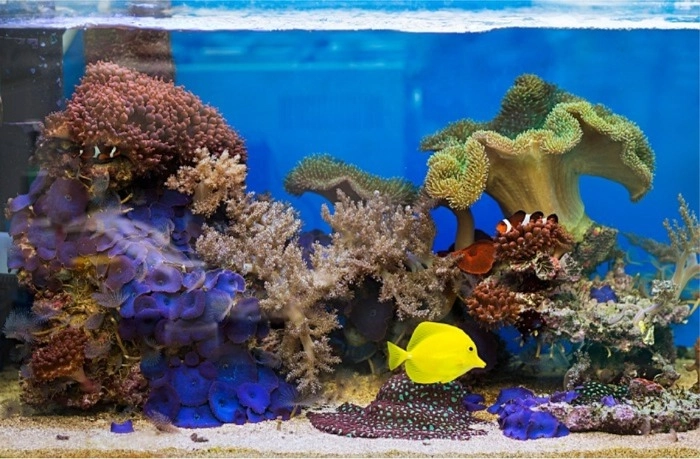
Drain a large fish tank to about a quarter of its volume, move the fish separately in insulated, oxygenated containers, and keep the gravel and filter media wet in sealed bags so the bacteria colony survives the trip. In Colorado, altitude and tap water treatment need extra attention that a lower-elevation move does not.
Turn off and unplug all equipment, remove the fish into insulated containers first, then drain the tank to roughly a quarter of its volume, keeping that water for the new setup. Move the empty glass separately from the stand, since an empty tank is far lighter and holds up better in transit.
Most fish tolerate two to four hours in a properly oxygenated, insulated container for a local Denver metro move. For anything longer, use a cooler with a battery-powered air pump rather than a sealed bag alone.
Confirm with your new water provider, whether that is Denver Water, Aurora Water, Colorado Springs Utilities, or a local district, whether the supply is treated with chloramine rather than plain chlorine. A dechlorinator rated for chloramine is required if it is; a chlorine-only product will not fully treat the water.
At 5,280 feet, atmospheric pressure is lower, which reduces how much oxygen the water can hold compared to sea level. Add extra surface agitation, such as a slightly stronger air stone or filter return, for the first few weeks after a move from a lower-elevation city.
No. For a same-day local move, keeping a portion of the original tank water reduces the shock to your fish and preserves some of the beneficial bacteria. A full drain is only necessary for a move with more than a day between pickup and setup.
Move fish and water inside the cab of your vehicle, not an unheated moving truck, any time you are relocating between November and March. Front Range temperatures can drop well below freezing overnight even on a mild-looking moving day.
Individual HOA rules vary, so check with the Highlands Ranch Community Association or your specific sub-association about any weight or floor-load restrictions before you set up a large tank in a condo or upper-level room. Ground-floor placement avoids most floor-load questions entirely.
Water weighs about 8.3 pounds per gallon, so a 100-gallon tank with substrate and equipment can weigh close to 1,000 pounds filled. Place any tank over 55 gallons on a ground floor or over a load-bearing wall, and confirm placement with your HOA or a contractor for an upper-level room.
For a tank over roughly 75 gallons, a specialty mover experienced with aquariums reduces the risk of a cracked seam or a damaged stand more than a standard crew unfamiliar with glass tanks that size.
Keep filter media and a scoop of gravel wet and sealed in tank water inside a bucket or bag rather than letting them dry out. The beneficial bacteria that keep your tank balanced live on these surfaces and die within a few hours if they dry completely.
Set the tank up, run the filter, and test the water before reintroducing fish, ideally within the same day for a local move to limit time in a temporary container. Float the fish's container in the tank for 15 to 20 minutes to match temperature before releasing them.
Test ammonia, nitrite, nitrate, and pH with a standard aquarium test kit before reintroducing fish. A properly transported bacteria colony should keep ammonia and nitrite near zero; if either reads high, wait and retest rather than adding fish on a bad reading.
Handle the tank early in the day, before the house gets chaotic, and assign one adult solely to the fish and water containers so they are not competing for attention with kids or other pets during loading.
Plan for at least two people to move an empty tank over 100 gallons without damage, plus a furniture dolly rated for the stand's weight. Never move a large tank while it still holds a significant amount of water.
Treat new tap water with a dechlorinator before it touches the tank, match the temperature to the fish's transport container, and add water gradually over 15 to 20 minutes rather than all at once.
| Tank Size | Approx. Filled Weight | Recommended Placement |
|---|---|---|
| 55 gallons | ~625 lbs | Any level, standard floor framing |
| 100 gallons | ~1,100 lbs | Ground floor or over load-bearing wall |
| 180+ gallons | ~2,000+ lbs | Ground floor, confirm floor load with a contractor |
The Kenna Real Estate Group helps Highlands Ranch and Denver metro buyers and sellers plan the details a move brings up, aquariums included, around a real closing timeline. Call or text 303-955-4220. A live person answers. Not a robot, not a phone tree. Looking for your next Colorado home? Search every home for sale in Colorado.
Questions about any home in Colorado? Call or text 303-955-4220. A live person answers.
Most fish tolerate two to four hours in an oxygenated, insulated container for a local move; use a battery-powered air pump for anything longer.
Check with your specific water provider, such as Denver Water or Aurora Water, since many Front Range utilities use chloramine, which requires a dechlorinator rated for it rather than a chlorine-only product.
Lower atmospheric pressure at 5,280 feet reduces how much oxygen the water holds, so extra surface agitation for the first few weeks helps fish adjust.
Roughly 1,000 to 1,100 pounds with water, substrate, and equipment, which is why placement on a ground floor or load-bearing wall matters.
Yes, keeping a portion of the original water for a same-day local move reduces stress on the fish and preserves beneficial bacteria.
Transport fish and water inside the heated cab of a vehicle rather than an unheated truck any time you move between November and March.
Yes, test ammonia, nitrite, nitrate, and pH before reintroducing fish, and wait to retest if ammonia or nitrite reads high.