.jpg)


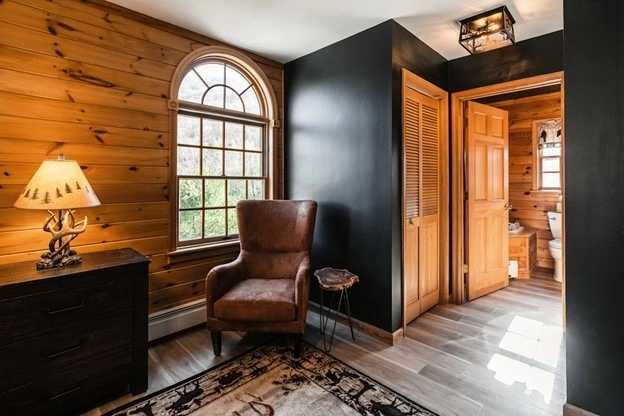
A Colorado country home does not have to choose between a barn-and-beams look and a modern interior. The properties that sell fastest outside Denver, in places like Parker, Castle Rock, Erie, Brighton and the foothills around Morrison, mix original materials with updated systems: original wood or stone paired with new insulation, wiring and finishes that work at altitude.
What makes a Colorado country home read as "modern" without losing its character?
Buyers touring acreage and horse properties respond to contrast: a reclaimed wood island next to quartz counters, a stone fireplace next to clean steel fixtures, original barn wood used as an accent wall instead of covering every surface. Keep one or two original materials as the anchor of a room and update everything else (lighting, hardware, paint) to a simpler, cleaner palette.
| Original element | Modern pairing | Where it works best |
|---|---|---|
| Exposed timber beams | Matte black fixtures, simple pendant lights | Great rooms, kitchens |
| Original stone hearth | Clean-lined steel or glass fireplace screen | Living rooms, dens |
| Barn wood siding or trim | Quartz or concrete counters | Kitchens, bathrooms |
| Wide-plank original floors | Neutral wool or jute area rugs | Bedrooms, living areas |
How do you keep a rural Front Range property's character while updating it?
Start with the systems buyers cannot see: a newer furnace, updated electrical panel and a well or septic inspection report all matter more to a rural buyer than decor. Once those are documented, spend on visible updates that respect the original structure: refinished original floors, repainted trim, new light fixtures that match the home's era instead of a mismatched modern chandelier in a 1970s ranch.
What does a fireplace need in a Colorado country home?
A wood-burning fireplace or insert needs an annual chimney inspection and a clearance check from combustible framing, which matters more in older country homes with timber framing close to the flue. A gas insert or fireplace conversion requires a permit through the county building department outside Denver city limits, and a licensed contractor for the gas line. Either option adds warmth and a strong focal point for buyers touring in the shoulder seasons when Colorado nights still drop below freezing.
How does Colorado's dry air affect exposed wood beams and timber framing?
Front Range winter indoor humidity runs 10% to 25%, and exposed structural beams and timber framing dry and check (develop surface cracks) faster in that range than in a humid climate. A whole-home humidifier tied to the furnace, kept in the 30% to 40% range, slows checking and keeps wood trim from shrinking away from joints. Oil-based wood conditioners applied yearly protect exposed beams better than a one-time sealant.
What does Colorado sun do to exterior wood siding and interior tones?
Colorado gets close to 300 days of sun a year, and UV at altitude is stronger than at sea level. South- and west-facing wood siding on a country home grays and checks within three to five years without a UV-rated stain, and interior wood floors near large windows fade unevenly without UV window film or periodic rug rotation. Plan on restaining exterior wood every three to four years on the sun-exposed sides of the house.
How do you blend reclaimed and modern materials in a kitchen remodel?
A reclaimed wood island, open shelving in salvaged wood, or an original stone hearth pairs well with simple quartz or butcher-block counters and matte black or brushed brass hardware. Keep wall colors neutral so the reclaimed material stays the visual anchor instead of competing with bold paint.
What permits apply to electrical and plumbing work on a rural Colorado property?
Outside Denver city limits, electrical and plumbing permits go through the county (Douglas, Arapahoe, Jefferson, Weld, El Paso and others each run their own building department), not the city. A permit is required for new circuits, panel upgrades, added plumbing fixtures and any gas line work; unpermitted work is a common finding on a rural home inspection and can complicate a sale. Denver proper handles its own permits through Denver Development Services.
Which Front Range areas have the most country-style inventory?
Acreage and country-style properties cluster in Douglas County (Parker, Castle Rock, Larkspur), Weld County (Erie, Frederick, Johnstown), the west side of Jefferson County near Morrison and Golden, and unincorporated Elbert and Douglas County east of Parker. The Kenna Real Estate Group's Colorado horse properties for sale page and horse property buying guide cover what to check on acreage before an offer.
How does wildfire risk change design choices for a Colorado country home?
Colorado's wildfire season runs roughly June through September, and country properties in wildland-urban interface zones benefit from noncombustible roofing, ember-resistant vents and a cleared defensible space in the first 5 to 30 feet around the structure. These choices affect insurance availability and premiums as much as they affect design, so check with a Colorado-licensed insurance agent before buying in a mapped wildfire zone.
What should a buyer check before purchasing Colorado acreage or a horse property?
Water rights, well permits, septic capacity, fencing condition and outbuilding permits all need separate verification from the home inspection on acreage. A property with a barn or outbuilding built without a permit can require retroactive permitting before a lender will finance it, so confirm permit history with the county before writing an offer. A rural well requires a well permit on file with the Colorado Division of Water Resources, and a septic system needs a use permit from the county health department; ask the seller for both before the inspection window closes.
Does blending traditional and modern design help resale value in Colorado?
A country home that keeps its character while updating systems and finishes sells faster, in most cases, than one that is either fully original (and reads as dated) or fully modern (and loses the character buyers seek out acreage for in the first place). Buyers touring acreage want the barn, the beams and the stone hearth; they just do not want a 40-year-old kitchen or an electrical panel that will not pass inspection. The Kenna Real Estate Group's guide to preparing and adding value before selling covers which updates return the most at closing.
What's the inspection objection deadline and disclosure requirement on a Colorado sale?
Colorado's standard contract sets an inspection objection deadline the buyer and seller negotiate directly, commonly 10 to 14 days after acceptance, and it runs longer on a country property since well, septic and outbuilding inspections take more time than a standard city home inspection. Colorado law requires sellers to disclose known material defects on the Seller's Property Disclosure form, including known issues with wells, septic systems and outbuildings.
Where to go next
- Colorado horse properties for sale
- Colorado horse property buying guide
- Preparing and adding value before selling
- How to evaluate mountain view homes in Colorado
- Explore homes for sale in Castle Rock
- Search every home for sale in Colorado
Talk to the Kenna Real Estate Group
The Kenna Real Estate Group works with buyers and sellers of Colorado acreage, horse properties and country homes across Douglas, Weld, Jefferson and El Paso counties, and helps sellers decide which updates are worth making before listing. Call or text 303-955-4220. A live person answers. Not a robot, not a phone tree. Ready to look at options? Search every home for sale in Colorado.
Homes for sale that match this post
- Horse properties: guide
- Homes with Fireplace in Castle Rock
- Homes on Wooded Lots in Castle Rock
- Homes with Wood Floors in Castle Rock
- All homes for sale in Castle Rock
Guides
Questions about any home in Colorado? Call or text 303-955-4220. A live person answers.