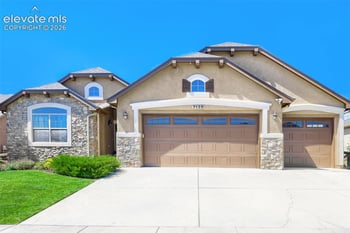
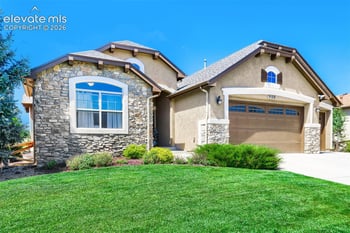
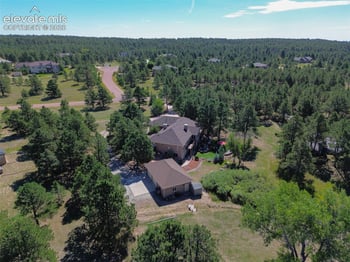
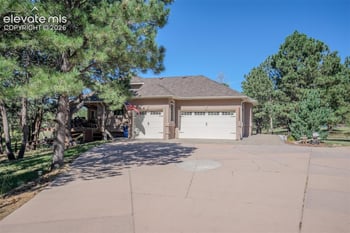
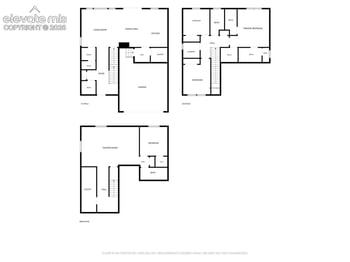
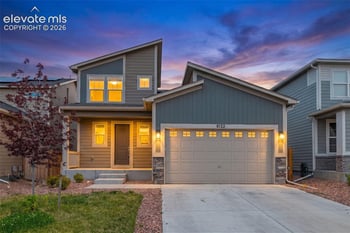
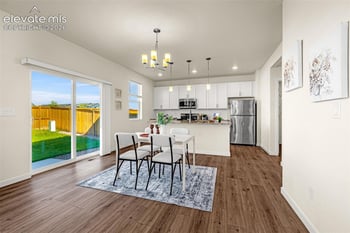
New - 2 Days Ago

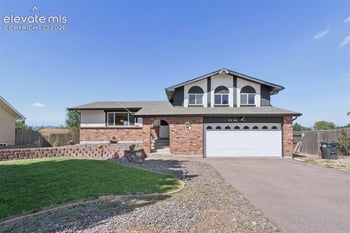
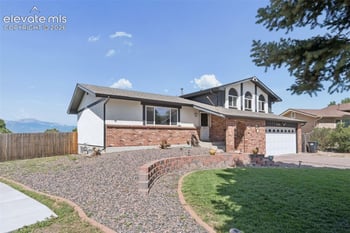
$460,000
Active
5
Beds
4
Baths
2304
Sqft
0.2
Acres
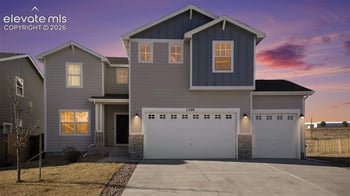
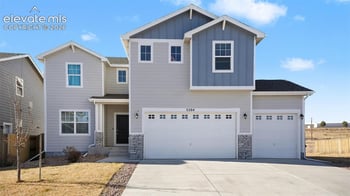
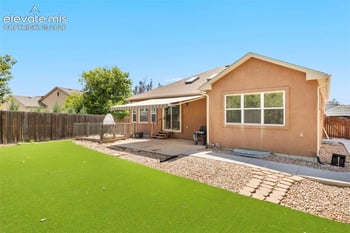
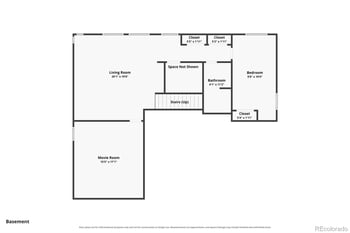
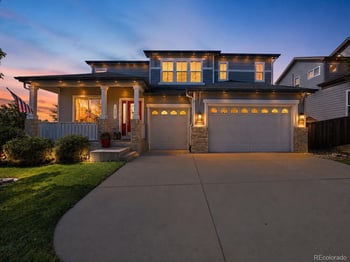
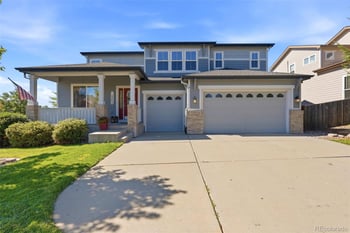
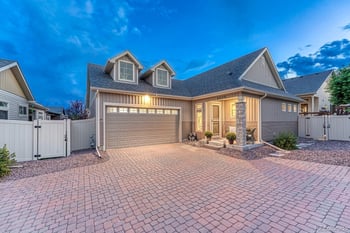
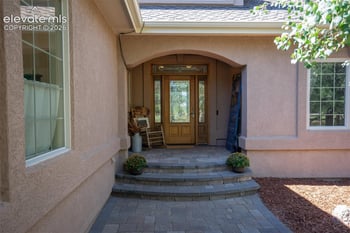
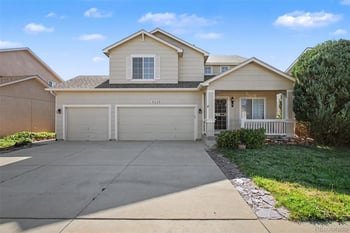
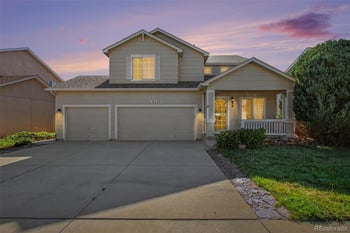
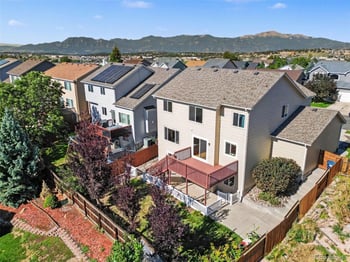
6399 Pawnee Cir, Colorado Springs, CO 80915
MLS#: 1592614
.jpg)



CHFA Schools To Home is a Colorado down payment assistance program for eligible full-time public school employees. If you work full time for District 49 (also known as Falcon School District 49), you may qualify for a 30-year fixed first mortgage paired with a deferred second mortgage worth up to 25% of that first mortgage — potentially useful for a home in Falcon, Peyton, or eastern Colorado Springs.
Program terms below reflect the CHFA Schools To Home program matrix effective July 1, 2026. Always confirm current requirements with a CHFA participating lender before making an offer.
What is CHFA Schools To Home? CHFA Schools To Home is a Colorado down payment assistance program for eligible full-time public school employees. It pairs a 30-year fixed-rate first mortgage with an optional deferred second mortgage worth up to 25% of the first mortgage amount — a zero-percent loan with no monthly payment and no accrued interest while it remains outstanding.
Schools To Home came out of bipartisan legislation passed in the 2025 Colorado legislative session, funded through the Public School Permanent Fund and launched by the Colorado Housing and Finance Authority (CHFA) in 2026. The assistance can be used toward:
District 49 — also known as Falcon School District 49 — is one of the fastest-growing districts in El Paso County, serving roughly 25,689 students across Falcon, Peyton, and the eastern edge of Colorado Springs. Home prices in that corridor have climbed alongside the district's growth, and for a paraprofessional, bus driver, or first-year teacher, saving a traditional down payment while renting in a fast-growing area is not a quick process.
No. Schools To Home is not a grant — the assistance is a real second mortgage with a real repayment obligation. You don't make a monthly payment on it, but you owe the original assistance later, plus a share of your home's appreciation, when a maturity event occurs. What it is is a way to convert "I need several more years of saving" into "I can buy this year," at a cost you can calculate in advance. Whether that trade makes sense depends on your numbers, which we walk through below.
CHFA's eligibility language is broad: any individual employed by a preK–12 Colorado public school, school district, charter school, institute charter school, board of cooperative educational services (BOCES), or innovation zone, who is classified full time by their employer. Job title is not the deciding factor — employment classification is. That means eligible D49 positions can include:
Classroom & SPED teachers Paraprofessionals & aides Counselors, psychologists, nurses Front office & registrars Custodial & maintenance Nutrition services staff Bus drivers, mechanics, dispatch Coaches & athletic staff Admin, IT, HR, finance, securityDistrict 49 also includes several innovation and charter schools within its boundaries, which can broaden the list of eligible employers beyond the traditional district office.
How to verify your employer: CHFA directs lenders and borrowers to the Colorado Department of Education's SchoolView database for employer verification. "Public" needs to appear in the School Type column for your specific employer. Private and parochial school employees are not eligible.
Yes. At least one borrower must be classified full time by an eligible public school employer. Part-time, substitute, and seasonal roles don't independently qualify — but see the next question, since there's a real workaround for a lot of D49 households.
Doesn't matter. Only one borrower on the loan needs to be the eligible full-time school employee. The other borrower can work in any industry — healthcare, construction, tech, or active-duty military. This flexibility matters a lot in the D49 area given how many households include one spouse in education and one connected to nearby military installations. Cosigners and non-occupying co-borrowers are not permitted, and non-borrowing spouses cannot take title without being on the loan.
No. Schools To Home is not restricted to first-time homebuyers. If you owned before, sold, and have been renting since — including after a PCS move or relocation — you may still qualify.
No. Your eligibility comes from your employment, not from where you buy. A D49 employee could purchase in Falcon, Peyton, Colorado Springs, Fountain, Monument, or elsewhere in Colorado, subject to the program's owner-occupancy and mortgage requirements.
District 49's service area sits close to several major military installations in the Colorado Springs area, including Peterson Space Force Base and Schriever Space Force Base, and within commuting distance of Fort Carson. That creates a real overlap between the D49 employee population and military households — a spouse who teaches or works in D49 while the other spouse serves, or a veteran who now works for the district after separating from service.
A few things worth knowing if this is your situation: Schools To Home can be combined with your own VA loan eligibility for the first mortgage in some cases, but the specifics of layering a VA-eligible first mortgage with a CHFA second mortgage need to be confirmed directly with a participating lender — not every lender structures this the same way. If you expect a PCS move within a few years, weigh that against the "when Schools To Home is the wrong move" section below, since a short hold period doesn't leave much time to build equity before the CHFA obligation comes due. And if only the non-military spouse is the D49 employee, remember: only one borrower needs to meet the eligible-employee requirement, so the military spouse's income can still count toward qualifying.
None of this changes the core program mechanics — it just means military-connected D49 households often have extra variables (VA entitlement, PCS timing, BAH) worth running past a lender who has actually structured this combination before.
The 25% figure trips people up. It is 25% of your first mortgage amount, not 25% of the purchase price. On a $475,000 home with a $380,000 first mortgage, the maximum second mortgage would be 25% × $380,000 = $95,000.
| Purchase price | $475,000 |
|---|---|
| First mortgage (80% LTV) | $380,000 |
| Schools To Home second | $95,000 |
| Buyer down payment | $0 |
| PMI | None |
| Purchase price | $475,000 |
|---|---|
| First mortgage (84% LTV) | $399,000 |
| Schools To Home second | $99,750 |
| Combined (105% CLTV) | $498,750 |
| PMI | May apply |
Structure A uses the assistance to cover the full down payment with no PMI. Structure B provides more assistance under the program's maximum 97% LTV / 105% CLTV limits, but comes with a larger first mortgage and possible mortgage insurance. Have a participating lender price both before you decide.
The $1,000 is your minimum required contribution, not the total amount of assistance you receive. On the example above, that's $1,000 out of pocket against $95,000 of CHFA help.
Your actual cash needed at closing can still be higher than $1,000 once you account for closing costs, prepaids, escrows, lender fees, and earnest money. Ask your lender for a full cash-to-close estimate before you write an offer.
No purchase price limit. There is still a maximum first-mortgage amount — the lower of $832,750 or the applicable Fannie Mae limit plus financed mortgage insurance — but that's a loan-amount ceiling, not a cap on the home's price.
$178,920, statewide, regardless of county or household size. The income counted is the qualifying income your lender uses for mortgage credit-qualification, not simply your gross salary.

Send us your target price range and we'll run Structure A and Structure B side by side — free, no obligation.
 Call Us: 720-575-1588 District 49 Area Homes
Let's say you're a full-time District 49 employee purchasing a home in Falcon for $475,000, using Structure A.
| Purchase price | $475,000 |
|---|---|
| First mortgage | $380,000 |
| Schools To Home assistance | $95,000 |
| Your down payment | $0 |
| Minimum contribution (can be a gift) | $1,000 |
| Locked shared appreciation rate | 20% |
| Appreciation ($605,000 − $475,000) | $130,000 |
|---|---|
| Shared appreciation owed (20%) | $26,000 |
| Original assistance repaid | $95,000 |
| Total owed to CHFA at closing | $121,000 |
This is an illustration only, not a projection of future home values or your actual payoff. Have a lender run the real numbers for your situation.
This is the part that costs money, so read it slowly. The assistance doesn't just disappear after closing — when the second mortgage becomes due, you repay the original assistance amount plus a calculated shared-appreciation payment.
CHFA's formula is simple division: your original assistance amount divided by your original purchase price. On the $475,000/$95,000 example above, that's $95,000 ÷ $475,000 = 20%. That percentage is established at closing from the original loan and purchase-price amounts.
Contract sales price minus original purchase price, for a standard sale. For a refinance or payoff, appraised or fair market value is used instead. Multiply the difference by your locked percentage, and that's what you owe on top of the assistance itself.
Negative appreciation is treated as zero. You still owe the original assistance amount, but you never owe a share of a loss.
Four triggers: you sell, you refinance, you pay off the first mortgage, or the property stops being your primary residence. If you move out and rent the house, the whole obligation accelerates. This program is not designed for buyers planning to convert the home into a rental — something worth flagging especially for households that might PCS or relocate and consider keeping the property as an investment.
Yes, but a refinance triggers repayment of the assistance and shared appreciation, so you'd need enough equity to absorb the payoff. Model this with your lender before you commit to Schools To Home if you're already planning to refinance soon.
District 49's service area covers Falcon, Peyton, and the eastern edge of Colorado Springs — three areas with different price points, growth patterns, and commute profiles.
The district's namesake community and its fastest-growing area, with a large mix of newer subdivisions, master-planned communities, and a steadily expanding retail base along Woodmen Road and Meridian Ranch. Browse Falcon homes.
A more rural, lower-density option east of Falcon, with larger lots and a slower pace — worth considering for buyers prioritizing space and privacy over a short commute. Browse Peyton homes.
The portion of the district that overlaps with Colorado Springs city limits, offering closer access to Powers Boulevard corridor amenities, Peterson Space Force Base, and shorter commutes for households working in central Colorado Springs. Browse Colorado Springs homes.
Every one of these submarkets is moving at a different speed right now. Rather than quote you a stale median, we'll pull live REcolorado (and Pikes Peak MLS) data for the specific attendance areas you're considering — that's a fifteen-minute conversation and it'll tell you more than any blog post.
Our team tracks active listings, price reductions, pending sales, and market trends so District 49 buyers can make decisions using current local market data rather than outdated averages.
Falcon's newer master-planned communities frequently sit inside metro districts financing roads, parks, and infrastructure, which can push property taxes well above what an older Colorado Springs neighborhood would carry.
2Many Falcon-area subdivisions carry HOA dues covering common areas and amenities. Build them into your total monthly budget, not just the mortgage payment.
3Falcon is one of the fastest-growing parts of El Paso County. New construction incentives can be attractive, but compare total ownership cost against resale homes in established neighborhoods.
4For military-connected households, factor in commute time to Peterson SFB, Schriever SFB, or Fort Carson — eastern Colorado Springs and Falcon offer very different drive times depending on which installation you're tied to.
5Some Peyton-area properties rely on well and septic systems rather than municipal utilities. Have these inspected separately, and factor maintenance costs into your budget.
6Because Schools To Home has no price ceiling, it's worth comparing Falcon new construction against established eastern Colorado Springs neighborhoods rather than assuming one is automatically out of reach.
Schools To Home is built around one-unit owner-occupied properties, so a typical duplex does not qualify. Have your lender confirm any unusual property configuration before you write an offer.
A Property Inspection Waiver (PIW) is not permitted under this program — a full appraisal is always required. In a competitive Falcon new-construction market or a multiple-offer situation on an established eastern Colorado Springs home, your offer strategy needs to account for this from the start.
No. It's a deferred second mortgage with a shared appreciation obligation.
No. Zero percent, no monthly payment, no interest accrual while it's your primary residence.
Up to 25% of your first mortgage amount, which works out to roughly 20% of the purchase price once the 105% CLTV cap is applied.
No. There's a maximum loan amount — the lower of $832,750 or the applicable Fannie Mae limit plus financed MI — but no cap on the home's price.
$178,920 statewide, the same in every county and for every household size.
A minimum mid score of 620, or higher if the loan type requires it.
Yes. The program covers any individual employed full time by an eligible public school employer, regardless of job title.
Yes — eligible charter and innovation schools are named as eligible employers, along with district-run schools, BOCES, and institute charter schools.
No. Only one borrower needs to be the eligible full-time school employee; the other can work in any industry, including active-duty military.
Structuring a VA-eligible first mortgage alongside a CHFA second mortgage is possible in some cases, but the specifics vary by lender. Confirm directly with a participating lender experienced in both programs.
No.
Yes — condos, PUDs, attached and detached single family, modular, and manufactured housing on a permanent foundation are all eligible.
Yes, subject to Fannie Mae requirements.
No. Schools To Home is limited to one-unit owner-occupied properties.
Not while the assistance is outstanding. The moment it stops being your primary residence, the second mortgage and shared appreciation both come due — important to plan around if you anticipate a future PCS.
A refinance is a maturity event. You'd repay the assistance plus the shared appreciation amount at that point.
Negative appreciation counts as zero appreciation. You repay the assistance, but never a share of a loss.
No. Subordinate financing isn't allowed.
Not on this program — interest rate buydowns aren't permitted. Seller concessions can still go toward closing costs and prepaids within loan guidelines.
Yes. Your employment with District 49 makes you eligible, but you aren't required to purchase within district boundaries.
Call our team at 720-575-1588 or 303-955-4220.
If you work full time for District 49 and homeownership in Falcon, Peyton, or eastern Colorado Springs has felt out of reach, Schools To Home is worth running the numbers on — whether you're a civilian D49 employee or part of a military-connected household. No cost, no commitment, and if a conventional loan turns out to be the better fit, that's the answer you'll get.
The Kenna Real Estate Group · 720-575-1588 · 303-955-4220
Lender partner: Mike Oswald, New American Funding · NMLS #261003
Call Us: 720-575-1588  Search District 49 Area Homes
Every eligible Colorado public school district gets its own Schools To Home breakdown. Links below will go live as each guide publishes — check back if one isn't active yet.
HUB — All Colorado Districts Denver Public Schools Douglas County RE-1 Aurora (Adams-Arapahoe 28J) Adams 12 Five Star St. Vrain Valley Poudre School District Boulder Valley District 49 (Falcon) — you're here Academy District 20 School District 27J Greeley-Evans 6 Colorado Springs D11 Colorado Charter School Institute Thompson Pueblo City 60 Littleton Public Schools Harrison District 2 Widefield District 3 Weld RE-4 Fountain-Fort Carson D8 Westminster Public Schools 50 BOCES + Small Districts RoundupIf you work for another Colorado public school district, use the hub above to find your district-specific guide.
Program details summarized here are based on the Colorado Housing and Finance Authority (CHFA) Schools To Home program matrix effective July 1, 2026, and are subject to change. This article is for general informational purposes only and is not a commitment to lend, an offer of credit, or a guarantee of eligibility, terms, or assistance amounts. Eligibility, income limits, loan limits, credit requirements, homebuyer education requirements, loan structure, and shared appreciation terms are determined by CHFA and a CHFA participating lender. Loan structure examples are illustrative only. VA loan combination details should be confirmed directly with a participating lender. Verify eligible employers with the Colorado Department of Education. The Kenna Real Estate Group is a real estate brokerage team and does not originate loans. Not affiliated with, sponsored by, or endorsed by District 49 (Falcon School District 49), the U.S. Department of Defense, or any branch of the U.S. military. Each office is independently owned and operated. Equal Housing Opportunity.