New - 20 Hours Ago

$1,999,995
Active
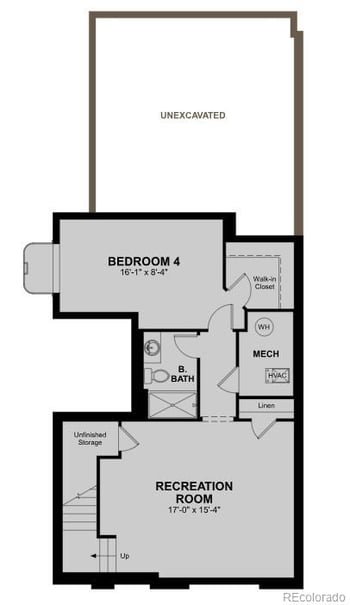
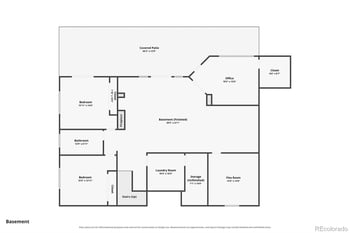
4
Beds
6
Baths
4053
Sqft
0.24
Acres
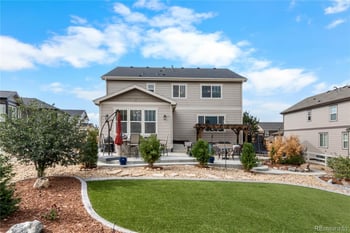
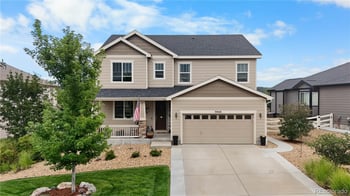
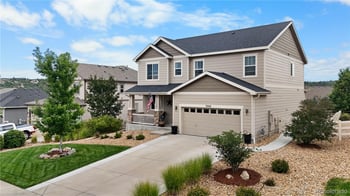
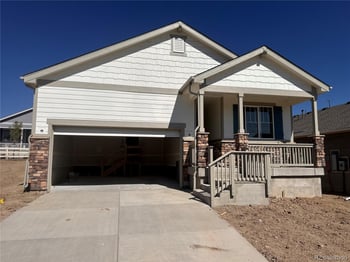
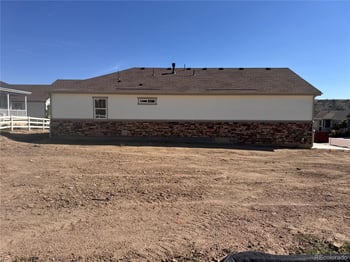
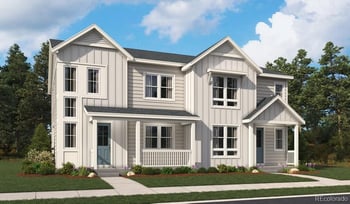
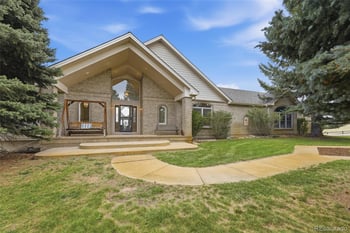
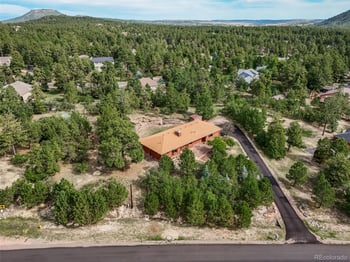
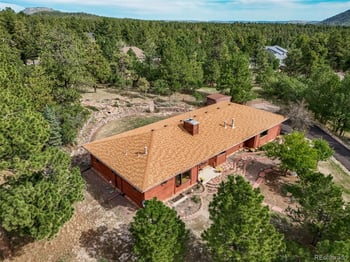
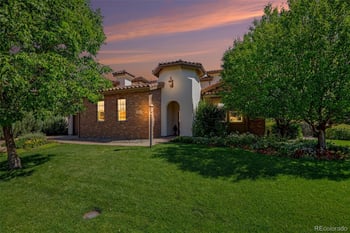
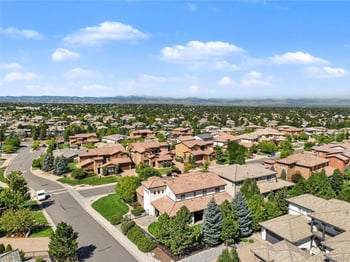
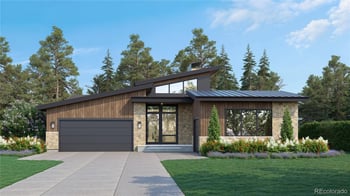
7930 Native Peak Way, Parker, CO 80134
MLS#: REC9505697
.jpg)



CHFA Schools To Home is a Colorado homebuying program for full-time public school employees. If you work full time for Douglas County School District RE-1 — or any Douglas County-authorized charter, institute charter, BOCES, or eligible preschool program — you can pair a 30-year fixed first mortgage with a second mortgage worth up to 25% of that first mortgage, used for your down payment, closing costs, prepaids, or principal reduction.
Program terms below reflect CHFA's published program matrix effective July 1, 2026. Terms change — always confirm current guidelines with a CHFA participating lender before you write an offer.
Schools To Home came out of bipartisan legislation passed in the 2025 Colorado legislative session. The General Assembly told the Colorado Housing and Finance Authority (CHFA) to build a down payment assistance program for public school employees, and funded it through the Public School Permanent Fund (PSPF). CHFA launched it in 2026.
The problem it's aimed at is not subtle in Douglas County. Castle Rock, Parker, Highlands Ranch, Lone Tree, and Castle Pines have some of the strongest school ratings and highest home prices along the entire Front Range. A first-year Douglas County RE-1 paraprofessional is not saving a six-figure down payment out of that paycheck. Neither is a bus driver, a nutrition services worker, or a custodian with fifteen years in the building. The people who keep Douglas County schools running have increasingly been priced out of the very neighborhoods those schools serve, and everybody in the district already knew it.
The second mortgage and the shared appreciation payment both come due at the same triggering events: you sell, you refinance, you pay off the first mortgage, or the property stops being your primary residence.
No, and anyone who tells you it is should not be handling your transaction. This is a real second mortgage with a real repayment obligation and a real cost attached to it. What it is — and this is the honest pitch — is a way to convert "I need another decade of saving to afford Douglas County" into "I can buy this fall," at a cost you can calculate in advance. Whether that trade is worth it depends on your numbers, and we walk through exactly how to run them below.
CHFA's language is deliberately broad. The program is for any individual employed by a preK–12 Colorado public school, school district, charter school, institute charter school, board of cooperative educational services (BOCES), or innovation zone, who is classified as a full-time employee by their employer.
Read that again, because it is not what most people assume. It does not say "teacher." It says any individual employed by. If you are full time and your employer is on the eligible list, your job title is irrelevant. That means:
Classroom & SPED teachers Paraprofessionals & aides Counselors, psychologists, nurses Front office & registrars Custodial & maintenance Nutrition services staff Bus drivers, mechanics, dispatch Coaches & activity directors Admin, IT, HR, finance, securityAll publicly funded schools. Douglas County School District RE-1 is the obvious one — serving Castle Rock, Parker, Highlands Ranch, Lone Tree, Castle Pines, Franktown, and the rest of the county with over 60 schools. But the eligible-employer list is wider than the district:
Every building. Every department. Not just the classroom.
How to verify your employer: CHFA points to the Colorado Department of Education's SchoolView site. If you use the Excel file there, make sure "Public" appears in the School Type column. Private and parochial school employees are not eligible, and that is a hard line.
Yes. Your employer has to classify you as full time. Part-time, substitute, and seasonal roles do not qualify on their own — but see the next question, because there is a real workaround for a lot of households.
Doesn't matter. If there are multiple borrowers on the loan, only one of them has to be the full-time public school employee. The other borrower can be a nurse, a contractor, a software engineer, a firefighter, anybody.
This is the single most underused feature of the program, and it is a big deal for two groups we work with constantly. First, dual-income households where one spouse works for the district and the other out-earns them — the school employee's job unlocks the program, and the household's combined income does the qualifying (up to the cap). This matters even more in Douglas County than most places, since prices here often require two solid incomes regardless of the program. Second, co-buyers who aren't married: two Douglas County paras buying together, a teacher buying with a sibling, two friends splitting a ranch-style home in Parker. As long as one of you is full time with an eligible employer and everyone is on the loan and on title, you're in the door.
Two important limits on that, though. Cosigners and non-occupying co-borrowers are not permitted, so you can't have a parent sign to strengthen the file and then not live there. And CHFA does not permit non-borrowing spouses or anyone else who isn't obligated on the mortgage to take title. Everyone on title is on the loan, and everyone on the loan lives in the house.
No. The program is statewide. If you work in Castle Rock and want to buy in Colorado Springs, Elizabeth, or Aurora, that's fine. If you work in Douglas County and want to buy further out in Elbert County for more land, that's also fine on the program side — though do the commute math honestly, since Douglas County's geography stretches from the Denver Tech Center's edge down toward Monument Hill.
No. You have to work full time for an eligible Colorado public school employer. Which district and which county are separate questions.
No. CHFA's matrix says plainly that this program is not restricted to first-time homebuyers. If you owned before, sold, and have been renting, you can use it. If you're going through a divorce and coming out the other side needing to buy again, you can use it — and if that's your situation, that's a whole separate conversation we're glad to have.
One property limit does apply: you can only have one CHFA-financed property at a time, and beyond Fannie Mae's own limits on financed properties, each borrower may hold an ownership interest in one other residential dwelling at closing.
Here is where most write-ups get lazy and say "up to 25%" without telling you 25% of what. The assistance is 25% of your first mortgage amount, not 25% of the purchase price. Those are different numbers, and the difference matters even more in a county where the median purchase price is well above the state average.
There's also a second constraint that almost nobody explains: the program allows a maximum 97% LTV on the first mortgage and 105% CLTV combined. Run those two rules together and the structure basically writes itself.
| Purchase price | $700,000 |
|---|---|
| First mortgage (80% LTV) | $560,000 |
| Schools To Home second | $140,000 |
| Cash needed for down payment | $0 |
| PMI | None |
| Purchase price | $700,000 |
|---|---|
| First mortgage (84% LTV) | $588,000 |
| Schools To Home second | $147,000 |
| Combined (105% CLTV) | $735,000 |
| PMI | Required |
You still bring closing costs and prepaids, plus the $1,000 minimum borrower contribution, under Structure A. Structure B covers the full down payment plus roughly $35,000 toward closing costs, prepaids, or principal reduction — at the cost of PMI on the first.
To be straight with you: the exact structure is your lender's call, run through Fannie Mae's automated underwriting. What we've laid out is how the program's own published limits interact. Have a CHFA participating lender price both versions side by side before you decide — the PMI premium versus the extra assistance is a real trade, and it goes different directions depending on your credit score and how long you plan to stay.
Yes, on the first mortgage: the lower of $832,750 or the applicable Fannie Mae limit plus financed mortgage insurance. In Douglas County, higher-priced communities like Castle Pines or parts of Lone Tree can push closer to that ceiling than in most Colorado counties, so it's worth checking early with your lender rather than assuming.
No purchase price limits. This is genuinely unusual for a down payment assistance program and it's the detail we'd underline twice for Douglas County buyers specifically. Most DPA programs cap the price of the house, which quietly pushes school employees toward the cheapest, least convenient corners of the metro. Schools To Home doesn't do that. If you qualify on income and the loan amount fits, you can buy in Castle Rock, Highlands Ranch, Lone Tree, or Castle Pines — wherever the house makes sense.
$178,920, statewide, regardless of county or household size. One flat number. That is a high ceiling for a school-employee program, and it's why the co-borrower rule matters so much in Douglas County — a district employee plus a well-paid partner can very often still fit underneath it, even at this area's price points.
The income counted is the qualifying income your lender uses to credit-qualify you for the loan, not some separate household calculation. That distinction saves a lot of files.
The part people miss: your required contribution and your assistance amount are two completely different numbers. You bring the minimum — $1,000, which can even be gifted — and CHFA can bring up to 25% of your first mortgage. On the $700,000 Castle Rock example above, that's $1,000 out of your pocket against $140,000 of down payment help. It's not that you "only get $1,000." It's that $1,000 is the price of admission to the rest of the assistance.

Send us your target price range and we'll run Structure A and Structure B side by side — free, no obligation.
Call Us: 303-955-4220 Douglas County HomesThis is the part that costs money, so read it slowly.
CHFA's formula is simple division: your original assistance amount divided by your original purchase price.
In Structure A above, $140,000 of assistance on a $700,000 house gives you a 20% shared appreciation rate. In Structure B, $147,000 on $700,000 gives you 21%. That percentage is locked in at closing and does not change.
Contract sales price minus original purchase price. On a refinance, payoff, or other maturity event, it's appraised or fair market value minus original purchase price. Multiply that difference by your locked percentage, and that's what you owe on top of repaying the assistance.
Note what is not in that formula: your down payment, your improvements, your selling costs, your agent commission. The calculation runs off purchase price and sale price. If you finish a basement or add a deck and it adds $60,000 of value, you share a percentage of that too. Worth knowing before you plan a major remodel.
Negative appreciation is treated as 0% appreciation. You still owe the assistance back in full, but you don't owe a share of a loss. There is no scenario where the shared appreciation payment is negative, and there's also no scenario where it makes you whole on a decline — you carry that part yourself, same as any owner.
Four triggers: you sell, you refinance, you pay off the first mortgage, or the property is no longer your primary residence. That last one deserves emphasis. If you move out and rent the house, the whole obligation accelerates. This is not a program you use to build a rental portfolio, and pretending otherwise is how people get hurt.
You can, but a refinance triggers repayment of the assistance and the shared appreciation payment. So a rate-and-term refinance three years in isn't a free move — you'd need enough equity to absorb the payoff. Practically speaking, most people using this program should plan on the first mortgage rate being the rate they live with for a while, or plan on the refinance being a "cash out enough to clear the second" event. Model it before you commit.
Let's say you're a full-time Douglas County RE-1 employee buying a home in Castle Rock for $700,000, using Structure A.
| Purchase price | $700,000 |
|---|---|
| First mortgage | $560,000 |
| Schools To Home assistance | $140,000 |
| Your down payment | $0 |
| Minimum contribution (can be a gift) | $1,000 |
| Locked shared appreciation rate | 20% |
About 3.8% annual appreciation — a reasonable, non-heroic assumption for many Douglas County communities.
| Appreciation ($910,000 − $700,000) | $210,000 |
|---|---|
| Shared appreciation owed (20%) | $42,000 |
| Assistance repaid | $140,000 |
| Total owed to CHFA at closing | $182,000 |
| Remaining first mortgage balance (~7 yrs) | $490,000 |
| Gross proceeds after payoff (before selling costs) | ~$238,000 |
So: you put down zero, and seven years later you walk away with something in the neighborhood of $238,000 gross — $210,000 of which is appreciation you shared 20% of, and the rest is principal you paid down instead of paying rent.
The right question isn't "does the shared appreciation cost me money." It obviously does — $42,000 in this example. The right question is: what would those seven years have looked like otherwise?
If the alternative was renting somewhere in the metro for seven more years while trying to save $140,000, you don't have $238,000 at the end. You have whatever you managed to save, and you're buying into a Douglas County market that moved without you. If the alternative was buying two years later with a 10–15% conventional down payment, run that side by side — sometimes it wins, especially if you can genuinely save the money quickly. Two years of appreciation on a $700,000 Douglas County home is often more than the shared appreciation cost.
That's a real calculation, not a rhetorical one, and it goes different ways for different people. We'll run it with you both directions.
Every honest program page needs this section. Here's when we'd tell a Douglas County employee to slow down:
If you're a longtime Douglas County RE-1 employee closer to the end of your career than the beginning, there's often a different and better play — particularly if you're thinking about downsizing, a one-level ranch, or a 55+ community in Castle Rock or Parker. That's a different toolkit, and we use it constantly. Ask us about it instead of forcing this program to fit.
Everything CHFA requires, in one place, per the program matrix effective July 1, 2026.
Start both education courses early. We've seen otherwise clean files sit at the closing table waiting on a certificate.
That last one matters more than it sounds. A 60-day delivery window means a long new-construction close in a growing Douglas County community needs planning, and extensions cost money — though the extension fee can be paid by the borrower, lender, builder, seller, or agent, which is a negotiating point most people never think to use.
Broader than you'd expect:
The ADU allowance is quietly one of the best features here. Douglas County has a growing amount of ADU-friendly stock, from finished basements and garage conversions in established Highlands Ranch neighborhoods to guest quarters on larger Franktown properties. A legal existing ADU can change the whole affordability picture for a district employee, and it's the kind of thing that also sets up a multigenerational living arrangement later.
No PIW is worth flagging for your offer strategy. In a competitive situation, some sellers prefer offers where the appraisal can be waived. Yours can't be. That's not a dealbreaker — it just means we structure the appraisal terms deliberately instead of pretending the issue doesn't exist. This is exactly the kind of detail that decides whether a Douglas County school employee's offer gets accepted in a multiple-offer situation on a well-priced Castle Rock or Parker listing.
Douglas County School District RE-1 covers the entire county, so "close to work" means very different price points depending on which building you report to. Rough lay of the land:
The county seat and a magnet for RE-1 employees. New master-planned communities, extensive parks and trails, and convenient access to both Denver and Colorado Springs. Browse Castle Rock homes.
A walkable downtown, community events, and newer subdivisions that balance suburban living with reasonable access to the Denver Tech Center. Browse Parker homes.
One of Colorado's most established master-planned communities — extensive trails, recreation centers, and strong resale demand, at a higher price point than some neighboring areas. Browse Highlands Ranch homes.
Light rail access, Park Meadows Mall, and a strong selection of townhomes and condos for buyers wanting lower-maintenance living along the I-25 corridor. Browse Lone Tree homes.
Luxury neighborhoods, golf courses, and larger homesites — generally one of the county's higher-priced markets, where the no-price-cap feature of this program matters most. Browse Castle Pines homes.
Larger lots, horse properties, and a rural, quieter pace for buyers willing to trade commute time for space and privacy. Browse Franktown homes.
Every one of these submarkets is moving at a different speed right now. Rather than quote you a stale median, we'll pull live REcolorado data for the specific neighborhoods and attendance areas you're considering — that's a fifteen-minute conversation and it'll tell you more than any blog post.
Buying in Douglas County is different from buying in many other parts of Colorado. Here's what we walk through with every Douglas County RE-1 employee before they write an offer:
1Many Highlands Ranch, Castle Rock, Parker, Lone Tree, and Castle Pines neighborhoods carry HOA dues covering pools, parks, and landscaping. Build them into your total monthly budget, not just the mortgage payment.
2Newer developments often sit inside metro districts financing roads and infrastructure, which can push annual property taxes well above what buyers expect. Ask your lender for the full escrowed monthly number before you fall in love with a listing.
3Well-priced homes in Castle Rock, Highlands Ranch, Parker, and Lone Tree can draw multiple offers, especially in spring and summer. Since this program requires a full appraisal with no waiver, get fully pre-approved before you shop, not after you find a house.
4Douglas County has a healthy mix of both. New builds bring modern layouts and efficiency; resale homes often bring larger lots, mature landscaping, and potentially lower prices. Compare both before deciding.
5Many RE-1 staff commute from neighboring communities. Factor in daily drive time, highway access, and proximity to your assigned school before choosing a neighborhood — a longer commute can sometimes buy meaningfully more house.
6Because Schools To Home has no price ceiling, it's worth seriously considering Castle Pines or Lone Tree even on a school-employee income — the program is built to make those markets reachable, not just the most affordable pockets of the county.
No. It's a deferred second mortgage with a shared appreciation obligation. Nothing is forgiven.
No. Zero percent, no monthly payment, no interest accrual for as long as it's your primary residence and the first mortgage stays in place.
Up to 25% of your first mortgage amount — which, once the 105% CLTV cap is applied, works out to roughly 20–21% of the purchase price.
No. There is a maximum loan amount — the lower of $832,750 or the applicable Fannie Mae limit plus financed MI — but no cap on the price of the home.
$178,920 statewide, the same in every county and for every household size.
A minimum mid score of 620, or higher if the loan type requires it.
50% if your mid FICO is 620–659; 55% if it's 660 or above. Automated underwriting can be more restrictive than that, so 55% is a ceiling and not a target.
Yes. The program covers any individual employed full time by an eligible public school employer. Job title is not a factor.
Yes — charter schools and institute charter schools are both named as eligible employers, along with district schools, BOCES, and innovation zones.
The program says preK–12, so publicly funded preschool employment at an eligible employer counts. Verify your specific employer on the CDE site.
No. Public employers only.
No. If there are multiple borrowers, only one needs to be the full-time public school employee.
Yes, as long as everyone is on the loan, everyone is on title, and everyone occupies the home. Cosigners and non-occupying co-borrowers aren't permitted.
No.
Yes — condos, PUDs, attached and detached single family, modular, and manufactured housing on a permanent foundation are all eligible.
Yes, subject to Fannie Mae requirements.
No. One unit, owner-occupied.
Not while the assistance is outstanding. The moment it stops being your primary residence, the second mortgage and the shared appreciation payment both come due.
A refinance is a maturity event. You'd repay the assistance plus the shared appreciation amount at that point.
Negative appreciation counts as zero appreciation. You repay the assistance, but you don't owe a share of a loss.
Original assistance amount divided by original purchase price. It's fixed at closing.
Effectively yes — the formula uses purchase price and sale price, so value you add flows into the appreciation calculation.
No. Subordinate financing isn't allowed.
Not on this program — interest rate buydowns aren't permitted. Seller concessions can still go toward closing costs and prepaids within loan guidelines, so there's still room to negotiate.
A $1,000 minimum borrower contribution, which can be a gift, plus closing costs and prepaids to the extent the assistance doesn't cover them.
A CHFA-approved homebuyer education course for every borrower, valid 12 months, plus CHFA's "Understanding Your Financial Commitment" course and quiz.
Yes. It's a statewide program.
Plan on 45 to 60 days from contract to close, and start the education courses a month before that. The rate lock delivery window is 60 days with extensions available at a cost.
The program is funded through the Public School Permanent Fund and terms are subject to change. Programs like this get revised. If you're eligible now, get pre-approved now rather than waiting to see what next year's matrix says.
Call our team at 720-575-1588, or the office line at 303-955-4220.
One conversation tells you whether Schools To Home is a fit, what you'd actually qualify for, and what the shared appreciation would realistically cost you at a Castle Rock, Parker, or Highlands Ranch price point. No cost, no commitment, and if the answer is "a straight conventional loan is better for you," we'll tell you that instead.
The Kenna Real Estate Group · Team line: 303-955-4220
Ask us for a CHFA participating lender referral if you don't already have one.
 Search Douglas County Homes
Every eligible Colorado public school district gets its own Schools To Home breakdown. Links below will go live as each guide publishes — check back if one isn't active yet.
HUB — All Colorado Districts Denver Public Schools Douglas County RE-1 — you're here Aurora (Adams-Arapahoe 28J) Adams 12 Five Star St. Vrain Valley Poudre (Fort Collins) Boulder Valley District 49 (Falcon) Academy District 20 School District 27J Greeley-Evans 6 Colorado Springs D11 Colorado Charter School Institute Thompson (Loveland) Pueblo City 60 Littleton Public Schools Harrison District 2 Widefield District 3 Weld RE-4 (Windsor) Fountain-Fort Carson D8 Westminster Public Schools 50 BOCES + Small Districts RoundupWork for Douglas County School District (Douglas County RE-1)? This guide is written specifically for district employees. If you work for another Colorado public school district, visit the statewide hub above to find your district-specific Schools To Home guide.
Program details summarized from the Colorado Housing and Finance Authority (CHFA) Schools To Home program matrix effective July 1, 2026, and are subject to change. This article is for general information only and is not a commitment to lend, an offer of credit, or a guarantee of eligibility, terms, or assistance amounts. Eligibility, income limits, loan limits, credit requirements, homebuyer education requirements, loan structure, and shared appreciation terms are determined by CHFA and a CHFA participating lender. Loan structure examples are illustrative and reflect published program limits; your actual structure is determined by your lender and automated underwriting. Verify eligible employers with the Colorado Department of Education. The Kenna Real Estate Group is a real estate brokerage team and does not originate loans. Not affiliated with, sponsored by, or endorsed by Douglas County School District RE-1. Each office is independently owned and operated. Equal Housing Opportunity.