.jpg)


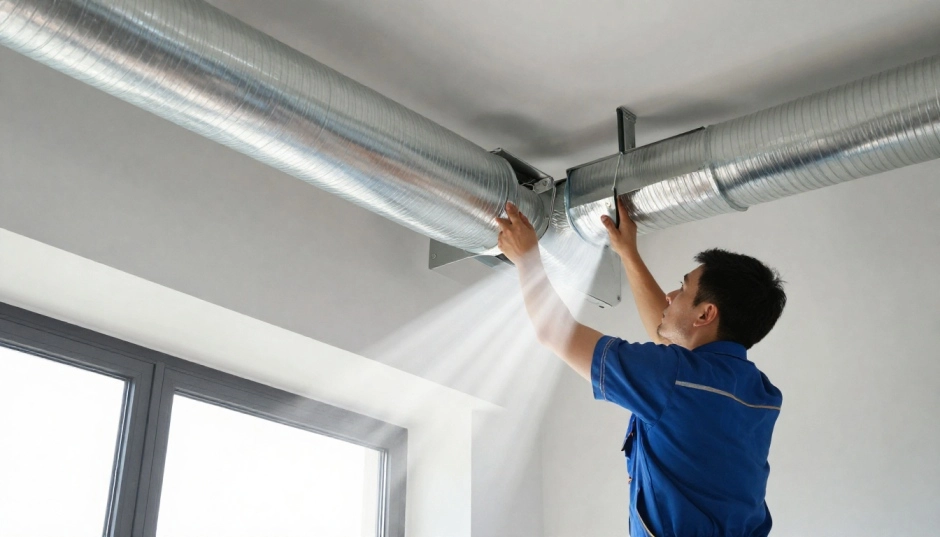
A professionally installed HVAC system improves indoor air quality by sizing the equipment correctly, sealing the ductwork so it pulls air from living space instead of a dusty attic or crawlspace, and fitting a filter rated for the pollutants the home actually deals with. On the Front Range, that means planning for wildfire smoke season, Colorado's naturally dry air, and, in many homes, a radon mitigation system that has to work alongside the HVAC rather than against it.
Why Installation Quality Matters More Than Equipment Alone
Two identical furnaces installed in the same house perform differently if one has sealed, correctly sized ductwork and the other has leaky joints and an undersized return. Duct leaks pull unconditioned air from an attic, crawlspace, or garage into the supply air, dragging in dust, insulation fibers, and outdoor pollutants along with it. A load calculation done correctly during installation, rather than a system sized by the old unit's capacity alone, is what actually determines whether the new system controls humidity and filters air the way its rating suggests it should.
Wildfire Smoke and Front Range Indoor Air
Colorado's wildfire season stretches roughly summer into early fall, and smoke drifting in from mountain and Western Slope fires pushes outdoor particulate levels well above normal for days at a time. A well-sealed HVAC system with a MERV 13 filter, the highest most residential blower motors handle without restricting airflow, captures a meaningful share of that smoke particulate as it recirculates indoor air. A system with leaky return ducts pulls in outside air around the leaks regardless of how good the filter is, which is why sealing matters as much as the filter rating itself during smoke season.
Radon Mitigation and HVAC Working Together
Colorado sits in the EPA's highest radon potential zone, and many Front Range homes run an active radon mitigation system, a fan that draws soil gas from under the foundation and vents it above the roofline. A radon system and the HVAC system both move air through the house, and an HVAC contractor who understands the radon fan's placement avoids depressurizing the home in a way that pulls more soil gas indoors instead of less. If your home already has a mitigation system, tell the HVAC installer before ductwork or return placement is finalized. Our radon testing and mitigation guide covers how the two systems interact.
Colorado's Dry Climate and Humidity Control
Front Range winters regularly run indoor relative humidity into the teens without added moisture, dry enough to crack woodwork, irritate sinuses, and make a room feel colder than the thermostat reading. A whole-home humidifier installed as part of the HVAC system, rather than a handful of portable units, holds humidity in a healthier 30% to 45% range through a Colorado winter without the daily refilling a portable unit needs.
What Professional HVAC Installation Costs in Denver
| Job | Typical Denver metro cost |
|---|---|
| Furnace and coil replacement | $5,500 to $10,000 |
| Full duct sealing (existing ductwork) | $1,500 to $4,000 |
| Whole-home humidifier add-on | $500 to $1,200 |
| High-MERV filter cabinet upgrade | $300 to $700 |
A company that does professional HVAC installation services includes a load calculation, duct inspection, and a combustion venting check as part of a full system replacement, not as separate line items.
Xcel Energy Rebates for High-Efficiency HVAC
Xcel Energy offers rebates on qualifying high-efficiency furnaces, heat pumps, and smart thermostats; the rebate table and qualifying models change over time, so check xcelenergy.com before you buy rather than assuming a specific number ahead of time.
Colorado's Carbon Monoxide Alarm Law and HVAC Work
Any home with a gas furnace, fireplace, or attached garage must have a working carbon monoxide alarm within 15 feet of every sleeping area before it sells, under Colorado law (C.R.S. 38-45-101). A full HVAC installation is a natural time to test and replace those alarms, since the installer is already checking combustion venting and flue condition on the new furnace.
Pet Dander, Dust, and Filtration
Standard fiberglass filters catch large particles but let dander and fine dust pass through; a pleated MERV 11 to 13 filter, sized correctly for the system's airflow, catches most of both without straining the blower motor. The National Institute of Environmental Health Sciences notes that pet dander stays airborne longer than many other household particles, which is part of why filtration and duct sealing matter together rather than either one alone.
DIY Duct Cleaning vs. a Professional Job
A homeowner can vacuum out visible dust at supply and return grilles, but reaching the full duct run, sealing leaky joints found along the way, and checking the blower and coil for buildup needs professional equipment. A professional duct cleaning and sealing job addresses the leaks that pull in unconditioned air in the first place, which does more for long-term air quality than a cleaning alone. Plan on a professional job every 3 to 5 years in a Front Range home, sooner after a renovation that generates drywall dust or after a wildfire smoke season with heavy indoor filtration use.
ERVs and HRVs in a Dry Colorado Climate
An energy recovery ventilator or heat recovery ventilator brings in fresh outside air while capturing most of the heat, or heat and humidity, from the air it exhausts, which matters more in a tightly sealed newer Front Range home than in an older, leakier one. In Colorado's dry climate, an ERV that also transfers moisture helps offset the winter humidity drop better than an HRV alone, while still bringing in fresh air during wildfire smoke events through its filtration rather than opening a window. Retrofitting an ERV into an existing Front Range home runs $2,500 to $5,000 installed, and it pairs naturally with a project that is already opening up ductwork, like a furnace replacement, rather than working best as a stand-alone add-on.
Sizing HVAC Ductwork at Denver's Elevation
Thinner air at 5,280 feet moves differently through ductwork than it does at sea level, and a duct system sized using sea-level airflow tables under-delivers air to rooms furthest from the furnace. A contractor doing a full installation runs a Manual D duct calculation specific to the home's elevation and layout rather than reusing generic sizing, which is part of why a full load and duct calculation matters as much as the equipment brand chosen for the job.
Do You Need a Permit for HVAC Installation in Colorado
Denver, Aurora, and Colorado Springs all require a mechanical permit for a full furnace or AC system replacement, with an inspection before the system goes into full use. Duct sealing and filter upgrades on existing equipment do not need a permit.
Where to Go Next
- Radon testing and mitigation guide for Denver homes
- AC repair guide for Colorado homes
- Why a high-efficiency HVAC system helps Colorado sellers
- Denver utility providers and costs guide
- Preparing and adding value before selling
- Search every home for sale in Colorado
Talk to the Kenna Real Estate Group
The Kenna Real Estate Group helps Colorado sellers decide whether an HVAC upgrade is worth doing before listing and helps buyers understand what indoor air quality features, like a radon system or a whole-home humidifier, mean for a home's day-to-day comfort. Call or text 303-955-4220. A live person answers. Not a robot, not a phone tree. Ready to look at what's on the market? Search every home for sale in Colorado.
Homes for sale that match this post
Guides
Questions about any home in Colorado? Call or text 303-955-4220. A live person answers.