New - 1 Hour Ago

.jpg)


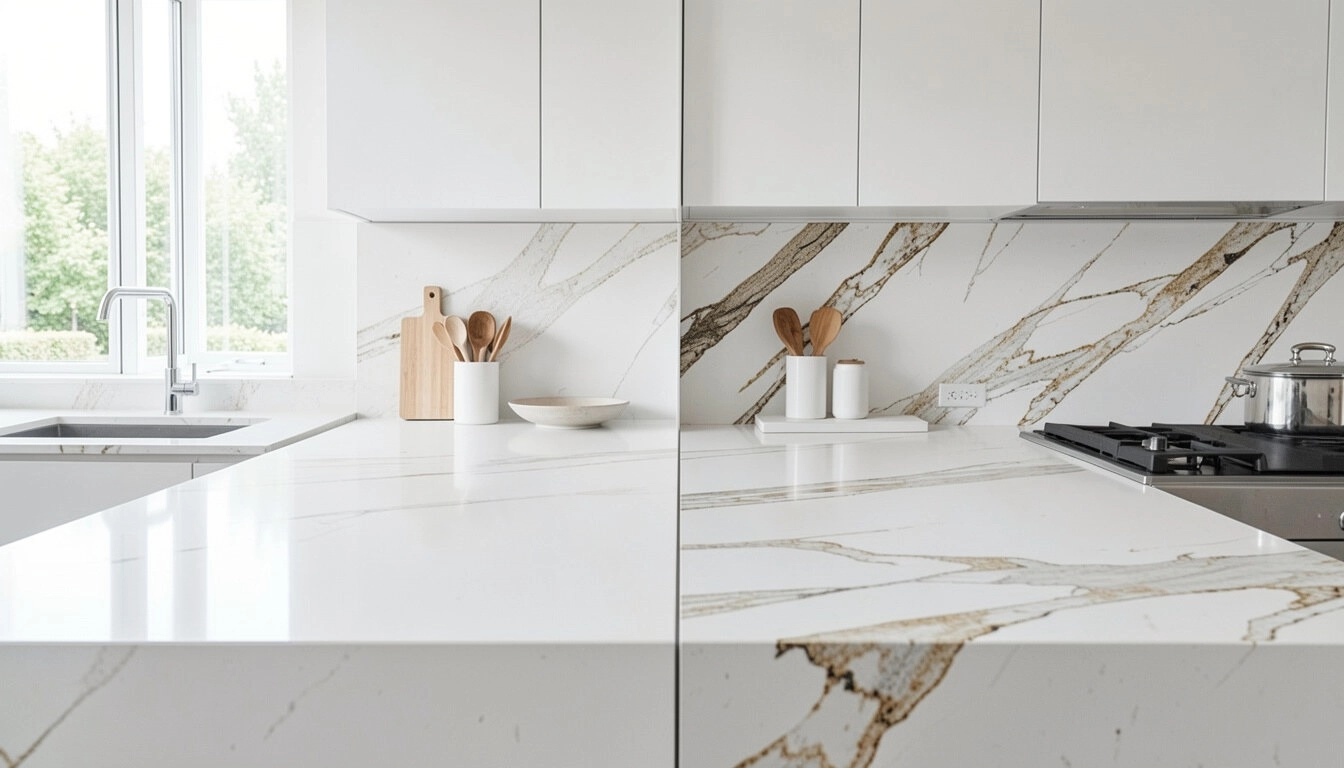
Quartz sells faster in Denver metro listings under $750,000; granite still closes the deal in the higher price bands where buyers expect a natural stone look. The material that returns the most money at your closing table depends on your price band, your kitchen's sun exposure, and how many years you plan to own the house before the next buyer walks through it.
In the $400,000 to $550,000 Front Range starter band, quartz returns more per dollar spent because buyers at that price read it as low-maintenance and modern in listing photos. Above $750,000, granite and high-end quartz perform close to evenly, and a slab with dramatic natural veining can outsell a uniform quartz pattern in a luxury listing. Recent kitchen trends research from Houzz shows quartz remains the top countertop pick nationally, with granite holding steady in higher-end remodels.
Denver metro water runs 7 to 15 grains per gallon of hardness. Sealed granite resists that hard water without staining, but an acidic spill combined with hard-water mineral buildup can dull an unsealed granite surface over a few years. Quartz is non-porous and needs no sealing, so hard water leaves no mark on it at all; that single difference is why quartz sells itself to buyers who do not want a maintenance routine.
Front Range indoor humidity drops to 10% to 25% in winter, and that dry air speeds up how fast a granite sealer breaks down compared to a humid climate. Reseal granite every 12 to 18 months on the Front Range rather than the 2- to 3-year interval sometimes quoted for wetter climates. Quartz needs no resealing at any interval, which is the maintenance argument that wins over buyers touring a starter-band kitchen.
Quartz is engineered stone bound with resin, and that resin can shift color under years of direct UV exposure on a south- or west-facing counter run near a large window. Manufacturers rate most current quartz lines for indoor UV resistance, but a counter that sits in direct sun for several hours a day at 5,280 feet still fades faster than one in a shaded kitchen. Granite, being fully natural stone, does not fade from UV at all.
| Material | Installed cost per sq ft |
|---|---|
| Granite, standard slab | $50 to $90 |
| Granite, premium/exotic slab | $90 to $150 |
| Quartz, standard | $55 to $95 |
| Quartz, premium | $95 to $140 |
A typical 40-square-foot Front Range kitchen runs $2,000 to $6,000 installed for either material at the standard tier, before edge profile and sink cutout charges. This granite countertop source quotes current slab pricing by grade if you want a specific number before you order.
Swapping countertop material in the same footprint needs no permit from Denver Community Planning and Development or the Arapahoe, Jefferson or Douglas County building departments. A plumbing permit becomes required the moment the sink location moves, since that changes the supply and drain lines. Pull that permit; an unpermitted plumbing move is the kind of item a buyer's inspector flags before the inspection objection deadline, and it has to be disclosed on the Colorado Seller's Property Disclosure form.
Quartz resin softens above roughly 300 degrees, so a hot pan set directly on the counter next to the range can leave a permanent mark or a hairline crack at a seam. Granite handles direct heat from cookware without damage, which is one reason granite still wins with buyers who cook daily. A trivet by the range solves the quartz heat issue entirely and costs under $20.
A straight or gentle eased edge reads as current and clean in a listing photo; a heavy bullnose or ogre edge reads as dated to most Front Range buyers touring homes built or remodeled after 2015. Keep the edge simple on either material if resale within the next five years is the goal.
Granite holds its finish with resealing and shows the least wear from a decade of daily hard-water splashes and hot pans. Quartz needs zero maintenance but shows heat and impact damage sooner near a busy range. For a seller planning to list within 2 to 3 years, quartz is the lower-effort, higher-return choice; for a 10-year hold, granite ages with fewer visible chips at the edges.
No. Countertop material is an interior finish and falls outside every Front Range HOA and metro district architectural review, which covers only exterior changes. Our Highlands Ranch HOA rules and covenants guide covers what those boards do review before a larger remodel.
Quartz in a white or light gray pattern is the near-default expectation for buyers shopping the Front Range starter band in 2026, largely because it appears in most new-construction and recently flipped homes they are comparing against yours. A well-maintained granite counter still competes at this price point, but it needs to be clean, fully sealed and free of visible etching to read as equal to a quartz alternative in a showing.
A repaired seam, a filled chip, or a hairline crack in either material should be noted on the Colorado Seller's Property Disclosure along with when and how it was repaired. A buyer's inspector checks countertop seams and edges closely, and an undisclosed repair discovered during the inspection creates a far higher chance of a request before the inspection objection deadline than the same repair disclosed upfront.
A stress crack found in either granite or quartz during a buyer's inspection is treated the same as any other material defect: repair it, credit it or negotiate it before the inspection objection deadline closes. Most seam or hairline cracks repair for $150 to $500 depending on material and location, which is a far smaller number than most buyers assume before getting an actual quote.
Large-format slabs with minimal seams, waterfall edges on kitchen islands, and honed rather than polished finishes are the three trends showing up most in current Denver metro listings. A honed finish hides fingerprints and light etching better than a high-polish finish, which matters most in a granite kitchen that sees daily use before a sale.
The Kenna Real Estate Group runs comps on kitchens with both materials every week and can tell you which one pays back on your street. Call or text 303-955-4220. A live person answers. Not a robot, not a phone tree. Or search every home for sale in Colorado to compare finishes across current Front Range listings.
Questions about any home in Colorado? Call or text 303-955-4220. A live person answers.
Quartz sells faster under $750,000, where buyers read it as low-maintenance. Above $750,000, granite with dramatic veining performs just as well or better.
Every 12 to 18 months. Colorado's dry indoor air breaks down sealer faster than in a humid climate.
No. Quartz is non-porous and never needs sealing, which is the main selling point buyers respond to.
A 40-square-foot kitchen runs $2,000 to $6,000 installed at the standard grade, before edge and sink cutout charges.
Yes. Quartz resin softens above roughly 300 degrees and can mark or crack at a seam. Granite handles direct heat without damage.
Only if the sink location moves, which requires a plumbing permit. Replacing the material in the same footprint needs no permit.
Direct UV on a south- or west-facing counter can fade the resin in some quartz lines over years. Granite does not fade from sun exposure.
No. Countertops are an interior finish and are never subject to HOA or metro district architectural review.