.jpg)


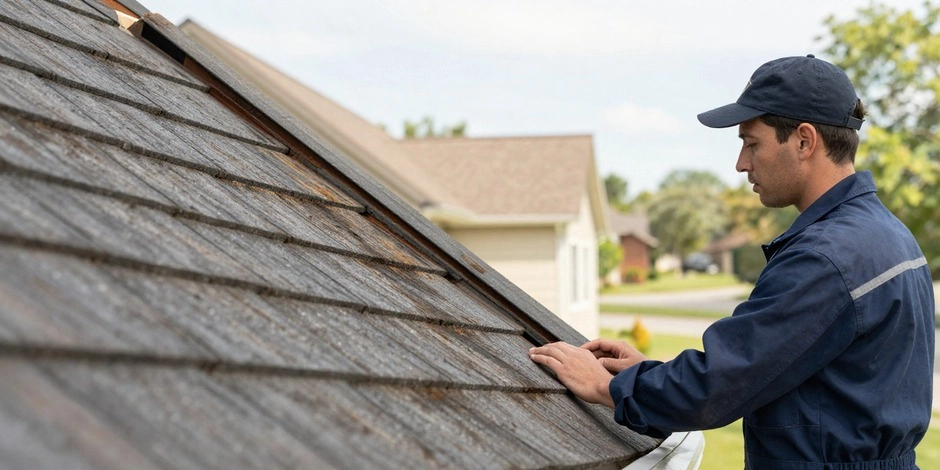
A roof leak causes mold when water reaches the underside of the roof deck or the attic insulation and stays wet long enough for spores already present in the air to take hold. Colorado's dry climate slows this process compared to humid states, but it does not prevent it, especially after a hailstorm or an ice dam.
Can a roof leak really cause mold in Colorado's dry climate?
Yes. Statewide low humidity helps surfaces dry out faster, but an active leak keeps a specific spot wet regardless of the air around it. Mold needs sustained moisture, not humidity, and a slow drip from a cracked shingle or failed flashing supplies exactly that, day after day, until the leak is fixed.
What are the first signs of attic mold from a roof leak?
- Discoloration: black, white or green patches on the underside of the roof sheathing, visible from inside the attic.
- Musty odor: a persistent, damp smell in the attic or the room below it.
- Water stains: dark rings or damp spots on ceilings and upper walls.
Mold from a roof leak rarely shows up on the exterior shingles; it grows on the underside of the deck, so an attic check is the only reliable way to catch it early.
Why does hail season create more roof-leak mold cases on the Front Range?
Hail damage between mid-April and mid-September cracks shingles and dents or loosens flashing in ways that aren't always obvious from the ground. A homeowner who skips a post-storm inspection can go months with a slow leak before noticing a stain, giving mold plenty of time to establish itself before repairs start.
What causes most Colorado roof leaks in the first place?
- Aging shingles: UV-brittled asphalt loses its water resistance over time, faster at altitude than in lower-UV climates.
- Damaged flashing: hail or wind can loosen flashing around chimneys, vents and valleys.
- Ice and water shield gaps: a valley or eave without adequate underlayment lets meltwater from an ice dam find its way in.
- Pest or debris damage: gaps created by animals or clogged gutters redirect water where it doesn't belong.
How do you stop mold growth once you find it?
- Fix the leak first. Mold keeps returning if water keeps coming in, so a roofing repair has to happen before or alongside remediation.
- Improve ventilation. Balanced attic airflow keeps humidity down and helps any residual moisture dry out fully.
- Reduce trapped moisture. A dehumidifier in an affected attic space can speed drying while repairs are scheduled.
What happens if you ignore mold from a roof leak?
Untreated mold spreads beyond the attic into living space, damaging wood framing, drywall and insulation, and creating a costlier repair the longer it sits. It can also raise health concerns for household members with respiratory sensitivities. Left unaddressed through even one more Front Range winter, the combination of moisture cycling and freeze-thaw can accelerate structural damage to the roof deck itself.
How much does mold remediation cost after a Front Range roof leak?
| Scope | Typical Denver-metro cost |
|---|---|
| Small, contained attic mold remediation | $500 - $1,500 |
| Larger remediation with insulation and decking replacement | $1,500 - $5,000 |
| Roof leak repair (source fix) | $300 - $1,200 per repair area |
Does homeowners insurance cover mold from a roof leak in Colorado?
Coverage depends on the cause and how quickly you acted. Most Colorado policies cover mold that results from a sudden, covered event like hail or a wind-driven leak, but they exclude mold tied to long-term neglect or a leak you knew about and didn't repair. Document the date of the storm or discovery and file promptly.
Do you have to disclose roof-leak mold when selling a Colorado home?
Colorado's seller's property disclosure asks directly about known water intrusion, leaks and mold. Past mold that has been professionally remediated, with documentation, is far easier to disclose and move past in negotiations than an active, undisclosed issue a buyer's inspector finds later.
How does low Front Range humidity change how mold shows up compared to wetter states?
Mold here stays localized to the specific wet area rather than spreading broadly through an entire attic, because the surrounding dry air limits its reach. That's good news for containment but bad news for early detection, since the smaller, contained patch is easier to miss during a quick visual check.
Can attic ventilation alone prevent mold after a repaired leak?
Ventilation reduces risk but doesn't replace a proper leak repair. Balanced ridge and soffit venting keeps humidity moving out of the attic, which helps any residual dampness dry fully once the water source itself has been fixed.
Should you fix the roof or remediate the mold first?
Fix the roof leak first, or at minimum simultaneously with remediation. Removing mold without stopping the water source means it returns, sometimes within weeks, and you pay for remediation twice.
How long does mold remediation take on an average Colorado attic?
A contained, professionally handled remediation takes 1 to 3 days, plus drying time. Larger jobs involving insulation and decking replacement can run a week or more depending on the extent of the damage.
Does a moldy roof deck affect a home inspection or Smart Pricing Report?
Yes. A buyer's inspector who finds attic mold will note it in the report, which commonly becomes part of the inspection objection. Address it before listing, and it becomes a non-issue rather than a negotiating point. A Smart Pricing Report factors in roof and attic condition alongside comparable Front Range sales.
When do you need a licensed mold remediation specialist instead of a DIY cleanup?
Bring in a professional for any area larger than roughly 10 square feet, for mold found in insulation or structural wood, or whenever household members have respiratory sensitivities. A roofer can fix the leak; a remediation specialist handles the mold itself, and larger jobs benefit from additional roofing services beyond a basic patch.
Does the direction a roof faces change how fast mold develops after a leak?
North-facing slopes and shaded valleys stay damp longer after a leak because they get less direct sun to help surfaces dry between rainstorms or snowmelt, which is exactly the kind of prolonged moisture mold needs. South and west-facing sections dry faster under Colorado's strong sun, so a slow leak there evaporates sooner, before mold fully establishes, though it can still cause staining and shouldn't be ignored.
Can a home inspector miss roof-leak mold during a Colorado sale?
Yes, especially if the mold is confined to a small, hard-to-access attic area or hidden behind insulation. A general home inspection is visual and non-invasive, so a seller who knows about past leak or mold history should disclose it directly rather than relying on the inspector to find every trace. Full disclosure up front avoids a reopened negotiation after closing.
Where to go next
- Search every home for sale in Colorado
- Preparing and adding value before selling
- Get a Smart Pricing Report for your home
- How to remove and prevent Colorado ice dams
- What shortens a roof's lifespan in Colorado
Talk to the Kenna Real Estate Group
The Kenna Real Estate Group helps Colorado sellers document and disclose past roof and mold repairs correctly, and helps buyers evaluate attic and roof condition before writing an offer. Call or text 303-955-4220. A live person answers. Not a robot, not a phone tree. Or search every home for sale in Colorado today.
Homes for sale that match this post
Guides
Questions about any home in Colorado? Call or text 303-955-4220. A live person answers.