New - Just Now

.jpg)


If a new Front Range home leaves soap scum in the tub, cloudy spots on glassware, or crusty white buildup around the faucets, the water is hard, and a softener pays for itself within a few years in avoided plumbing and appliance repairs. Here is how to confirm it and what to do next.
Water picks up dissolved calcium and magnesium as it moves through rock and soil before reaching a home's tap. Colorado's geology, limestone and mineral-rich aquifers along the eastern slope of the Rockies, puts more of those minerals into groundwater than in states with softer, more acidic source water. The result is water hardness that varies block by block depending on whether a home is on a municipal surface-water system or a groundwater well.
Denver Water's supply comes mostly from mountain snowmelt captured in reservoirs, which tests moderately hard rather than extremely hard. Homes on groundwater, whether a private well or a municipal system drawing from a deep aquifer, commonly test harder because the water spends more time in contact with mineral-bearing rock before it reaches the tap.
Yes. Much of Douglas County, including Highlands Ranch, Parker and Castle Rock, draws on the Denver Basin aquifer system, and homes there commonly test hard to very hard. Buyers moving from a mountain-reservoir water district into a Denver Basin groundwater district notice the jump in mineral content right away, which is exactly why testing at move-in matters even if the previous home never needed a softener.
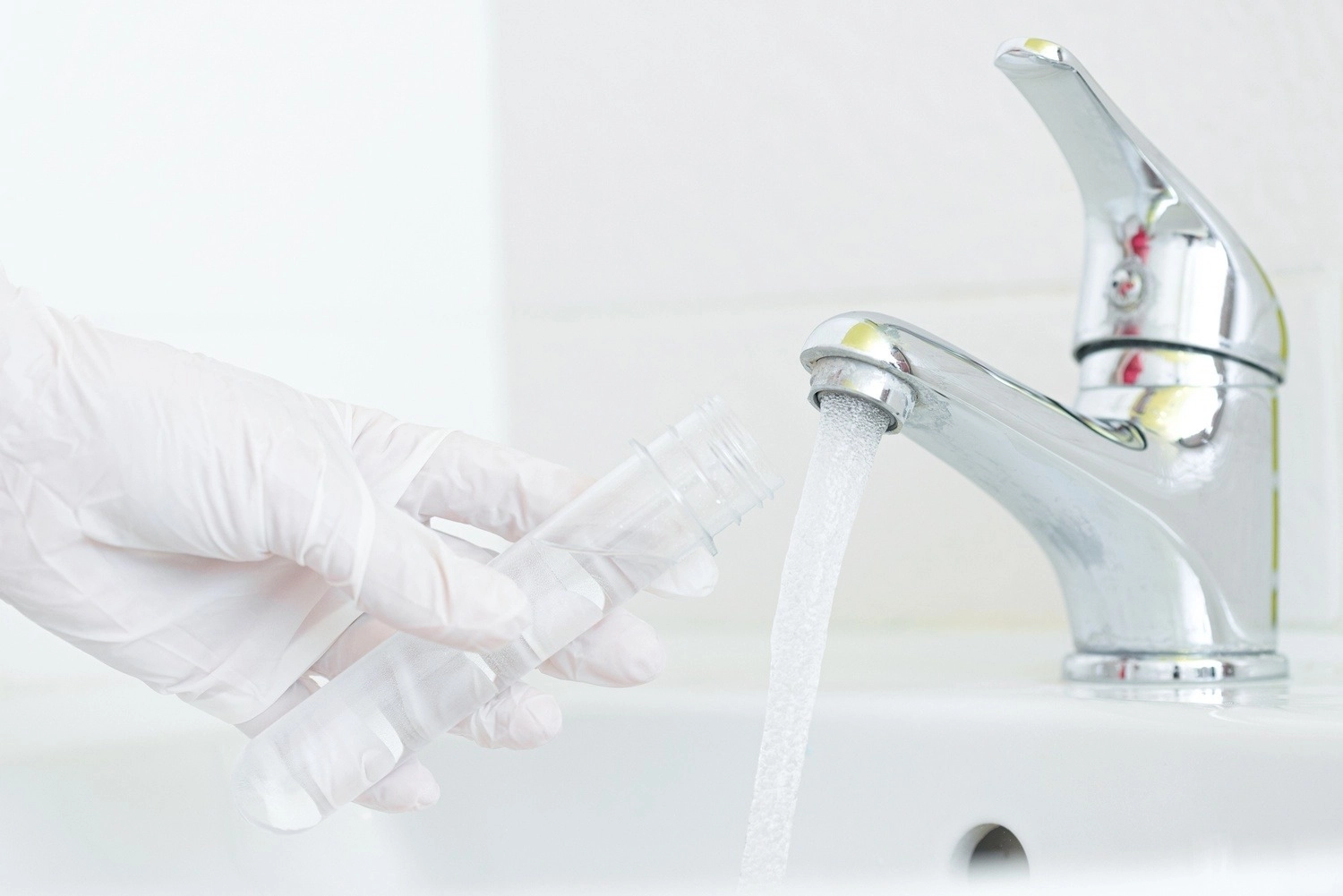
A home hardness test kit from a hardware store gives a same-day reading in grains per gallon and costs under $20. For a more complete picture, including iron, sulfur and pH, a local water treatment company or an independent lab can run a full panel for $50 to $150. Testing before you buy equipment prevents paying for a system sized for the wrong problem.
| Grains per gallon | Classification | What it means for the home |
|---|---|---|
| 0 to 3 | Soft | No softener needed |
| 3.1 to 7 | Moderately hard | Softener optional; some scale over time |
| 7.1 to 10 | Hard | Softener recommended to protect fixtures and appliances |
| Above 10 | Very hard | Softener needed to prevent scale buildup and reduced water flow |
Dissolved minerals build up inside pipes, water heater tanks and appliance lines, narrowing the interior diameter and forcing pumps and heaters to work harder for the same output. A water heater with heavy sediment buildup uses more energy to heat the same volume of water and fails years earlier than one running on softened water. Dishwashers, washing machines and low-flow fixtures all lose efficiency the same way as scale accumulates inside their internal lines.
A single-tank salt-based softener sized for a typical Front Range household runs $1,500 to $3,500 installed, and a dual-tank system built for higher household demand runs $2,500 to $5,000. Ongoing costs include salt or potassium chloride refills, $15 to $30 a bag every few months depending on household size and water hardness. Get the system sized correctly before you buy, since an undersized unit will not keep up with a larger household's demand; read more on matching softener capacity to household size and hardness level.
A whole-house softener that ties into the main water line needs a plumbing permit in Denver and most Front Range cities, similar to the exterior-equipment rules covered in the Denver HOA rules and fees guide, since it is a modification to the home's plumbing system. A licensed plumber pulling the permit also confirms the installation meets local backflow-prevention requirements, which several Colorado water providers require on any treatment system tied into the main line.
A salt-based system using ion exchange is the most effective option for the hardness levels common on the Front Range, especially in Denver Basin aquifer areas. Potassium chloride is available as a sodium-free alternative for households monitoring sodium intake. Salt-free conditioners change how minerals bond rather than removing them, and they perform less consistently at the hardness levels many Colorado groundwater homes test at.
Visible mineral stains, a corroded water heater, or reduced water pressure from scaled pipes are exactly the kind of items a buyer's inspector flags, and they can slow a sale or trigger a price negotiation. A documented, working softener and a clean recent water heater are a selling point worth mentioning in listing photos and disclosures, not just a maintenance item.
Yes, during the inspection objection period. A hardness test costs little and tells a buyer exactly what they are inheriting, whether that is a well-maintained softener already in place or a home that will need one added after closing. Ask the seller for softener maintenance records if a system is already installed.
Dry mountain air already pulls moisture from skin and hair at altitude, and hard water compounds that by leaving mineral film behind after washing that makes skin feel tighter and hair feel coarser. Softened water rinses cleaner, which reduces residue on skin without changing the dry-climate humidity problem itself.
Front Range watering restrictions already limit outdoor use to set days and hours during dry summer months, and mineral-heavy water compounds the stress on soil by leaving calcium and magnesium behind that make it harder for roots to absorb the water that is allowed. Using softened water outdoors is not recommended since the added sodium content can build up in soil over repeated use; keep softened water for household fixtures and let untreated water go to the yard.
A salt-based system needs the brine tank refilled every one to three months depending on household size and hardness level, and the resin bed needs a regeneration cycle the system runs automatically on a schedule or based on usage. Have a technician check the unit annually to confirm it is still cycling correctly and sized for current household demand.
No. An active carbon filter improves taste and odor by removing chlorine and organic material, which recent research on active carbon filters covers in detail, but it does not remove the calcium and magnesium that cause hardness. Many Front Range homes run both: a softener for hardness and a carbon filter for taste, installed in sequence.
Yes. Private wells common in unincorporated parts of Douglas, Elbert and Weld counties need a full water panel, not just a hardness test, since well water can also carry iron, sulfur, nitrates or bacteria that municipal systems already treat. Test private well water annually regardless of whether a softener is installed.
Some Front Range HOAs restrict where a softener's exterior components, like a whole-house filter housing, can be visible from the street, similar to rules covering utility equipment and landscaping. Check the community's architectural guidelines before installation if any part of the system sits outside the home.
The Kenna Real Estate Group helps Front Range buyers understand exactly which water district a home falls in, and what that means for hardness, treatment costs and maintenance, before they write an offer. Call or text 303-955-4220. A live person answers. Not a robot, not a phone tree. Ready to compare homes by water district? Search every home for sale in Colorado and ask about water source on any listing you tour. More Colorado homeowner resources are posted at KennaRealEstate.com.
Questions about any home in Colorado? Call or text 303-955-4220. A live person answers.
Look for spots on clean glassware, soap that will not lather, white crust around faucets, and stiff laundry after washing. All four together point strongly to hard water even before a test confirms the exact grains-per-gallon reading.
Denver Water's mountain-reservoir supply tests moderately hard. Homes on Denver Basin aquifer groundwater, common in Highlands Ranch, Parker and Castle Rock, commonly test hard to very hard.
A single-tank system runs $1,500 to $3,500 installed; a dual-tank system for larger households runs $2,500 to $5,000. Ongoing salt or potassium chloride refills add $15 to $30 every few months.
Yes, in Denver and most Front Range cities, because it ties into the home's main plumbing line. A licensed plumber pulls the permit and confirms backflow-prevention requirements.
It is not recommended. Softened water adds sodium that can build up in soil over repeated use. Keep softened water for household fixtures and let untreated water go to outdoor watering.
Yes, during the inspection objection period. A hardness test costs under $20 and tells you exactly what treatment, if any, the home already needs.
No. A carbon filter removes chlorine taste and odor but does not remove the calcium and magnesium that cause hardness. Many homes run a softener and a carbon filter together.
Refill the brine tank every one to three months depending on household size and hardness level, and have a technician check the system annually to confirm it is cycling correctly.


