
.jpg)


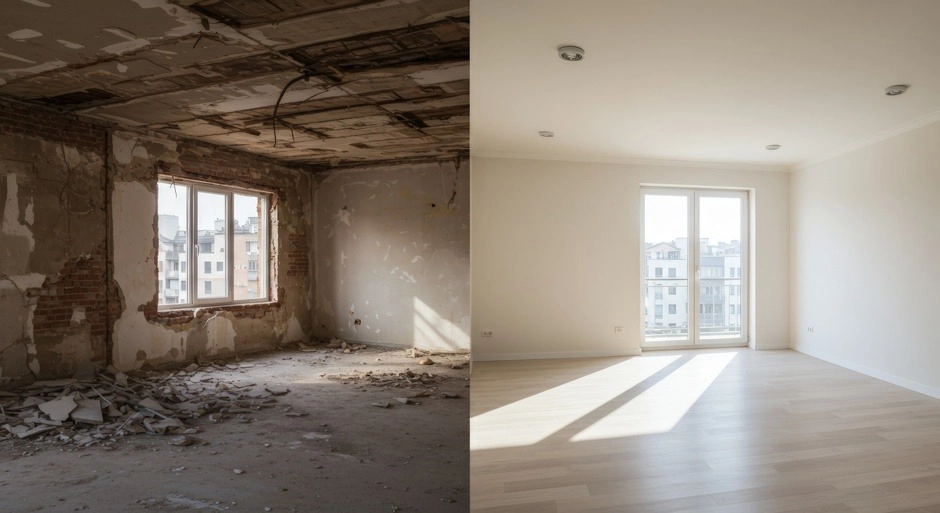
Renovating and building new both get a Front Range homeowner to a better house, but the two paths carry different costs, timelines and risk once Colorado's permitting, soil and climate rules enter the picture. The right answer comes down mostly to how much of the existing structure is sound, how attached you are to the lot and neighborhood, and how long you plan to stay.
Front Range renovation costs run $150 to $300 per square foot depending on scope, while new construction on an existing lot runs $250 to $450 per square foot once site work, permits and a knock-down are included. Renovation starts with a smaller number in most cases, but hidden problems, old wiring, undersized plumbing, or a foundation that needs engineering work on expansive clay, can push the final bill close to what a rebuild would have cost. New construction has a clearer number up front because a fixed contract locks in most variables before the first permit is pulled.
Colorado has no statewide general contractor license, but Denver and most Front Range cities require a licensed contractor for the trades involved, electrical, plumbing and mechanical, on either a renovation or a new build. A full knock-down rebuild triggers a new building permit, new utility taps in some cases, and a fresh review against current zoning and setback rules, even if the old house sat on the same footprint for decades. A renovation that stays within the existing walls needs a simpler permit in most cases, unless it touches the foundation or adds square footage.
Much of the Denver metro sits on expansive bentonite clay, and any project that disturbs the foundation, renovation or rebuild, needs a soils report and, in most cases, an engineered foundation. A rebuild lets you install a modern, properly engineered foundation from the start; a renovation that leaves an older, undersized foundation in place carries the risk of the same heave and cracking issues resurfacing a few years later. Homes on lots with known soil movement are better candidates for a rebuild than a partial fix more frequently than not.
A phased renovation lets a family stay in the home while work happens in sections, though it means weeks or months of noise, dust and closed-off rooms. A new build on the Front Range runs 8 to 14 months from permit to move-in ready, plus 1 to 3 months for a knock-down and site prep, but the disruption happens somewhere else while you rent or stay put, not in the middle of your daily routine. Hail season, which runs spring through September, can add delays to roofing and exterior work on either path.
| Renovation | New construction | |
|---|---|---|
| Typical cost per sq ft | $150 - $300 | $250 - $450 |
| Budget predictability | Lower, hidden issues common | Higher, fixed contract |
| Timeline | Weeks to several months, staged | 8 - 14 months, plus demo |
| Where you live during work | In the home, in most cases | Off-site until complete |
Room additions and Denver's 2023 citywide accessory dwelling unit rule change, which allows an ADU on most single-unit residential lots without a zoning variance, both give homeowners more space without a full knock-down. An addition or ADU keeps the original structure, foundation and character intact while solving a specific space problem, bedrooms, a home office, a rental unit, and it goes through a lighter review than a complete rebuild in most Front Range jurisdictions.
Colorado's mechanic's lien law lets an unpaid contractor, subcontractor or supplier place a lien on the property even after the homeowner paid the general contractor in full, on a renovation or a new build. Paying through a title company escrow and collecting lien waivers at each draw protects both paths equally. A homeowner rebuilding on a lot with a history of unpermitted additions or repairs should also confirm those older permits are closed out; an open or missing permit on the original structure can complicate the demolition permit for a knock-down.
A move-in-ready new build appeals to buyers who want modern systems and fewer near-term repairs, and it appraises at or above cost in Front Range markets with strong new-construction demand. A well-renovated older home in an established Denver neighborhood, Baker, Berkeley, Platt Park, competes on location and character, and it outperforms a rebuild on price per square foot in neighborhoods with limited new-construction inventory. Aurora, Lakewood and Colorado Springs see a smaller premium gap between the two, on the whole, since both options are common in those markets.
Denver's amended 2022 energy code requires new homes and many additions to be electric-ready, with circuits reserved for a future heat pump and EV charger. A new build designs orientation, insulation and window placement around energy performance from the start, while a renovation gets there by adding insulation, replacing windows and upgrading mechanical systems, which lowers bills without matching a new build's baseline efficiency. Either path can pursue Xcel Energy rebates on qualifying insulation, heat pump and window upgrades; lower bills over time offset part of the upfront investment either way.
A full rebuild starts every system fresh, roof, plumbing, electrical, HVAC, which lowers near-term maintenance costs for the first decade. A renovation's long-term performance depends on how well new work integrates with what stayed; a new kitchen wired into old panel capacity, or new windows in a shell with an aging roof, still carries the older components' remaining lifespan. Homeowners planning to stay 10 or more years get more value from addressing the whole system at once, whether that means a rebuild or a renovation that includes the mechanical and structural basics, not just the finishes.
Most Front Range HOAs and metro districts run a separate architectural review committee process for exterior changes, and a full rebuild goes through a far more detailed review than a kitchen or bathroom renovation, since the entire exterior design, roofline and setbacks are up for approval. A renovation that keeps the existing footprint and roofline clears review faster in most cases than a design that changes the home's exterior appearance or square footage. Submit renderings and material samples to the HOA at the same time as the city or county building permit application to run both reviews in parallel instead of back to back.
A seller weighing a pre-listing renovation against selling as-is has a narrower calculation than a homeowner planning to stay: only projects that return most or all of their cost at appraisal make sense in the months before a listing goes live. Kitchens, bathrooms and exterior curb-appeal projects pay back more of their cost at resale than a full rebuild timed right before a sale, on the whole, since a buyer paying for new construction wants to choose the finishes themselves in most cases.
The Kenna Real Estate Group, part of Kenna Real Estate Group's Front Range team, helps homeowners weigh a renovation against buying new construction or a rebuild-ready lot, with real numbers from current listings in your neighborhood. Call or text 303-955-4220. A live person answers. Not a robot, not a phone tree. Curious what your options look like right now? Search every home for sale in Colorado.
Questions about any home in Colorado? Call or text 303-955-4220. A live person answers.
Renovation starts cheaper per square foot in most cases, $150 to $300 versus $250 to $450 for new construction, but hidden issues in an older home can close the gap once work begins.
Roughly 8 to 14 months from permit to move-in ready, plus 1 to 3 months for demolition and site prep on a knock-down rebuild.
On a lot with known foundation movement, a rebuild allows a properly engineered modern foundation, while a renovation that keeps an older foundation risks the same heave and cracking resurfacing later.
A room addition or an accessory dwelling unit. Denver's 2023 citywide ADU rule allows one on most single-unit lots without a zoning variance, and both options go through a lighter review than a full rebuild.
Yes, for electrical, plumbing and mechanical trades on either a renovation or a new build. Colorado has no statewide license, so confirm the contractor is licensed in the specific city where the home sits.
It depends on the neighborhood. Established areas with limited new-construction inventory reward a well-renovated home on price per square foot more frequently, while markets with strong new-home demand favor new builds.
New homes and many additions must be electric-ready under Denver's 2022 code, with wiring set aside for a future heat pump and EV charger. A renovation reaches better efficiency through insulation and equipment upgrades but starts from an older baseline.