New - 4 Days Ago
$2,300,000
Active
3
Beds
3
Baths
3471
Sqft
2.08
Acres
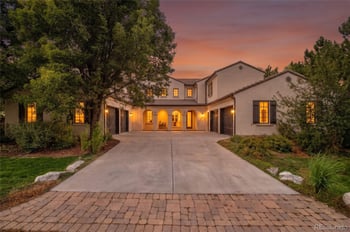
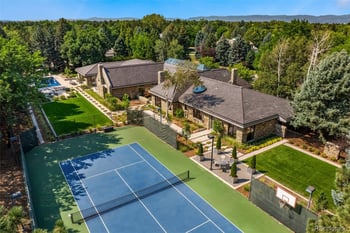
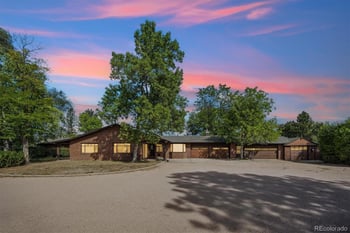
3500 S Gilpin St, Cherry Hills Village, CO 80113
MLS#: REC2489590
.jpg)


In 2026 it is cheaper to buy an existing home than to build one almost everywhere on the Front Range. A finished custom home in the Denver metro lands at $450 to $800 per square foot once land, tap fees, soft costs and construction are added, while resale homes in the same counties sell for $220 to $400 per square foot. Building wins in three cases: you already own the land, you want a layout resale cannot supply (a main-floor primary bedroom with an attached suite for a parent, a shop, an ADU), or you are shopping in Boulder, Cherry Hills Village or the foothills where resale already sells above $500 per square foot.
This guide puts the 2026 numbers in one table: construction cost per square foot by build type, land, tap fees and soft costs against resale price per square foot by area, then shows how a construction loan works and when each side wins. The decision between a production builder's new home and a resale is covered separately in the new construction vs resale in Colorado guide.
Construction cost alone, before land and fees. Ranges cover the Denver metro, Northern Colorado and Colorado Springs; the foothills and mountain towns run 20% to 40% higher for access, snow loads and wildfire-rated materials.
| Build type | Construction cost per sq ft | 2,500 sq ft example | What you get |
|---|---|---|---|
| Production builder (lot included in price) | $220 to $320 | $550,000 to $800,000 | Fixed plans, design center finishes, 6 to 10 months |
| Semi-custom (builder's plans, your changes) | $275 to $425 | $690,000 to $1,060,000 plus lot | Modified plans, upgraded finishes, 10 to 14 months |
| Custom (architect and general contractor) | $400 to $700 | $1,000,000 to $1,750,000 plus lot | Your plans, your specs, 14 to 24 months |
| Foothills and mountain custom | $500 to $900 | $1,250,000 to $2,250,000 plus lot | Steep sites, well and septic, wildfire codes |
Three lines sit between the construction quote and the finished home:
| Line item | Front Range range | Notes |
|---|---|---|
| Infill lot, Denver, Littleton, Arvada, Lakewood | $250,000 to $700,000 | Includes a teardown; demolition adds $15,000 to $30,000 |
| Platted lot in Parker, Castle Rock, Elizabeth, Erie, Berthoud | $150,000 to $400,000 | Utilities to the lot line; most sit in a metro district |
| 1 to 5 acres in Elbert, Weld, Larimer or El Paso County | $150,000 to $500,000 | Well and septic instead of taps |
| Water and sewer tap fees, Denver Water and Metro Wastewater | $10,000 to $20,000 | Lowest in the region |
| Water and sewer tap fees, Douglas County and district towns | $30,000 to $60,000 | Parker, Castle Rock and similar districts buy renewable water with these fees |
| Well and septic on acreage | $35,000 to $70,000 | Well permit through the Colorado Division of Water Resources; septic through the county |
| Soils report and foundation engineering | $3,000 to $8,000 | Required; expansive bentonite clay decides the foundation type |
| Architecture, structural engineering, survey | 6% to 12% of construction | Custom builds; semi-custom runs lower |
| Building permit, plan review and construction use tax | 1% to 3% of construction | Most Colorado cities collect use tax on materials at permit |
| Contingency | 10% of construction | Change orders, soils surprises, material swings |
Tap fees are the Colorado-specific line. In Denver, water and sewer taps on a single-family lot cost a fraction of what a Douglas County water district charges, because the districts south of Denver are still buying and piping renewable water to replace the Denver Basin aquifer. A $200,000 lot in Castle Rock with $50,000 in taps is a $250,000 lot. On acreage, a well permit from the Colorado Division of Water Resources and a county septic permit replace the taps, and the driller's depth sets the price.
Rounded ranges for existing detached homes. Pull the current month's figures for any city on the Colorado market reports page.
| Area | Resale price per sq ft | Build wins? |
|---|---|---|
| Denver, central neighborhoods | $320 to $450 | Rarely; infill lots and demolition eat the gap |
| Aurora, Thornton, Commerce City, Brighton | $210 to $280 | No |
| Littleton, Centennial, Lakewood, Arvada | $270 to $350 | No |
| Highlands Ranch, Lone Tree, Parker, Castle Rock | $260 to $340 | No, except for a specific layout |
| Boulder and Cherry Hills Village | $500 to $800 | Yes, when a lot is available |
| Foothills: Evergreen, Conifer, Golden | $350 to $500 | Sometimes, on owned land |
| Fort Collins, Loveland, Windsor | $250 to $330 | No |
| Colorado Springs | $200 to $270 | No |
| Elbert County and eastern Weld acreage | $220 to $320 | Yes on owned land with a shop or barn |
A 2,500 sq ft custom home on a $250,000 platted lot in Castle Rock in 2026: construction at $450 per square foot is $1,125,000; taps $45,000; soils, design and engineering $110,000; permit and use tax $25,000; contingency $112,000. Total: about $1,667,000, or $667 per finished square foot. The same 2,500 sq ft resale in Castle Rock sells for $650,000 to $850,000. Building costs roughly double, and that is before 14 to 20 months of construction interest and rent.
Now a 2,500 sq ft home in Boulder. A buildable lot runs $700,000 to $1,200,000, construction at $550 per square foot is $1,375,000, and fees, design and contingency add $250,000. Total: $2,300,000 to $2,800,000 against resales at $1,250,000 to $2,000,000 for 2,500 square feet. Still more, but the gap narrows enough that buyers who want a new home in Boulder build, because almost none exist to buy.
A 1970s to 1990s Front Range resale carries deferred work that closes part of the gap. Budget it before deciding building is too expensive:
A resale needing everything on this list costs $90,000 to $240,000 to bring to new-home condition, still far below the build premium in most Front Range cities. For a home with fire, water or structural damage, a construction and restoration contractor such as Golden Coast Construction and Restoration is the kind of firm that prices the repair before you commit; a design-build team such as Origami Design Build shows what a single contract for design, permits and construction looks like. Both are out-of-state examples of the model; the Kenna Real Estate Group works with Colorado builders and contractors on every project here.
A construction-to-permanent loan closes once, funds the build in draws as work passes inspection, charges interest only on the amount drawn during construction, and converts to a standard mortgage at completion. Lenders appraise the finished home from the plans and specs, require a fixed-price contract with a licensed builder, and ask for 10% to 20% down on the total project cost. Land you already own counts toward that down payment at its appraised value, which is why building on owned land is the one case where the cash requirement drops. Rate locks on construction loans run 9 to 12 months, so a build that runs long costs an extension.
Mike Oswald, VP of Mortgage Lending at Rate, NMLS 261003, Equal Housing Lender, writes construction-to-permanent loans on the Front Range and prices them against a purchase loan on a comparable resale so you see both payments side by side. You are free to use any lender. The Colorado financing page covers the draw schedule and the paperwork. Before closing on any lot, the Colorado ILC vs land survey guide explains which survey a lender and a builder each need.
A production builder's quick move-in home sits between the two: new, warrantied, 30 to 60 days to close, priced $220 to $320 per square foot with the lot, and listed by city on the new construction homes in Colorado by area page. For most Front Range buyers who want new, that is the answer.
The Kenna Real Estate Group at Keller Williams DTC prices the build against the resale for the specific city you want, finds lots and teardowns that never reach the MLS, and works with Colorado builders, surveyors and soils engineers on every build from Castle Rock to Berthoud. Call or text 303-955-4220. A live person answers. Not a robot, not a phone tree. Or start now and search every home for sale in Colorado.
Questions about any home in Colorado? Call or text 303-955-4220. A live person answers.
$400 to $700 per square foot for construction alone in 2026, before the lot, tap fees, design and permits. Finished cost with land lands at $450 to $800 per square foot.
Districts in Parker, Castle Rock and the surrounding towns charge $30,000 to $60,000 for water and sewer taps because they are buying and piping renewable water to replace the Denver Basin aquifer. Denver Water taps run $10,000 to $20,000.
$250,000 to $700,000 for an infill lot in Denver, Littleton, Arvada or Lakewood, and $150,000 to $400,000 for a platted lot in Parker, Castle Rock, Elizabeth, Erie or Berthoud.
Yes. Land you own counts at appraised value toward the 10% to 20% down a construction-to-permanent loan requires on the total project cost.
14 to 24 months from design through certificate of occupancy, including 3 to 6 months of design, engineering and permitting before ground breaks.
Boulder, Cherry Hills Village and parts of central Denver where resale sells above $500 per square foot, and on land you already own in Elbert, Weld, Larimer or El Paso County.
$3,000 to $8,000 with foundation engineering. Expansive bentonite clay across the Front Range decides whether the home gets a post-tension slab, caissons or an over-excavated pad.
Yes. A production home with the lot included runs $220 to $320 per square foot and closes in 30 to 60 days as a quick move-in, against $450 to $800 finished for custom.