New - 1 Hour Ago

.jpg)


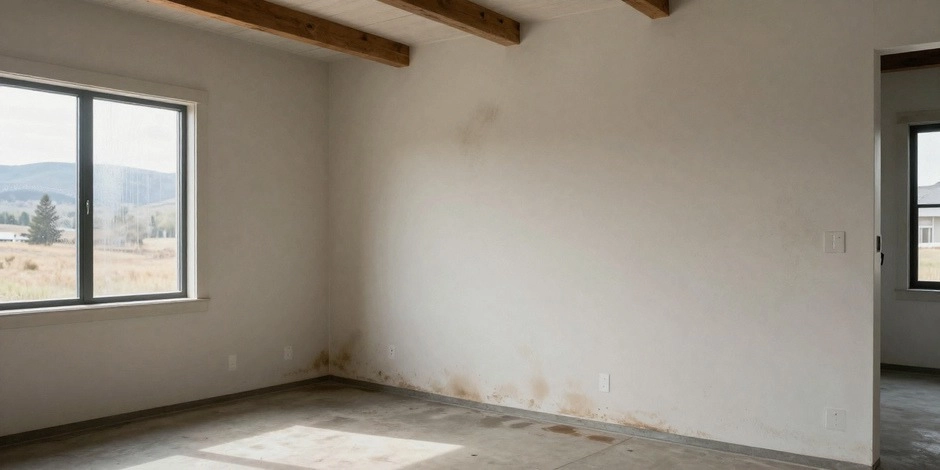
Colorado's dry climate hides a moisture problem longer than a humid state would, because there is no sticky, obvious dampness to notice right away; the first sign is a musty smell or a stain that has already been there for weeks. Check gutters, grading, the water heater area and any HVAC condensate line twice a year, and act the day a musty smell shows up, not after.
Front Range humidity sits low most of the year, so a home rarely feels damp the way a coastal or Southeastern home does even when water is actively getting in somewhere. That dryness means a slow leak behind a wall or under a floor can run for months without the telltale clammy feeling that would prompt a faster fix in a wetter climate. By the time a musty odor becomes noticeable, mold has had weeks or months to establish itself in the affected material in most cases.
Excess indoor moisture creates the exact conditions mold and mildew need to grow, and once airborne, mold spores trigger allergy and respiratory symptoms for people living in the house. Mold spores are present in nearly all indoor and outdoor air at some level; the difference between background levels and a problem is active moisture feeding a colony somewhere in the building. Beyond air quality, constant moisture degrades building materials over time, causing wood to rot, paint to peel, and drywall to crumble, which affects a home's structural integrity and its resale condition together.
Clogged gutters send water straight down a home's foundation walls instead of away from them, and on the Front Range that water refreezes overnight during the shoulder seasons, expanding cracks in the foundation each cycle. Clean gutters twice a year, in spring after cottonwood seed and pollen drop and in fall after leaves come down, and check that downspouts extend at least four to six feet from the foundation. Grading that slopes toward the house rather than away from it is one of the most common, and most fixable, causes of a wet Front Range basement.
Bentonite and other expansive clay soils under most of the Front Range swell when they absorb spring snowmelt and heavy rain, which can push water toward a foundation wall through the same soil movement that cracks pipes. A foundation crack that lets water in during a wet spring closes up again as the soil dries out in summer in some homes, which is why a moisture problem tied to soil movement looks intermittent rather than constant, and gets dismissed until it becomes a bigger repair.
A central air conditioner produces condensate as it runs, and that water is supposed to drain through a dedicated line to the outside or to a floor drain. A clogged or disconnected condensate line backs up into the furnace cabinet or drips onto a basement ceiling for weeks before anyone notices, especially in a finished basement where the drip lands on top of a ceiling tile instead of the floor. Any qualified HVAC service team, such as Westland HVAC, should check the condensate line and pan during a routine seasonal visit, and you are free to use any provider you trust for that inspection. Pair that check with the annual filter and coil service already recommended for a Front Range system, so the visit covers both cooling performance and this easy-to-miss moisture path in one appointment.
A pipe that freezes and cracks in an exterior wall or crawl space does not always leak right away; the split stays sealed by ice in most cases until a thaw sends water through the crack and into wall cavities or a subfloor. The same is true of an irrigation system that never got a fall blowout: a cracked fitting under a lawn does not show up until the system runs again in spring, by which point water has been finding its way into the soil around the foundation for weeks. Both are moisture problems that start as a plumbing or seasonal maintenance issue and end as a mold and structural one if they go unnoticed.
Keep indoor humidity in the 30% to 50% range during heating season; below that range, dry air cracks wood trim and irritates sinuses, and above it, condensation forms on windows and interior surfaces exactly where mold gets its start. A whole-house humidifier calibrated to outdoor temperature, rather than a single fixed setting, keeps that balance through Colorado's wide winter temperature swings. The Kenna Real Estate Group's downsizing guide for the Denver metro covers single-level layouts where moisture and grading issues are easier to spot and fix than in a home with multiple additions and rooflines.
A standard Colorado homeowners policy covers sudden water damage from a burst pipe or a covered peril, but most policies exclude mold that results from long-term neglect, a maintenance issue the homeowner should have caught, or gradual seepage. Document a leak and the repair the moment it is found; a fast, documented response supports a claim, while a moisture problem left to develop for months works against one.
A buyer's inspector treats any moisture sign, a musty smell, a stain, warped flooring, as a reason to dig deeper, and an unresolved finding becomes a repair-credit negotiation during the inspection objection window. Sellers who address the source, document the repair, and confirm the area has dried out completely before listing avoid that conversation happening at the worst possible time in a transaction.
Ask for the printable moisture and leak checklist in the form below and we email it the same day, so you know exactly where to look each spring and fall before a small stain becomes a structural repair.
The Kenna Real Estate Group helps Front Range buyers read a moisture finding correctly during inspection and helps sellers document a repair before it becomes a listing problem. Call or text 303-955-4220. A live person answers. Not a robot, not a phone tree. Ready to look at homes now? Search every home for sale in Colorado.
Questions about any home in Colorado? Call or text 303-955-4220. A live person answers.
Dry Front Range air removes the sticky, obvious dampness a humid climate would produce, so a slow leak can run for months before a musty smell or a visible stain finally gives it away.
A musty odor in a basement, bathroom or utility room. It shows up before visible mold growth does and is one of the more reliable early warnings in a dry climate.
Yes. Water that overflows a clogged gutter runs down the foundation wall instead of away from it, then refreezes overnight during shoulder-season freeze-thaw cycles, widening foundation cracks each time.
It does. Bentonite and other expansive clays swell with spring snowmelt and heavy rain, pushing water toward foundation walls, and the resulting leaks look intermittent in many homes since the soil dries out and the crack closes again in summer.
30% to 50%. Below that range, dry air cracks trim and irritates sinuses; above it, window condensation forms in exactly the conditions mold needs to start.
Most policies cover mold that results from a sudden covered event like a burst pipe, but exclude mold traced to long-term neglect or a maintenance issue the homeowner should have caught, so document and address leaks quickly.
A clogged or disconnected condensate line backs water up into the furnace cabinet or drips onto a basement ceiling for weeks, especially in a finished basement, before the moisture becomes visible from below.
Yes. A buyer's inspector treats any moisture sign as a reason to dig deeper, and an unresolved finding turns into a repair-credit negotiation during the inspection objection window unless it is addressed and documented before listing.