.jpg)


Compare three numbers before deciding: what a remodel costs to fix your current layout, what an addition or ADU costs to add square footage on your existing lot, and what it actually costs to sell your house and buy a bigger one on the Front Range right now. The math, not the emotional pull of a fresh start, should decide.
Remodel when your lot and floor plan already support the life you want and the problem is dated finishes or a poor room arrangement. Add on when your lot has room to build out or up and you like your street, your commute, and where the house sits. Move when the cost of adding space on your current lot approaches or exceeds the cost difference between your house and a larger one already built in a neighborhood you would choose again.
A single-story addition on the Front Range runs $250 to $450 per square foot including foundation, framing, roofing, and finishes, so a 400 sq ft addition lands between $100,000 and $180,000. A second-story addition costs more per square foot ($300 to $500) because it requires reinforcing the existing structure to carry the new load, plus temporary roof removal and weatherproofing during construction.
| Option | Denver metro cost range | Timeline |
|---|---|---|
| Interior remodel (no added square footage) | $40,000 - $150,000 | 2 - 6 months |
| Single-story addition (400 sq ft) | $100,000 - $180,000 | 4 - 8 months |
| Detached ADU (600 sq ft) | $150,000 - $280,000 | 5 - 9 months |
| Sell and buy a larger home (net cost, 3,500 sq ft home vs. 2,200 sq ft) | Varies by neighborhood; run a Smart Pricing Report to compare | 2 - 4 months |
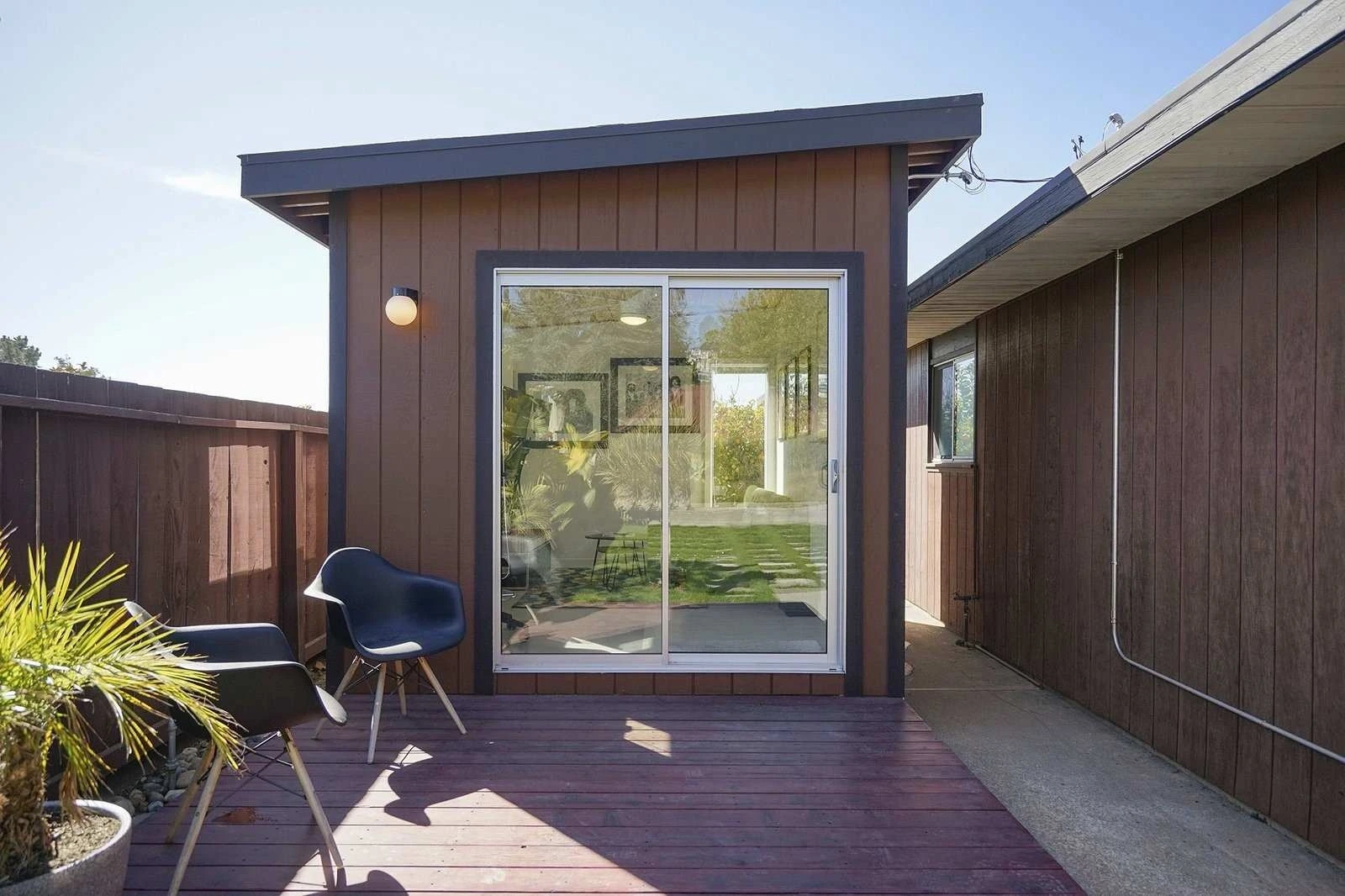
A detached accessory dwelling unit runs $150,000 to $280,000 for 600 sq ft of fully finished living space, which is a higher cost per square foot than an attached addition because it needs its own foundation, utility connections, and a separate entrance and parking plan in most cases. An ADU makes more sense than an addition when you want separated living space (an aging parent, adult child, or rental income) rather than more square footage tied directly to the main house.
Selling costs run roughly 7% to 9% of your sale price (agent commission, closing costs, and prep work), and buying costs add 2% to 4% more in closing costs on the new purchase. On a $600,000 sale and $800,000 purchase, transaction costs alone run $60,000 to $85,000 before accounting for the price difference between the two homes. Compare that total against the addition or remodel cost, not just the sale price difference.
Yes to both in nearly every Front Range city and HOA. Denver, Aurora, Lakewood, Littleton, Colorado Springs, and Fort Collins each require a building permit for an addition, and most HOAs require architectural review of the exterior footprint, height, and materials before the city permit is even submitted. Submit HOA plans first, since a denial after permits are filed forces a redesign and a second round of city review.
An addition's new foundation has to tie into the existing foundation without inheriting decades of settlement from Front Range bentonite clay movement. A geotechnical soil report ($3,000 to $6,000) tells your structural engineer whether the addition needs a matched foundation depth, an isolation joint, or a different foundation system than the original house to avoid differential settlement between old and new structure.
Plan for 4 to 8 months for a single-story addition and 6 to 10 months for a second story, including 4 to 8 weeks of permitting and HOA review before construction starts. Weather affects the exterior phases; foundation and framing scheduled to avoid the heart of Colorado's spring-through-September hail season keeps roofing and siding crews more available and reduces storm-delay risk.
Depends on the neighborhood ceiling. An addition that brings your house in line with the largest homes already selling on your block returns 60% to 80% of its cost at resale in most cases. An addition that pushes your house well above what anything else on the street has ever sold for runs into an appraisal ceiling, where the bank's appraisal caps at what comparable homes support, regardless of what you spent. Check the Smart Pricing Report for your street before committing to addition size.
Denver allows accessory dwelling units citywide under its updated zoning code, with size, height, and setback limits that vary by zone district and lot size. Confirm your specific lot's zone district and any historic district overlay before finalizing ADU plans, since setback and height limits differ block to block in older Denver neighborhoods. See the Denver ADU, Zoning, and Historic District Guide for the current rules.
A basement finish runs $30 to $75 per square foot, far less than an addition, and adds usable square footage without touching the foundation footprint or roofline. It works when your basement has adequate ceiling height and natural light (egress windows) and does not work as a substitute for main-floor space needs like an accessible primary bedroom or an open kitchen expansion.
A home equity line of credit, a cash-out refinance, or a renovation loan (which finances the addition against the home's after-completion value rather than its current value) fund most additions. Moving finances through a traditional purchase mortgage on the new home, sometimes contingent on selling the current one. Compare the interest rate and monthly payment impact of each path, not just the total project cost. Ask about financing options at Colorado Home Financing or Kenna Credit Care, and note that you are free to use any lender for either path.
A metro district can add its own review layer for anything affecting drainage, setbacks, or shared infrastructure, on top of the city permit and HOA process. Check with your metro district early in the planning phase, since their review timeline runs separately from the city's and can add weeks if not started in parallel.
Moving wins when the addition cost approaches 70% or more of the price difference between your current home and a larger one already built in a neighborhood you would choose, when your lot's zoning or setbacks don't support the addition you actually want, or when you also want a different group of neighborhoods, a different commute, or a different lot entirely rather than just more square footage in the same spot.
The Kenna Real Estate Group runs the remodel-versus-addition-versus-move numbers against real comparable sales in your specific neighborhood, so the decision is based on what buyers actually pay, not a guess. Call or text 303-955-4220. A live person answers. Not a robot, not a phone tree. Or search every home for sale in Colorado to see what a move would actually cost you today.
Infinity Builders' Infinity Builders addition process and DFD House Plans' library of home addition plans are both useful starting points for picturing addition layouts, even though the pricing and permitting rules on those pages reflect a different market than Colorado.
Questions about any home in Colorado? Call or text 303-955-4220. A live person answers.
Remodeling costs the least ($40,000 to $150,000) but doesn't add space. An addition runs $100,000 to $180,000 for 400 sq ft. Moving costs 9% to 13% of your combined sale and purchase price in transaction costs alone. Run all three numbers before deciding.
A single-story addition runs $250 to $450 per square foot; a second-story addition runs $300 to $500 per square foot because it requires reinforcing the existing structure.
An ADU costs more per square foot ($150,000 to $280,000 for 600 sq ft) but delivers separated living space for a parent, adult child, or rental income, which an attached addition cannot.
Yes, citywide under Denver's updated zoning code, with size, height, and setback rules that vary by zone district and lot, so confirm your specific lot before finalizing plans.
Most Front Range HOAs require architectural review of an addition's footprint, height, and exterior materials, and it should be submitted before the city building permit to avoid a costly redesign.
A geotechnical soil report determines whether the addition's new foundation needs a matched depth or isolation joint to avoid differential settlement against the existing house, which sits on decades of Front Range clay movement.
When the addition cost approaches 70% or more of the price gap between your current home and a larger one already built where you would choose to live, or when your lot's zoning does not support the addition you want.
