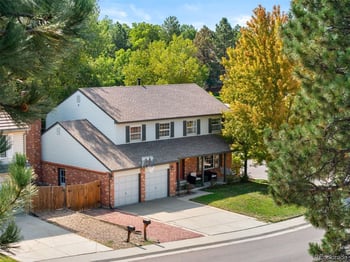
New - 1 Day Ago
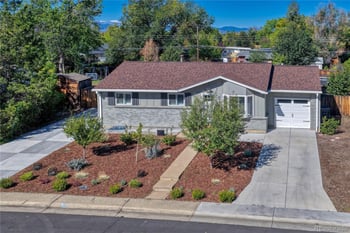
$698,000
Active
5
Beds
3
Baths
2064
Sqft
0.27
Acres
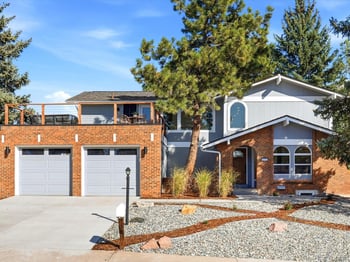
6945 S Clermont Dr, Centennial, CO 80122
MLS#: REC9041628
.jpg)


As of May 2026, Colorado’s homeowners-insurance pressure is no longer a background cost for Centennial homebuyers. The practical issue is not just whether the house fits the loan amount, but whether the roof, deductible, escrow, and carrier quote still fit the monthly budget.
The headline is Colorado insurance inflation. The local question is whether a Centennial home still works after the insurance quote lands in the monthly payment. A lender preapproval can look fine until the escrow estimate absorbs a higher premium, a separate wind/hail deductible, or a roof issue the carrier does not like.
That is the mechanism: not abstract “market impact,” but cash flow. Centennial homebuyers compare older resales, newer subdivisions, E-470 access, Cherry Creek State Park proximity, and Southlands convenience. Now they also have to compare roof risk. The roof is no longer just an inspection item. It is a monthly-payment item.
Colorado’s insurance pressure has been building for years. Colorado State University’s Regional Economic Development Institute reported that Colorado ranked as the sixth-costliest state for homeowners insurance, with average premiums of $4,072 annually for $300,000 in coverage and premiums up 58% from 2018 to 2023. [Source: Colorado State University, "Wildfire risk is driving up insurance costs for Colorado homeowners," September 23, 2025.]
By May 2026, Axios reported that Colorado’s insurance department showed home insurance rates up 100% from 2018 to 2024, while Gov. Jared Polis was promising an $800 cut tied to affordability concerns around hail and wildfire. [Source: Axios, "Colorado Gov. Jared Polis promises $800 cut in homeowners' insurance," May 1, 2026.] Realtor.com also reported that Colorado escrow costs rose 77%, underscoring how insurance and taxes can reshape monthly budgets after the mortgage rate gets all the attention. [Source: Realtor.com, "Colorado Has Seen a 77% Surge in This Hidden Housing Cost for Homeowners," January 28, 2026.]
Centennial is not a one-risk market. The local wrinkle is that many homes are suburban, many are established, and roof condition can vary widely from one block to the next. A home near open space or a trail corridor is not the same insurance file as a newer build with a documented impact-resistant roof. A 20-year-old roof is not priced like a new Class 4 roof.
As of June 1, 2026, active Centennial MLS listings ranged from $295,000 to $3,295,000, with a median list price of $665,000 and homes from two to seven bedrooms. [Source: Local MLS listing data, "Centennial active-listings snapshot," June 1, 2026.] That spread matters because insurance is tied to replacement cost, roof details, deductibles, and carrier appetite, not simply the price you negotiate.
Centennial homebuyers do not shop a spreadsheet. They compare tradeoffs: a shorter run to the Denver Tech Center versus more space farther east, Southlands convenience versus E-470 toll exposure, an older resale with mature landscaping versus a newer roof with fewer insurance questions.
Wildfire risk is part of the statewide insurance story, but Centennial homebuyers should not treat every house as if it sits in a foothills fire zone. The more immediate deal-level question is often hail and wind coverage, deductible percentage, roof age, and whether the carrier will bind coverage before closing. The annual premium is not the number you live with. The escrow payment is.
Get the insurance quote before you emotionally own the house. A quote that arrives after inspection can change the deal just as much as a sewer scope or appraisal gap.
Ask the insurer to price the actual property, not a placeholder address. Give the roof age, roof material, square footage, claims history if available, wildfire score if the carrier uses one, and whether there are detached structures. Then make your lender update the payment with the real premium, not the first estimate from preapproval.
Also read the deductible page. In Colorado, the painful number may not be the premium alone; it may be a percentage hail or wind deductible that leaves you carrying a larger repair bill after a storm. If two homes are similar in price, the one with clearer roof documentation may be the less stressful monthly decision.
Do not wait for renewal season to learn how your roof reads to an insurer. If you own in Centennial, keep roof invoices, permit records, impact-resistant material documentation, and mitigation work in one file. That file may matter for renewal, refinance, and resale.
Colorado has also moved toward stronger wildfire-related building-code discussions; Boise State Public Radio reported that Colorado adopted a statewide wildfire code in 2025, with enforcement details varying by jurisdiction. [Source: Boise State Public Radio, "Across the West, states take a wide range of approaches to wildfire building codes," May 25, 2026.] For Centennial owners, the practical point is simple: improvements should be documented, not just completed. A buyer, lender, or insurer may ask.
This does not mean Centennial home prices will fall because insurance is more expensive. It also does not mean every home will become hard to insure. The source material shows statewide pressure and higher costs, not an assured outcome for a specific address.
It also does not mean homebuyers should avoid older homes. An older Centennial resale with a well-documented roof, manageable deductible, and clean quote may compete well against a newer house with higher taxes, HOA dues, or commute costs. Not a reason to panic. A reason to compare.
Before you write an offer, verify:
What changed is the weight insurance carries in Centennial affordability. What did not change is that each house still has to be underwritten on its own roof, location, coverage, deductible, taxes, and dues. The uncertain piece is how much state action will relieve premiums. Before you rely on a payment estimate, make the insurance quote real.
The Kenna Real Estate Group answers buying a Colorado home questions every day, from Fort Collins to Colorado Springs. Call or text 303-955-4220. A live person answers. Not a robot, not a phone tree. Or search every home for sale in Colorado right now.
Questions about any home in Colorado? Call or text 303-955-4220. A live person answers.