.jpg)


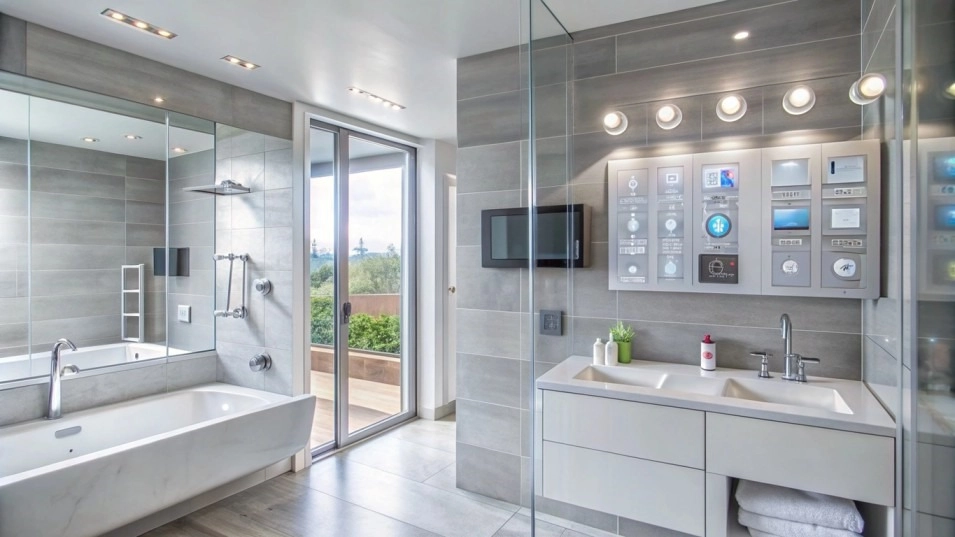
Bathroom storage on the Front Range has to solve two problems at once: most Denver metro condos and patio homes give a bathroom 35 to 55 square feet to work with, and Colorado's hard water and dry climate wear on cabinet hardware and finishes faster than a humid climate does. A vanity with real drawer storage, sealed hardware, and a layout that uses vertical space answers both.
What bathroom storage works best in a small Front Range condo?
Vertical storage outperforms floor storage in a small condo bathroom: a tall, narrow linen cabinet, a recessed medicine cabinet built into the wall cavity, and a shelf above the door for overflow all add storage without eating into floor space a small bathroom doesn't have to spare. A single well-organized 24- to 30-inch vanity with three drawers holds more usable storage than a pedestal sink with no cabinet at all.
How does Colorado's hard water affect vanity hardware and fixtures?
Front Range water runs 7 to 15 grains per gallon of hardness, and that mineral content builds visible spotting on chrome and unlacquered brass faucets and drawer pulls faster than in a soft-water region. Matte black and brushed nickel hardware hide hard-water spotting better than polished chrome between cleanings, which matters in a bathroom that gets daily use.
Does dry Colorado air affect wood bathroom vanities?
Yes. Denver's low winter humidity shrinks and expands solid wood vanity doors and drawer fronts the same way it affects kitchen cabinets, which can show up as a drawer front that no longer sits flush or a small gap at a door joint. Vanities built with engineered wood cores and a veneer or painted finish hold their shape better through Front Range humidity swings than a solid slab wood front.
What vanity style holds up best in a Front Range bathroom?
A vanity with a sealed quartz or solid-surface top, soft-close drawers, and hardware rated for daily water contact holds up longest against both hard water and dry-climate wood movement. Open shelving under a vessel sink looks clean in photos but offers no storage, which works against the space efficiency most Front Range bathrooms need.
How do I organize a small bathroom in a Denver patio home?
Group items by frequency of use: daily items in the top vanity drawer, weekly items in the middle, and rarely used items in the bottom drawer or a linen cabinet. A drawer organizer insert keeps a shared vanity drawer from becoming a single pile, which matters more in a smaller Denver metro patio-home bathroom shared by more than one person.
What storage keeps a shared bathroom organized in a Front Range home?
Assigning each person a dedicated drawer or shelf rather than a shared catch-all space is the single change that keeps a shared bathroom functional day to day. A double-sink vanity with independent storage under each sink solves the morning-routine bottleneck better than a single large vanity with shared cabinet space underneath.
Does bathroom organization affect resale value in Denver?
A visibly organized bathroom with clear counters photographs larger and reads as better-maintained to a buyer touring a Front Range listing, which supports showings and offers. What buyers pay a premium for is updated finish quality — the vanity, counter, and fixtures — not the organizing system inside the drawers, so organization supports a sale but doesn't replace a needed update.
What's the best double-sink vanity setup for a small Front Range bathroom?
A 60- to 66-inch double vanity fits most Front Range primary bathrooms without crowding the room, and independent drawer stacks under each sink prevent the shared-space friction a single center-drawer double vanity creates. In a bathroom under 60 square feet, a single vanity with a wider single sink functions better day to day than a cramped double.
How much storage does a downsized Front Range bathroom need?
A downsized Denver metro bathroom in a condo or patio home functions well with one three-drawer vanity, one recessed medicine cabinet, and a slim linen tower for towels and backstock — roughly a third of the storage a full-size suburban primary bathroom holds, which matches the smaller footprint of the room itself.
What under-sink storage works with Colorado plumbing configurations?
A pull-out drawer built around the P-trap, rather than a fixed shelf that forces items around the plumbing, recovers most of the under-sink space a standard vanity otherwise wastes. This matters more in older Front Range homes where the drain and supply lines sit slightly off-center from a newer vanity's cutout.
How do I declutter a bathroom before selling a Denver metro home?
Clear the counter down to one or two items, empty the shower of all but the essentials, and box up anything stored on top of the toilet tank or on open shelving before listing photos. A cluttered bathroom photographs smaller than its actual square footage, and it's the fastest, lowest-cost improvement available before a Front Range listing goes live.
Does an HOA regulate bathroom storage or venting in Colorado?
Interior storage choices don't need HOA review in any Front Range community. A new exterior bathroom exhaust vent penetration, added as part of a larger remodel, can require architectural approval in some HOAs and metro districts — check your covenants if the project involves cutting a new vent through an exterior wall.
What materials resist Colorado hard water for shelving and hardware?
Powder-coated metal, sealed engineered wood, and glass shelving all resist hard-water spotting better than unsealed natural wood or unfinished metal. Hardware finished in matte black, brushed nickel, or oil-rubbed bronze hides mineral spotting longer between cleanings than polished chrome.
How do I organize a bathroom linen closet in an older Denver home?
Older Denver bungalow and 1970s-era Front Range homes built linen storage into a narrow hall closet rather than the bathroom itself in most cases. Wire or wood shelving with adjustable heights, labeled bins for smaller items, and vertical dividers for towels make that narrow space work closer to a modern linen tower without a remodel.
Is it worth upgrading bathroom storage before listing a Front Range home?
A vanity swap alone, without touching plumbing or tile, runs $600 to $2,500 installed on the Front Range and is one of the highest-return, lowest-cost updates available before a listing goes live. A dated vanity with worn hardware and no real drawer storage is one of the first things buyers' agents point out on a showing, even when the rest of the bathroom is in good condition. Swapping it, adding a recessed medicine cabinet, and updating hardware finish costs less than one month of carrying a home that sits on market longer than comparable listings nearby.
What medicine cabinet size works in a small Front Range bathroom?
A recessed 24- to 30-inch medicine cabinet built into the wall cavity between studs adds storage without taking up floor or counter space, which is the highest-value storage upgrade in a small Denver metro bathroom that doesn't have room for a linen tower. Pair it with a bathroom vanity that has at least three real drawers, and most small Front Range bathrooms have enough storage for daily use without feeling crowded.
Where to go next
- A homeowner's guide to remodeling in Highlands Ranch
- Highlands Ranch HOA guide: what HRCA includes
- Downsizing in the Denver metro: what it really costs
- Preparing and adding value before selling in Colorado
- Colorado 55-plus communities by area
- Search every home for sale in Colorado
Talk to the Kenna Real Estate Group
Whether you're organizing a bathroom to sell or sizing storage for a smaller Front Range home, the Kenna Real Estate Group can tell you what buyers in your price band expect to see. Call or text 303-955-4220. A live person answers. Not a robot, not a phone tree. Reach one of our Front Range agents directly, or search every home for sale in Colorado to see bathroom layouts at your target size.
Homes for sale that match this post
- Patio Homes in Denver
- Condos: guide
- Homes with Gourmet Kitchen in Denver
- HOA Rules and Fees Guide in Denver
- All homes for sale in Denver
Guides
Questions about any home in Colorado? Call or text 303-955-4220. A live person answers.