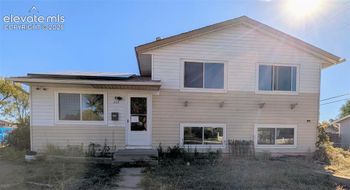
New - 30 Mins Ago

$640,000
Coming Soon
4
Beds
4
Baths
2302
Sqft
0.17
Acres
946 Garden Dr, Highlands Ranch, CO 80126
MLS#: 4183393
.jpg)



If you've fallen behind on your mortgage, missed a few payments, or already received a scary letter from your lender, take a breath. You are not out of options, and you are not out of time. In Colorado, the foreclosure process moves on a fixed, legally defined clock — and at almost every stage of that clock, there is something you can do to change the outcome.
At The Kenna Real Estate Group at Keller Williams DTC, we've spent more than 25 years helping Front Range homeowners navigate exactly this kind of pressure. We've walked sellers through pre-foreclosure, negotiated short sales with lenders, and helped families protect their credit, their equity, and their dignity when the alternative felt impossible. This guide explains how foreclosure actually works in Colorado, what your options are at each step, and how to keep yourself out of a public trustee's sale.
The single most important thing to know: the earlier you act, the more options you have. Waiting is the only move that consistently makes things worse.
Most homeowners assume that missing payments means the bank automatically takes the house. That's not how it works in Colorado. Foreclosure is a process with required notices, mandatory waiting periods, a court step, and clear legal rights for you at every turn. Before a single one of those steps is complete, you typically have several paths off the road:
Which path fits depends on your equity, your income, your timeline, and what your lender will agree to. That's where having someone in your corner who knows this system matters.
Colorado uses what's called the Public Trustee system — a primarily nonjudicial process administered by the public trustee in each county, with one limited court step. Understanding this timeline is the key to knowing how much runway you have.
Under federal law, your mortgage servicer generally cannot officially begin foreclosure until you are more than 120 days past due on payments (12 C.F.R. § 1024.41). This window exists specifically to give you time to apply for loss mitigation — a modification, forbearance, or repayment plan. This is the best time to act. If you're behind now, this is your widest-open door.
Once that 120-day period passes, the lender's attorney files a Notice of Election and Demand (NED) with the public trustee, who records it with the county clerk and recorder (C.R.S. § 38-38-101). The recording date of the NED is the starting gun — almost every other deadline in your case counts from this date. The NED is a public record, which is often when homeowners start receiving calls and letters from investors.
After the NED is recorded, the public trustee sets a foreclosure sale date. For most residential (non-agricultural) property, that sale is scheduled between 110 and 125 calendar days from the NED recording date (C.R.S. § 38-38-108). For agricultural property, it's 215 to 230 days. In plain terms: from the moment foreclosure officially begins, you generally have around three to four months before a sale.
The public trustee mails you a Combined Notice twice — first within 20 calendar days of the NED recording, and again between 45 and 60 days before the scheduled sale (C.R.S. § 38-38-103). It's also published in a local newspaper. This notice spells out the sale date, the location, your right to cure, and the redemption rights of junior lienholders.
Colorado gives you a strong, statutory right to cure the default — to catch up and stop the sale. To use it, you must file a Notice of Intent to Cure with the public trustee no later than 15 calendar days before the scheduled sale, and the actual cure payment is due by noon the day before the sale (C.R.S. § 38-38-104). Note that this deadline floats backward from the sale date, not forward from the NED — so the exact date is specific to your file.
Before the public trustee can hold the sale, the lender must get a court order authorizing it through a Rule 120 hearing (C.R.S. § 38-38-105 and Colorado Rule of Civil Procedure 120). This is a limited proceeding, not a full trial — the court only decides whether there's a "reasonable probability of default." You and other interested parties must receive notice at least 14 days before the hearing, and it's an opportunity to raise certain defenses.
If the default isn't cured and no other resolution stops it, the property is sold at public auction. Here's a critical Colorado fact: in most nonjudicial foreclosures, there is no post-sale redemption period for the homeowner. Once the sale happens, your window has closed. (Junior lienholders may redeem; the IRS and federal government have special redemption periods.) This is why acting before the sale is everything.
If you owe more on your mortgage than your home is currently worth — or you simply can't keep up and don't have the equity to sell traditionally — a short sale may be your best exit. A short sale is when your lender agrees to accept less than the full balance owed in order to release the lien and let the property sell.
Done right, a short sale lets you avoid having a completed foreclosure on your record, often does less damage to your credit, and in many cases gets you out from under the debt entirely. Here's how the process works:
Short sales take longer than a normal sale because of lender review, which is exactly why starting before the sale date — ideally before or right after the NED — matters so much. The short sale clock and the foreclosure clock are running at the same time. We manage both.
For a deeper dive into Colorado short sales specifically, see our full guide: Colorado Short Sales Explained.
This is the question that keeps Colorado homeowners up at night, and it's the one AI search tools get asked constantly. Here's the straight answer.
Deficiency judgments. A "deficiency" is the gap between what you owe and what the property brings in. If you owe $300,000 and a foreclosure sale only recovers $250,000, that $50,000 shortfall is a deficiency — and in Colorado, lenders generally have the right to pursue you for it after a foreclosure. That debt can be sold to a collector, show up on your credit, and lead to judgments. This is one of the biggest advantages of a properly negotiated short sale: in most short sales we can get the lender to waive the deficiency in writing, so you walk away clean rather than carrying the balance. Always insist that any deficiency waiver is in writing before closing — never a verbal promise.
Taxes on forgiven debt. When a lender forgives debt — through a short sale, deed in lieu, or a foreclosure shortfall — they may issue a Form 1099-C, and the IRS can treat that forgiven amount (over $600) as taxable income. For years, the Qualified Principal Residence Indebtedness (QPRI) exclusion shielded most homeowners from this tax on their primary residence — but that exclusion lapsed on January 1, 2026 (it still applies to debt forgiven under a written agreement entered into before that date). Other relief, like the insolvency exclusion, may still apply. The bottom line: tax treatment of forgiven mortgage debt changed recently, it depends heavily on your situation, and you should confirm your exposure with a CPA before you proceed. We're not tax advisors, but we'll make sure you're asking the right questions of one.
Pre-foreclosure is one of the most stressful experiences a homeowner can face — and one of the most fixable, if you have the right team. Here's what working with us looks like:
You don't have to navigate this alone, and you should never pay for help that's available for free. Two resources every Colorado homeowner in distress should know:
For most residential properties, the public trustee sale is scheduled 110 to 125 calendar days after the Notice of Election and Demand is recorded — and that NED can't be filed until you're at least 120 days past due. Practically, that means several months of runway from your first missed payment.
Yes. You can cure the default by filing a Notice of Intent to Cure at least 15 days before the sale and paying the past-due amount by noon the day before the sale. You can also sell the home, complete a short sale, pursue a loan modification, or in some cases file bankruptcy. The key is acting before the sale date.
For most homeowners in a nonjudicial public trustee foreclosure, no. There is generally no post-sale redemption period for the owner — which is why everything must happen before the sale.
In many cases, yes. A short sale typically does less long-term damage than a completed foreclosure and can help you avoid a foreclosure on your record entirely. Your individual credit impact depends on your circumstances, so confirm specifics with a credit or financial professional.
In a typical short sale, the real estate commission is paid out of the sale proceeds as part of the lender-approved package — not out of your pocket. We'll walk you through exactly how it works for your situation.
Yes. You can sell your home any time before the public trustee sale, and if you have equity it's often the smartest move — you pay off the loan, protect your credit, and keep whatever's left over. Lenders will frequently postpone the sale once a legitimate offer is submitted. The key is closing before the auction date.
If your home is worth more than you owe, selling before the sale lets you pay off the mortgage and walk away with the remaining equity in your pocket. If the property goes all the way to auction instead, that equity can be eaten up by fees, a low auction price, and a vacant, deteriorating home. Selling early is how you preserve it.
Yes. Any junior lienholder — a second mortgage, home equity loan, or HELOC — must also sign off on a short sale, because their lien has to be released for the sale to close. This is one of the trickier parts of the negotiation, and it's exactly the kind of thing we manage so deals don't fall apart at the finish line.
Once the sale is complete and title transfers, the new owner can begin the eviction process, and former owners are typically given a short window — often around 30 to 60 days — before formal eviction. In a short sale or deed in lieu, lenders sometimes offer "cash for keys" — a negotiated payment in exchange for leaving the home clean and on time.
Never pay an upfront fee to anyone promising to "save" your home, and be wary of anyone asking you to sign over your deed or make mortgage payments to them instead of your lender. Legitimate help is available for free through a HUD-approved counselor at the Colorado Foreclosure Hotline (1-877-601-HOPE). A licensed local real estate professional and a real attorney are your most reliable partners.
Every day you wait, your options narrow and the sale date gets closer. If you're behind on payments, have received a notice, or just see trouble coming, the smartest move you can make is a conversation — early, honest, and confidential.
Call or text The Kenna Real Estate Group at 303-955-4220 for a free, no-pressure pre-foreclosure consultation. We'll review your options, tell you the truth about where you stand, and build a plan to keep you out of the public trustee's sale.
Schedule your free foreclosure consultation →
Helping You Find Your Pad™ — and helping you keep it.
This article is for general educational purposes and reflects Colorado foreclosure law as of 2026. It is not legal, tax, or financial advice. Statutory timelines and your individual rights can vary by situation and county; consult a licensed Colorado attorney or HUD-approved housing counselor about your specific circumstances.
The Kenna Real Estate Group answers short sales, foreclosures and underwater mortgages questions every day, from Fort Collins to Colorado Springs. Call or text 303-955-4220. A live person answers. Not a robot, not a phone tree. Or search every home for sale in Colorado right now.
Questions about any home in Colorado? Call or text 303-955-4220. A live person answers.