.jpg)


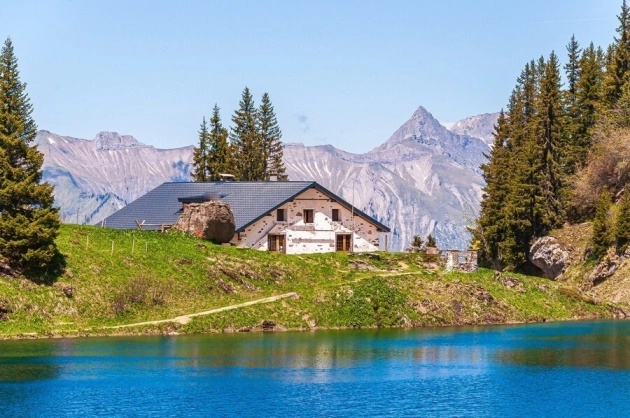
Colorado's lakefront homes sit almost entirely on reservoirs rather than natural lakes, which changes two things buyers need to know before falling for the view: most reservoir shoreline is owned by a water authority or metro district, not the homeowner, and the "water rights" that come with the lot rarely include any right to draw water for irrigation. A lakefront or near-lake home in the Denver metro runs 10% to 25% more than a comparable inland home in the same neighborhood, and that premium buys proximity, not always direct water access.
Which Colorado lakes and reservoirs have homes for sale on the water?
Sloan's Lake in west Denver, Cherry Creek Reservoir near Aurora and Cherry Hills Village, Chatfield Reservoir near Littleton, Standley Lake near Westminster and Arvada, Boyd Lake near Loveland, and Horsetooth Reservoir near Fort Collins are the main Front Range water bodies with residential development nearby. Very few homes sit directly on reservoir shoreline; most "lakefront" or "lake view" listings back onto a park or trail buffer between the lot line and the water.
Does owning a lakefront lot in Colorado include water rights?
Almost never for reservoir property. Colorado water law separates land ownership from water rights under the prior appropriation system, and reservoirs like Cherry Creek, Chatfield, and Standley Lake are owned and managed by water conservancy districts, the Army Corps of Engineers, or a municipal water provider — not by adjacent homeowners. Owning the lot next to the water gives you the view and, where permitted, recreational access; it does not give you a right to draw water for a sprinkler system or a private dock without a separate permit from the managing agency.
How much more does a lakefront home cost than a comparable inland home?
Expect a 10% to 25% premium for a home directly adjacent to Front Range water, more for a rare direct-shoreline lot and less for a lake-view or lake-adjacent property a block or two back. Sloan's Lake and Cherry Creek State Park-adjacent listings carry some of the highest premiums in the metro because of how limited true waterfront inventory is.
Does living near water actually affect daily quality of life?
Buyers consistently cite the trail access, the open sightlines, and the outdoor recreation right outside the door as the reason they pay the premium — running, cycling, paddleboarding, and fishing are all accessible without a drive. That's a lifestyle and convenience factor more than a measurable dollar return, and it shows up in how quickly these listings move relative to comparable inland homes.
Is a lakefront home in a Colorado flood zone, and does that change insurance?
Some are, depending on the specific reservoir's flood-control design and the property's elevation relative to the maximum pool level. Pull the FEMA flood zone designation for any specific address before making an offer — a property in a mapped flood zone requires flood insurance as a condition of most mortgages, on top of a standard homeowners policy, and that adds a real, ongoing cost to factor into the offer.
Do lake communities have HOA dock and shoreline rules?
Where docks or private shoreline access exist at all, they're almost always governed by an HOA or the managing water district, with rules covering dock size, boat storage, and seasonal maintenance. Read the specific community's covenants before assuming any lake access comes with the lot; see the Denver HOA rules and fees guide for how architectural and use-restriction review works across Front Range communities.
What's the difference between a reservoir-front home and a natural-lake home in Colorado?
Reservoirs are engineered water bodies managed for flood control, water supply, and recreation, with water levels that can drop noticeably in a dry year as water gets released downstream. Colorado's true natural lakes sit almost entirely in the mountains, well outside commuting range of the Denver metro, which is why nearly every Front Range "lake home" is really a reservoir home. Water-level variability is worth asking about directly, since a reservoir at low pool looks very different from the same reservoir at full capacity.
Does a lakefront home cost more to insure in Colorado?
In many cases, yes, particularly if the property sits in a mapped flood zone or carries higher wildfire exposure nearby. Get a homeowners insurance quote on the specific address before finalizing an offer rather than assuming coverage will match a standard Front Range policy; premiums can run meaningfully higher for properties with any flood-zone overlap.
Can you build a dock on a Front Range reservoir?
Only with permission from the managing agency, and several Front Range reservoirs don't allow private docks at all since they're operated as public recreation areas with shared boat ramps instead. Confirm what's actually allowed on a specific shoreline before budgeting for a dock as part of the purchase.
How does humidity near a Colorado lake compare to the rest of the Front Range?
Colorado stays dry overall — the state's low humidity is one of its defining climate features — but the air directly around a reservoir runs noticeably more humid than a few blocks inland, especially in early morning. That's a minor daily effect, not the muggy conditions associated with lake living in wetter states.
What should a buyer check before making an offer on lakefront property?
Confirm the FEMA flood zone status, ask the water district or HOA directly what shoreline access and dock rights actually transfer with the lot, get an insurance quote before writing the offer, and ask a local agent for water-level history at that specific reservoir over the past several years.
Are lakefront homes in Colorado a good long-term investment?
Limited water-adjacent inventory along the Front Range has kept demand consistently ahead of supply, and that scarcity has supported resale premiums over time. As with any specialty property, resale depends on finding a buyer pool that values the same features, so ask a local agent about turnover history in the specific lake community before treating the premium as a certainty.
How close to a lake can you build under most metro district rules?
Setback requirements from the water's edge vary by district and are set to protect the shoreline buffer and the district's maintenance access; some run 25 to 50 feet from the high-water line. Check the specific metro district's development standards before assuming a lot's full depth is buildable.
What maintenance does a lakefront property need that an inland home doesn't?
Dock and shoreline structures need seasonal inspection, exterior materials near the water take more weathering, and irrigation systems near reservoir setbacks sometimes have additional restrictions on runoff. Budget for these as part of ongoing ownership cost, not a one-time expense at purchase.
Where to go next
- Search every home for sale in Colorado
- Explore Littleton
- Explore Fort Collins
- Colorado market reports
- Sloan's Lake real estate guide
- Waterfront homes for sale in Northern Colorado
Talk to the Kenna Real Estate Group
Lakefront and lake-adjacent listings move fast and come with details, flood zone status, HOA dock rules, water-level history, that a standard inland home doesn't have. The Kenna Real Estate Group can pull that history on a specific Front Range address before you write an offer. Call or text 303-955-4220. A live person answers. Not a robot, not a phone tree. Or search every home for sale in Colorado today.