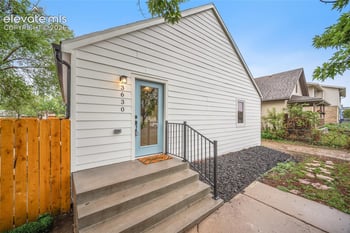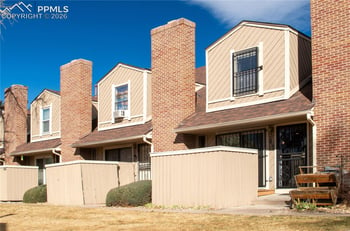
$345,000
Pending
3
Beds
2
Baths
1538
Sqft
0.0202
Acres
3300 W Florida Ave #48, Denver, CO 80219
MLS#: 9397860
.jpg)



Selling a Colorado home costs the seller between 7% and 10% of the sale price once every line is counted: the listing fee, the owner's title policy that Colorado sellers pay by custom, title closing fees, HOA status letter and transfer fees, prorated property taxes with the metro district levy inside them, repairs or credits after inspection, prep and staging, and the cost of holding the house while it is listed. On a $600,000 Denver metro sale that is $42,000 to $60,000 before the mortgage payoff. This guide lists every cost with a Front Range dollar range so the net proceeds number is right before the sign goes in the yard.
The Kenna Real Estate Group prepares a written net sheet at the listing appointment and again for every offer, using the numbers below.
| Cost | Who pays in Colorado | Range on a $600,000 sale |
|---|---|---|
| Listing brokerage fee | Seller, negotiated | Set in the listing agreement |
| Buyer-broker compensation | Seller only if offered or negotiated in the contract | $0 to what the contract states |
| Owner's title insurance policy | Seller, by custom | $1,500 to $2,500 |
| Title company closing fee | Split with buyer | $300 to $600 |
| Colorado documentary fee | Seller | $60 (1 cent per $100) |
| Recording the release of your deed of trust | Seller | Under $50 |
| HOA status letter | Seller | $100 to $400 |
| HOA transfer fee | Seller, or as negotiated | $100 to $500 |
| Property tax proration | Seller credits buyer | Prior year's bill, January 1 to closing |
| Repairs or credits after inspection | Seller, negotiated | $0 to $10,000 |
| Prep, cleaning, staging, photos | Seller | $1,500 to $8,000 |
| Carrying costs while listed | Seller | $3,000 to $6,000 per month |
| Home warranty for buyer | Seller, if offered | $500 to $700 |
| Moving | Seller | $1,500 to $4,000 local |
Colorado custom puts the owner's title policy on the seller. The policy insures the buyer's title, and its premium is set by rate filings each underwriter makes with the Colorado Division of Insurance, so quotes from two title companies on the same price land within a few dollars. On a $500,000 to $700,000 sale the premium runs $1,500 to $2,500. The buyer pays the lender's policy for their mortgage. If you bought the home in the last 5 years, ask the title company for the reissue rate on your old policy; it cuts the premium.
The title company charges a closing or settlement fee, split between buyer and seller, of $300 to $600 per side in the Denver metro. Colorado has no real estate transfer tax; the only state charge on the deed is the documentary fee of 1 cent per $100 of price, $60 on a $600,000 sale, paid by the seller. Recording the release of your paid-off deed of trust through the county public trustee is under $50. The what is needed to close on a house in Colorado post lists the closing documents.
A home in an HOA cannot close without a status letter from the association stating the dues balance, any violations and any special assessment. Colorado law requires the association to deliver it within 14 calendar days of a written request, and the management company charges $100 to $400 for it. Most associations also charge a transfer fee of $100 to $500 at closing, and some charge a separate document fee for the governing documents the buyer receives. Dues are prorated to the closing date. Order the status letter the week the contract is signed; a late letter delays closing. The Denver HOA rules and fees guide covers what the letter contains.
Colorado property taxes are paid in arrears: the bill you pay in 2026 covers 2025. At closing the seller credits the buyer for the days from January 1 to the closing date, calculated on the most recent bill. A home with a $4,800 annual bill closing on July 1 credits about $2,400 to the buyer on the settlement statement. In a metro district community (most homes built since 2000 in Douglas, Adams and Arapahoe counties) the district's mill levy is inside that bill, so the same July 1 closing on a $7,200 bill credits $3,600. There is no separate metro district transfer fee, but the higher bill means a larger credit. The special district and metro district tax guide and the Denver property taxes guide explain the levy.
The buyer's inspection objection is where Colorado sellers lose the most unplanned money. The items that show up on Front Range reports, with the fix cost:
A pre-listing inspection ($400 to $600), a sewer scope ($150 to $300) and a radon test ($150 to $250) find these first, and fixing them before photos costs less than crediting them under contract. The preparing and adding value before selling page ranks the fixes by return.
Deep clean $300 to $600, carpet cleaning $200 to $400, a handyman day $500 to $800, interior touch-up paint $1,500 to $4,000, junk removal $300 to $800. Vacant staging runs $2,000 to $5,000 for 60 days. Professional photography, drone, a floor plan and a 3D tour are included on a Kenna Real Estate Group listing. Landscaping in a Front Range spring, mulch, and a sprinkler start-up add $300 to $1,000.
A Denver metro listing takes 2 to 6 weeks to go under contract at a correct price, then 30 to 45 days to close with a financed buyer. Every one of those months costs the mortgage payment, property taxes, insurance, Xcel Energy, water, HOA dues and lawn or snow service: $3,000 to $6,000 a month on a $600,000 home. Two extra months from overpricing costs more than any single fee on this list, which is why the Smart Pricing Report comes before the listing agreement.
The payoff is the principal balance plus interest through the day the title company funds, not the day you last paid. On a $350,000 balance at 6.5%, that is about $62 a day, so a closing 20 days after your last payment adds about $1,250 to the number you see on your statement. Lenders charge $30 to $60 for the payoff statement and the reconveyance. A home equity line closes with the payoff and needs a written close-out letter from you so the lender releases its deed of trust. The home equity and net proceeds guide walks through the payoff math.
A concession is money the seller credits toward the buyer's closing costs or rate buydown, written into the contract. On the Denver metro market concessions run from $0 in a multiple-offer week to $5,000 to $15,000 on a home that has sat 60 days, and the lender caps them at 3% to 6% of price depending on the loan. A one-year home warranty for the buyer costs $500 to $700 and is a standard ask on homes with 15-year-old systems.
The federal capital gains exclusion removes $250,000 of gain for a single filer and $500,000 for a married couple filing jointly when you owned and lived in the home 2 of the last 5 years. Gain above that is taxed at federal capital gains rates and by Colorado as income. If you are not a Colorado resident at closing, the title company withholds 2% of the sale price or the net proceeds, whichever is less, on any sale over $100,000 and sends it to the Colorado Department of Revenue with Form DR 1083; the excess comes back on your Colorado nonresident return. A Colorado CPA runs both numbers before you accept an offer.
Sellers who buy their next Front Range home in the same move pay a second set of closing costs and, in many cases, need the sale proceeds for the down payment. Mike Oswald, VP of Mortgage Lending at Rate, NMLS 261003, Equal Housing Lender, structures the purchase loan around the sale date and runs the numbers on a bridge loan or a home equity line when the purchase closes first. You are free to use any lender. Details on the Colorado home financing page, and the buyer side of the same table is on the closing costs for Colorado home buyers page.
The how to sell a house in Colorado guide has the contract calendar those costs fall on.
The Kenna Real Estate Group at Keller Williams DTC prices your home from closed sales, writes a net sheet with every cost on this page before you list, and negotiates the inspection resolution so the credits stay inside the number you planned for. Call or text 303-955-4220. A live person answers. Not a robot, not a phone tree. Sellers buying next can search every home for sale in Colorado.
Questions about any home in Colorado? Call or text 303-955-4220. A live person answers.
The seller pays the owner's policy by Colorado custom, $1,500 to $2,500 on a $500,000 to $700,000 sale. The buyer pays the lender's policy on their mortgage. Ask for the reissue rate if you bought within the last 5 years.
No. The only state charge on the deed is the documentary fee of 1 cent per $100 of the price, which is $60 on a $600,000 sale, paid by the seller.
A status letter fee of $100 to $400, a transfer fee of $100 to $500, and prorated dues to the closing date. Colorado law gives the association 14 calendar days to deliver the status letter after a written request.
Taxes are paid in arrears, so the seller credits the buyer for January 1 through the closing date using the most recent bill. In a metro district the district's mill levy is inside that bill, which makes the credit larger.
$0 to $10,000 on a Denver metro sale. Radon mitigation is $1,000 to $2,000, a sewer line repair $3,000 to $15,000 and a Federal Pacific panel $2,000 to $4,000. A pre-listing inspection finds them before they become credits.
$3,000 to $6,000 a month on a $600,000 home for the mortgage, taxes, insurance, Xcel Energy, water, HOA dues and lawn or snow service. Two extra months from overpricing costs more than any closing fee.
Yes. On a sale over $100,000 by a nonresident, the title company withholds 2% of the price or the net proceeds, whichever is less, and sends it to the Colorado Department of Revenue. The excess is refunded on a Colorado nonresident return.
They run from $0 in a multiple-offer week to $5,000 to $15,000 on a home listed more than 60 days, capped by the buyer's lender at 3% to 6% of the price depending on the loan type.