New - 3 Hours Ago
.jpg)


The maintenance tasks that cost Colorado homeowners the most are the ones nobody sees: dust packed inside air ducts, gutters clogged with cottonwood fluff, and a crawlspace nobody has opened since closing day. None of them show symptoms until the repair bill is three or four times the maintenance cost would have been.
Air duct cleaning, gutter clearing, roof debris removal, solar panel washing, crawlspace inspection and radon testing top the list. Each one sits out of sight, so it gets pushed to "next season" until a symptom forces the issue: uneven room temperatures, a stained ceiling, a lower solar bill credit, or a radon reading that surprises everyone at closing.
Denver metro humidity runs 10% to 25% indoors in winter, which keeps dust airborne longer instead of settling. That dust gets pulled straight into return vents and packs into ductwork. A furnace working against restricted airflow uses more energy and wears out its blower motor faster. Front Range households with forced-air heat should plan on duct cleaning every 3 to 5 years, sooner in a house with pets or a recent remodel.
Denver sits in a dust corridor: dry topsoil, unpaved shoulders on county roads, and heavy spring pollen from cottonwood and juniper all feed into open windows and intake vents. Add wildfire smoke season, July through September, and a single bad air-quality week can deposit more particulate into a duct system than a normal month.
Air duct cleaning clears that buildup and restores airflow to registers that have gone quiet in back bedrooms, a common complaint in two-story Front Range homes with a single main-floor return.
Every 3 to 5 years for most households. Cut that to 2 to 3 years if anyone in the home has allergies or asthma, if you finished a remodel that generated drywall dust, or if you moved into a home where the prior owner had no record of the ducts ever being cleaned.
Yes. Fine particulate from wildfire smoke is small enough to pass through a standard HVAC filter and settle inside ductwork rather than on it. During a smoke advisory, running the system on recirculate with a MERV 13 filter reduces how much smoke residue reaches the ducts in the first place.
Twice a year at minimum: once in late spring after cottonwood seed drops, and once in fall after leaves come down. Homes under mature cottonwoods or oaks on the Front Range need a third cleaning most years, mid-summer.
Gutter guards cut the number of cleanings roughly in half but do not eliminate them. Fine cottonwood fluff and pine needles still pack against the guard mesh and need to be brushed off two or three times a year.
Colorado hail season runs spring through September, and the Front Range sees some of the highest hail-claim frequency in the country. Have a roof inspected after any storm that drops hail larger than a quarter, and again each fall before snow load season, since bruised or lifted shingles that go unnoticed all summer are the ones that leak during the first heavy snowmelt.
Roof cleaning removes the moss, lichen and debris that hide hail bruising from a ground-level look, which matters when an insurance adjuster or a buyer's inspector is deciding whether damage is cosmetic or structural.
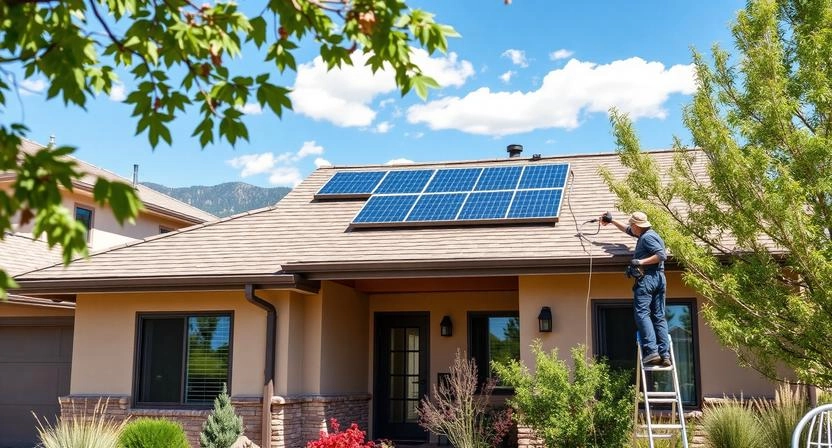
Colorado gets close to 300 days of sun a year, which is exactly why panel output matters here. A film of dust, pollen or wildfire ash cuts output by 5% to 15% during the driest stretches of summer, right when panels need to be producing the most.
Most Front Range households pay $150 to $350 for a standard residential array, once or twice a year. Homeowners who track their production credits see the cleaning pay for itself within a season or two.
Much of the Front Range sits on bentonite clay that expands when it takes on moisture and shrinks when it dries out. That movement telegraphs into crawlspace framing, sill plates and foundation walls. A yearly look at the crawlspace for new cracking, standing moisture near a sprinkler line, or framing that has started to sag catches soil movement early, before it becomes a structural repair.
It should be. Colorado sits in EPA Radon Zone 1, the highest risk category, and that includes most of the Denver metro and Front Range. A test kit runs $15 to $30, and mitigation systems for homes that test high run $800 to $1,800 installed. Retest every 2 years, or sooner after any foundation or crawlspace work.
Water that pools in a clogged gutter freezes, expands, and pulls fasteners loose from the fascia. The same cycle at grade, where a downspout dumps water too close to the foundation, drives the freeze-thaw movement that opens hairline foundation cracks wider each winter. Extending downspouts 4 to 6 feet from the foundation is one of the cheapest fixes on this entire list.
Yes, every home with an in-ground irrigation system needs a compressed-air blowout before the first hard freeze, by mid-October. Water left in the lines cracks the backflow preventer and the pipe fittings, a repair that runs several hundred dollars more than the blowout itself would have cost.
Buyers and their inspectors treat visible neglect as a signal to look harder everywhere else. A home with a dusty duct system, a moss-covered roof and a crawlspace nobody has checked in years invites a longer inspection objection list, and Denver, Aurora, Lakewood, Littleton, Colorado Springs and Fort Collins buyers routinely negotiate repair credits once that list comes back. Sellers who address these items ahead of listing keep more of that value than sellers who negotiate it away after an offer is in hand.
Inspectors flag restricted attic ventilation, crawlspace moisture or framing movement, roof wear that is hard to see from the ground, gutter and downspout drainage away from the foundation, and any radon reading above 4.0 pCi/L. Every one of these is cheaper to fix in advance than to negotiate after an offer is under contract.
| Task | Routine maintenance cost | Cost after neglect |
|---|---|---|
| Air duct cleaning | $300 - $500 | $1,200+ (duct replacement or mold remediation) |
| Gutter clearing | $100 - $250 per visit | $3,000 - $8,000 (fascia, soffit, foundation repair) |
| Roof debris removal | $250 - $600 | $8,000 - $20,000 (full roof replacement) |
| Sprinkler blowout | $50 - $100 | $500 - $1,500 (backflow and pipe repair) |
| Radon test and mitigation | $15 - $30 test | $800 - $1,800 mitigation, plus buyer negotiation risk |
Yes. The Kenna Real Estate Group's Smart Pricing Report factors in condition alongside comparable sales, and a home that has already handled its duct, roof, gutter and crawlspace items supports a higher list price with fewer contingencies attached.
Roof condition, gutter and downspout drainage, crawlspace moisture, and radon results are the four items that generate the most repair requests during a Colorado transaction's inspection objection window. Handling them before the home hits the market removes them from the negotiation entirely.
Many Front Range HOAs and metro districts require architectural approval before a roof replacement, exterior gutter color change, or visible solar installation. Check the covenants before scheduling work that changes the home's exterior appearance, since an unapproved change can hold up a sale later.
Whether you are maintaining a home you plan to keep or getting one ready to list, the Kenna Real Estate Group can walk your property and tell you which of these hidden items actually affects value in your neighborhood. Call or text 303-955-4220. A live person answers. Not a robot, not a phone tree. Or search every home for sale in Colorado to see how well-maintained homes are pricing in your area right now.
Questions about any home in Colorado? Call or text 303-955-4220. A live person answers.
Every 3 to 5 years for most households, sooner with pets, allergies, or a recent remodel. Colorado's low indoor humidity keeps dust airborne longer, which speeds up buildup inside ductwork.
Twice a year for most homes: late spring after cottonwood seed drops and fall after leaves come down. Homes under mature trees need a third cleaning most years, mid-summer.
Yes. Hail season runs spring through September, and bruised shingles can look fine from the ground while losing their protective granules. A post-storm inspection catches this before it becomes a leak.
It is not legally required, but Colorado is EPA Radon Zone 1 and most buyers request a test during their inspection period. Testing ahead of listing avoids a late surprise in negotiations.
Most Front Range companies charge $50 to $100 for a compressed-air blowout, scheduled by mid-October before the first hard freeze.
Dust, pollen and wildfire smoke residue settle on panels during dry stretches, cutting output by 5% to 15%. A $150 to $350 cleaning restores most of that lost production.
Yes. Visible neglect leads buyers and inspectors to look harder everywhere else, which increases inspection objection requests on the Front Range. Sellers who address maintenance before listing keep more of that value at closing.
Yes. Bentonite clay expands and contracts with moisture changes, which moves crawlspace framing and foundation walls over time. Annual visual checks catch movement before it becomes a structural repair.