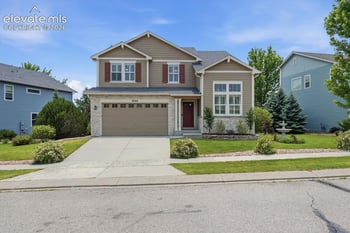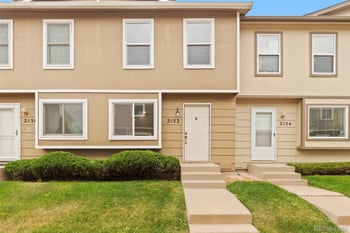
$500,000
Pending
4
Beds
3
Baths
2234
Sqft
0.14
Acres
375 Medford Dr, Colorado Springs, CO 80921
MLS#: 1083714
.jpg)



Colorado investors commonly choose between four financing paths: hard money loans, conventional mortgages, private money loans, and tapping equity through a home equity loan, HELOC or reverse mortgage. Each fits a different speed, cost and property type, from a fast Front Range auction purchase to a buy-and-hold rental in Aurora or Colorado Springs.
The four most common routes are hard money loans for speed, conventional mortgages for the lowest long-term rate, private money loans from individual lenders, and equity-based options that draw on a home you already own. Most Front Range investors combine more than one over the course of building a portfolio.
Hard money lenders price financing on the property and the deal rather than your credit score, and they commonly approve and fund within days instead of the weeks a bank underwriting process takes. This fits a competitive Front Range auction purchase or a distressed property that needs to close fast, but the rate runs well above a conventional loan and terms run short, from six months to a few years.
Conventional investment property loans commonly require a substantial down payment, commonly 15% to 25% or more, higher than the down payment required on an owner-occupied purchase. A stronger credit score and cash reserves can sometimes improve pricing but rarely reduce the minimum down payment itself.
Lenders price non-owner-occupied loans higher than owner-occupied ones because a borrower is statistically more prone to walk away from a rental property than a primary residence during financial stress. Expect a rate roughly a quarter to a full percentage point above a comparable owner-occupied Front Range mortgage, depending on your credit score and down payment.
A private money loan works like a hard money loan but comes from an individual investor rather than a lending company, which can mean more flexible terms and a faster relationship-based approval. Many Colorado investors find local money lenders through real estate investment groups in the Denver metro area; vet any private lender's track record and get every term in writing before you borrow.
Yes. A home equity loan or one of the home equity lines of credit (HELOCs) secured by your primary residence can fund some or all of a rental property down payment. The home equity loan gives you a lump sum at a fixed rate, while a HELOC lets you draw as needed, which fits an investor buying more than one property over time.
A reverse mortgage on your primary residence, through an FHA-insured Home Equity Conversion Mortgage, converts home equity into cash as a lump sum, monthly payments or a line of credit, commonly without a required monthly mortgage payment for as long as you live in and maintain the home. It requires mandatory HUD counseling and is limited to homeowners 62 and older; it is worth comparing to a HELOC on the same property before deciding which route frees up capital more efficiently for a Colorado purchase.
Many hard money lenders fund within 5 to 10 business days once the property and the investor's exit plan are underwritten, compared with 30 to 45 days for a conventional Front Range mortgage. That speed is the main reason investors accept a higher rate for a short-term hard money loan.
Most Colorado lenders want a credit score of 680 or higher for the best investment property pricing, and some programs allow 620 to 660 with a larger down payment and cash reserves covering several months of payments.
Lenders commonly count a share of projected rental income toward your qualifying income on a Front Range investment purchase, using either an appraiser's rent schedule or a signed lease if the property is already tenanted. Strong rent-to-price ratios in growing Colorado submarkets can meaningfully improve how much loan you qualify for.
A HELOC fits an investor planning to buy more than one property over a few years, since you only pay interest on what you draw for each deal. A home equity loan fits a single, immediate purchase where you know the exact down payment amount up front.
Short terms mean you need a clear exit plan, whether that is a refinance into a conventional loan, a resale, or a lease-up that supports a longer-term loan. Missing the payoff deadline can trigger default rates or an extension fee, so line up your next-stage financing before you close on the hard money loan.
A short renovation timeline of a few months commonly favors hard money or private money for speed, then a refinance or sale to pay it off. A longer hold, like a buy-and-hold rental, favors a conventional mortgage for the lowest long-term rate once the property is stabilized.
Many Front Range investors do exactly that: a hard money loan covers the fast purchase and renovation budget, then a conventional refinance, sometimes called a BRRRR-style refinance, pays off the hard money lender once the property is stabilized and appraises for more. Line up the refinance lender and confirm the seasoning period they require, commonly six to twelve months of ownership, before you close on the hard money loan.
Confirm the lender's minimum down payment, whether they count projected rental income, their typical closing timeline, and any prepayment penalty on a hard or private money loan. Ask for references from other Front Range investors when using a private lender, and get every term, including the exit fee and extension terms, in writing before you sign.
| Option | Speed | Best for |
|---|---|---|
| Hard money loan | Days | Fast, short-term purchases |
| Conventional mortgage | 30 to 45 days | Long-term buy-and-hold |
| Private money loan | Days to weeks | Flexible, relationship-based deals |
| Home equity / reverse mortgage | 2 to 6 weeks | Funding a down payment from existing equity |
The Kenna Real Estate Group works with Front Range investors sourcing rental, flip and multi-unit properties across Denver, Aurora and Colorado Springs, and can connect you with lenders across all four financing paths. Call or text 303-955-4220. A live person answers. Not a robot, not a phone tree. Ready to find your next deal? Search every home for sale in Colorado.
Questions about any home in Colorado? Call or text 303-955-4220. A live person answers.
Hard money and private money loans both fund in days to a couple of weeks, far faster than a conventional mortgage's 30- to 45-day timeline.
Conventional lenders commonly require 15% to 25% or more down for a non-owner-occupied purchase.
Lenders price in the higher statistical risk of a borrower walking away from a rental during financial stress, adding roughly a quarter to a full percentage point.
Yes, a HELOC on your primary residence lets you draw funds as needed, which fits an investor planning multiple purchases over time.
An FHA-insured Home Equity Conversion Mortgage for homeowners 62 and older that converts home equity into cash, commonly without a required monthly payment; it requires mandatory HUD counseling.
Most Colorado lenders want 680 or higher for the best pricing, with some programs allowing 620 to 660 given a larger down payment and cash reserves.
Many count a share of projected or actual rental income toward qualifying income, using an appraiser's rent schedule or a signed lease.
Its short term means you need a clear exit plan, such as a refinance or sale, before the payoff deadline to avoid default rates or extension fees.