.jpg)


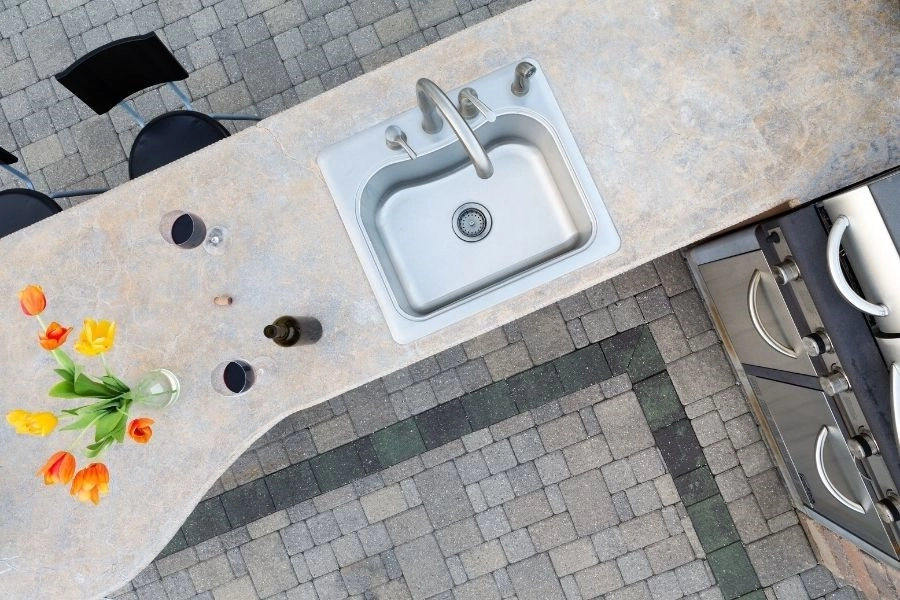
A Front Range outdoor kitchen needs three things most regions do not have to plan around as closely: plumbing that survives a hard freeze, materials that hold up to hail and intense high-altitude sun, and, on many lots, a required distance from wildfire mitigation zones around the home. Here is what to build in, and what it returns at resale.
Front Range winters bring hard freezes well into spring at elevation, so any water line run to an outdoor sink needs a shutoff and drain-down point that is easy to reach each fall, not buried behind finished stonework. Gas lines for a built-in grill or burner should be sized and installed by a licensed plumber, since a permit and inspection apply to new gas piping in Denver, Jefferson County, El Paso County, and every other Front Range jurisdiction.
Yes, for the gas line, any new electrical circuit, and in many cases for the structure itself if it includes a permanent roof or exceeds a size threshold set by the local building department. Confirm the specific rules with the city or county before pouring a foundation — Denver, Aurora, Lakewood, Littleton, Colorado Springs, and Fort Collins each set their own thresholds.
Many HOAs require architectural review for any permanent outdoor structure, including a built-in grill island, a pergola, or an outdoor fireplace, and some metro districts add their own construction rules on top of the HOA's. Submit plans before ordering materials — a structure built without approval must come down if the board denies it after the fact.
Colorado's hail season runs roughly April through September, and a hard hail event dents stainless appliance panels and crack lightweight countertop materials. Choose a heavier-gauge stainless for appliance doors and panels, and a durable countertop material like granite or a dense concrete, over lighter composite options. A retractable or hard cover over the cooking area protects the equipment on the days storms are forecast.
Homes near wildland areas on the Front Range foothills fall under defensible space guidance from the Colorado State Forest Service, which sets clearance zones for flammable materials near the home. An outdoor kitchen built from non-combustible materials — stone, metal, concrete — and placed with the guidance in mind is easier to insure and to explain to a future buyer than one built close to dense landscaping in a wildfire-mitigation zone.
UV intensity at 5,280 feet and above is measurably higher than at sea level, which fades and dries out untreated wood, plastic laminate, and some fabric cushions faster than the same materials would age at lower elevation. Stone, metal, and UV-stabilized synthetic materials hold their color and finish far longer under a Front Range sun.
A built-in grill, a side burner, and a small refrigerator cover most entertaining needs. Anything with standing water — an ice maker or a sink — needs the winterization plan from the first section built in from day one, not added later.
A basic built-in grill island with counter space runs at the lower end of the budget; a full outdoor kitchen with a sink, refrigerator, and a covered structure runs well beyond that once gas, electrical, and a permitted structure are added. Get bids from at least three Front Range outdoor-living contractors and confirm which ones include permitting in their scope. Many of the same budgeting and styling steps that apply to an indoor kitchen remodel carry over directly to planning an outdoor build.
A well-built, permitted outdoor kitchen extends usable living space during the roughly five months of warm-weather entertaining season on the Front Range and is a strong showing feature, though it adds less dollar-for-dollar value in most cases than an equivalent indoor kitchen upgrade. Our guide to adding value before selling covers how outdoor spaces factor into a listing, and a Smart Pricing Report compares your home to recent closed sales with similar outdoor features.
Yes. Colorado's Seller's Property Disclosure form asks about known defects and improvements made without a permit, and an unpermitted gas line or structure is exactly the kind of item that surfaces during a buyer's inspection, before Colorado's standard contract inspection objection deadline, commonly around ten days after acceptance.
Entry-level Front Range buyers, roughly $400,000 to $550,000, respond to a simple patio and a portable or small built-in grill more than a full outdoor kitchen. Mid-market buyers, $550,000 to $850,000, increasingly expect a built-in grill island with counter space as a standard feature in newer construction. Above $850,000, buyers compare against homes with a full outdoor kitchen, a covered structure, and a fireplace or fire feature, and notice when that feature is missing.
Ask any contractor bidding the job whether they pull their own gas and electrical permits or sub that work out, and ask to see a completed project from the past winter to check how the water lines were protected. A contractor with Front Range experience plans the shutoff and drain-down points into the design from the start, rather than adding them as an afterthought once the stonework is finished.
An open-air layout costs less and skips the roof-structure permit threshold in most Front Range jurisdictions, but it leaves appliances fully exposed to hail and intense summer sun with no break. A pergola or a solid roof structure adds cost and, in many cities, its own permit and setback rules, but it extends the number of comfortable entertaining days each year and protects the equipment investment. Weigh the roof cost against how many months of the year the space actually gets used uncovered before deciding.
A permanent structure with a built-in gas appliance changes a homeowner's insurance replacement-cost calculation, so call the insurance carrier once the project is designed, not after it is built. A permitted, inspected structure is straightforward to document for a claim; an unpermitted one can complicate a claim after a hailstorm or a fire, which is one more reason to keep every permit and inspection record on file with the home's other paperwork.
If you are weighing an outdoor kitchen build against other upgrades before you sell, we can show you what similar Front Range homes have returned at closing. Call or text 303-955-4220. A live person answers. Not a robot, not a phone tree. Ready to look while the work is underway or before you list? search every home for sale in colorado.
Questions about any home in Colorado? Call or text 303-955-4220. A live person answers.
Yes, for the gas line, any new electrical circuit, and in many cases for the structure itself. Denver, Aurora, and other Front Range cities each set their own thresholds, so check before building.
Install an accessible shutoff and drain-down point on every water line before the first hard freeze, and have gas lines sized and inspected by a licensed plumber.
Yes. Colorado's hail season runs roughly April through September, so heavier-gauge stainless and durable stone or concrete counters hold up better than lighter composite materials.
It is the clearance guidance from the Colorado State Forest Service for flammable materials near a home in wildland-adjacent areas. Non-combustible materials placed with that guidance in mind are easier to insure.
It extends usable entertaining space and is a strong showing feature, but it returns less dollar-for-dollar in most cases than an equivalent indoor kitchen upgrade.
Many HOAs require architectural review for permanent outdoor structures. Submit plans before ordering materials to avoid having to remove an unapproved structure.