.jpg)


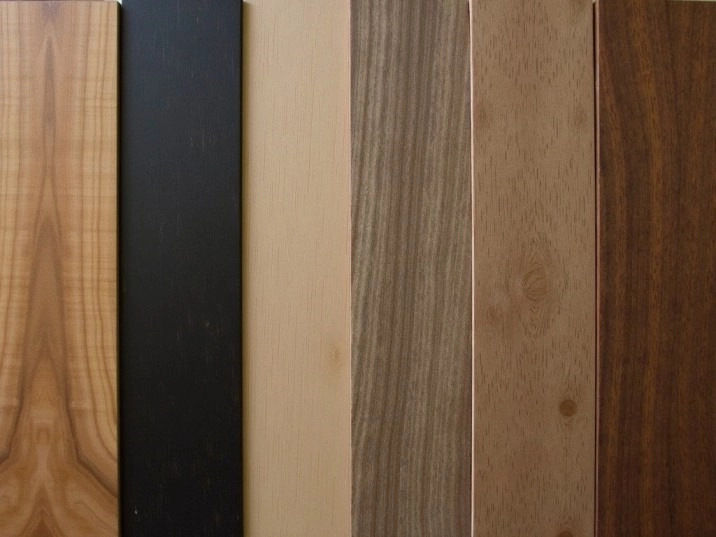
Oak veneer wood is a thin slice of real oak, cut anywhere from 1/40 inch to 1/16 inch thick for a standard veneer and up to 1/8 inch or more for a thick veneer, glued to a stable engineered core like plywood or MDF. It is real wood grain and color on the surface, not a printed laminate, over a core that resists the warping, cracking and cupping a solid oak board shows in a climate with the humidity swings the Front Range sees between a dry winter and a wetter spring.
Why Colorado kitchens lean on veneer instead of solid oak
Solid oak boards expand and contract across the grain as humidity swings, and a Front Range kitchen goes from 15% to 25% indoor humidity in January to 35% to 45% by June in a home without a whole-house humidifier, a range wide enough to open visible seams in a solid wood panel over a few winters. An engineered core under a veneer face moves far less with that swing because the plywood or MDF core's cross-grain construction cancels out the expansion a single solid board shows, which is why cabinet doors wider than about 18 inches are built as a veneer-over-engineered-core panel even in high-end custom shops, not just budget lines.
Real wood veneer vs. printed laminate
A real wood veneer shows actual oak grain, with the natural variation and occasional knot a printed laminate cannot replicate, and it takes stain the same way solid oak does since it is the same material at a fraction of the thickness. A printed laminate is a photographic pattern under a plastic wear layer; it never needs refinishing but it also never looks like real wood up close, and it cannot be sanded or restained if a homeowner wants to change the color down the road. A thick wood veneer, cut heavier than the standard paper-thin sheet, holds up to one or two light refinishing passes over the life of a kitchen the way a thin veneer cannot.
Cost comparison for a Front Range kitchen
| Cabinet material | Cost per linear foot |
|---|---|
| Oak veneer over engineered core | $150 to $350 |
| Solid oak | $300 to $600+ |
| Printed laminate | $80 to $180 |
A Denver metro kitchen with 10 to 15 linear feet of cabinetry sees a $1,500 to $4,000 difference between veneer and solid oak at comparable quality, money most homeowners put toward countertops, hardware or a larger island instead, since a well-built veneer cabinet lasts as long as a solid wood one in normal Front Range use.
Durability in Colorado's dry, high-altitude climate
A quality oak veneer cabinet, properly sealed on all six sides of the panel at the factory, holds up 20 to 30 years in a Front Range kitchen without cracking or peeling, the same service life as a well-built solid wood cabinet. The failure point for veneer is almost always a factory that skips sealing the panel edges or the interior face, letting Colorado's dry air pull moisture out of the exposed plywood core unevenly and cause the veneer face to lift at a seam; buying from a cabinet line that documents six-sided sealing avoids that problem entirely.
Reading a cabinet spec sheet before you order
A cabinet listing that says only "oak veneer" without a thickness number, a core material and a finish warranty length is worth a follow-up question before ordering; the better online and local sellers list all three because they know a Colorado buyer's climate makes those details matter more than in a milder region. A finish warranty of 5 years or longer against cracking and peeling is a reasonable minimum to ask for on a Front Range order.
Maintenance in low humidity
Clean oak veneer cabinets with a damp microfiber cloth and a mild dish soap solution, never a harsh solvent that can dissolve the finish coat over the veneer's thin wood layer. Keep cabinets at least a few inches from a range's direct heat and steam, and run a kitchen exhaust fan during cooking, since repeated heat-and-dry cycles right at a stove wall age a veneer finish faster than ambient Front Range humidity swings do on their own.
Oak veneer vs. other popular veneer species in Colorado kitchens
Oak veneer holds a market lead in Front Range kitchens over walnut, cherry and maple veneers mainly on cost and grain visibility: oak's open grain pattern reads clearly under a stain, which is why it took over as the default choice when white oak and rift oak finishes became the dominant 2020s kitchen look. Walnut veneer costs 30% to 60% more than oak for a comparable grade and reads darker without staining; maple veneer takes paint better than stain and is the more common pick for a fully painted cabinet rather than a natural wood look. A buyer touring a Denver metro kitchen sees oak veneer more than any other species simply because it matches the current finish trend, not because it outperforms the other species structurally.
What to check before buying oak veneer cabinets online
Ask any online or local cabinet seller for the veneer thickness in writing, whether the panel is sealed on all six sides at the factory, and what core material sits underneath, plywood or MDF, since those three answers predict how the cabinet performs in Colorado's climate far better than the listed wood species alone. A seller who cannot answer whether the interior face of the panel is sealed is a seller whose cabinets show veneer lift at a seam within the first few dry Front Range winters.
Where oak veneer shows up beyond cabinet doors
Oak veneer covers cabinet end panels, a kitchen island's furniture-style legs and paneling, and matching trim pieces where a solid board of that width and length would cost several times more or simply is not available from a mill in a single piece. A Front Range kitchen with a large island benefits the most from this, since an 8-foot solid oak end panel without any seam is both expensive and prone to the widest movement of any single piece in the room, while a veneered panel over an engineered core stays flat and free of joint lines at that size.
Resale: does veneer hurt a kitchen's value
Buyers touring a Denver, Aurora or Fort Collins listing cannot tell a well-built oak veneer cabinet from solid oak without close inspection, and appraisers value a kitchen on its overall condition, layout and finish quality rather than by veneer versus solid construction. A well-maintained veneer kitchen photographs and shows the same as solid wood; the resale gap shows up only when veneer cabinets were poorly built to begin with and show visible peeling or delamination, which is a condition issue rather than a material issue.
Where to go next
- Which home updates add value before you sell
- Shaker cabinets for Colorado homes: style, cost and care
- Kitchen remodeling ideas for Boulder rental properties
- New construction homes by Colorado area
- Colorado market reports
- Search every home for sale in Colorado
Talk to the Kenna Real Estate Group
Weighing a kitchen cabinet upgrade before listing a Front Range home, or comparing kitchens between homes you are touring? The Kenna Real Estate Group can tell you which kitchen finishes are moving comparable homes right now. Call or text 303-955-4220. A live person answers. Not a robot, not a phone tree. Or search every home for sale in Colorado.
Homes for sale that match this post
Guides
Questions about any home in Colorado? Call or text 303-955-4220. A live person answers.