New - 1 Day Ago
$675,000
Coming Soon
4
Beds
4
Baths
2651
Sqft
0.1
Acres
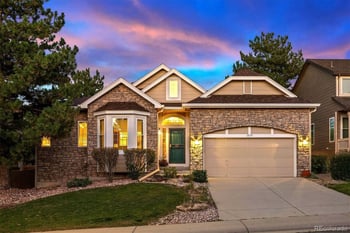
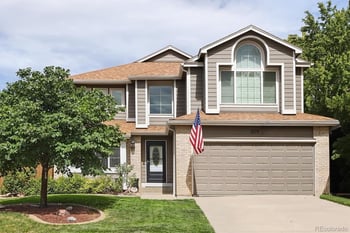
9352 Wilmington Ct, Highlands Ranch, CO 80130
MLS#: REC6759426
.jpg)


A custom home costs more upfront than a production or existing home, and on the Front Range it holds value better over time because it is built for Colorado's specific conditions instead of a national template. The numbers below cover what that investment actually looks like from land to move-in.
That difference shows up in three places: the foundation engineered for Colorado's expansive soils, the insulation and window package specified for altitude and temperature swings, and the roofing material chosen with hail season in mind. A production home built to a national spec sheet treats all three as optional upgrades; a custom home treats them as the starting point, and that starting point is what protects the buyer's equity over the next decade.
A buildable lot inside Denver metro suburbs runs from roughly $150,000 for a smaller infill parcel to well over $500,000 in Highlands Ranch, Castle Rock or Boulder County, with acreage further out in Elbert or Weld County available for less per lot but requiring a well and septic system. Land cost is the single biggest variable in the total project budget, and it should be confirmed with a survey and a soil test before a design begins.
Front Range custom construction runs roughly $250 to $450 per square foot depending on finish level, site conditions and location, compared to $180 to $280 for a production-built home in the same area. A custom build costs more because every material, fixture and structural decision is selected instead of chosen from a builder's standard package, and that selection is exactly what supports the home's value later.
Many Front Range new-build communities sit inside a metro district that issued bonds to fund the roads, water and sewer infrastructure, and that debt shows up as an added mill levy on the property tax bill for decades. A buyer should request the district's mill levy and outstanding debt figures before purchasing land, since two otherwise identical lots can carry very different long-term tax costs.
Colorado's temperature swings, over 300 days of sun a year and intense UV at 5,280 feet all affect how a home performs. A custom build lets an owner specify higher R-value insulation, high-performance windows and a right-sized HVAC system from the start, which lowers utility bills through both winter heating and summer cooling load. The EPA's guidance on lowering energy consumption is a useful baseline when comparing contractor proposals for insulation and window packages.
Hail-resistant Class 4 roofing, which many Colorado insurers discount, is worth specifying at the design stage rather than retrofitting after the first major storm. Expansive bentonite clay soils common along the Front Range require an engineered foundation design specific to the lot, and skipping that step is the single most common source of costly structural repairs in Colorado homes built without a proper soil study.
Grading, drainage and a septic or sewer tap review add their own review cycles on top of the standard building permit, and each Front Range county runs that review on a different timeline.
Permitting runs through the city or county where the lot sits, and requirements differ: Douglas County, Jefferson County and the City of Denver each run separate plan review, septic or sewer tap, and building permit processes with their own timelines. A buyer working with an experienced local builder avoids the most common delay, which is submitting plans that do not match that specific jurisdiction's checklist.
An existing Front Range home costs less at closing. An older property carries a real chance of needing a new roof, updated electrical or outdated mechanical systems within the first several years of ownership, and those repair costs are hard to predict in advance. A custom build front-loads those decisions into the construction budget, which is a more expensive closing but a more predictable cost over the following decade.
A construction-to-permanent loan is the standard financing path: the lender releases funds in draws as the builder completes each phase, then the loan converts to a normal mortgage at move-in. Down payment requirements on a construction loan run higher than on a standard purchase mortgage, and a buyer should confirm both the draw schedule and the interest rate lock terms before signing with a builder.
A custom floor plan lets a buyer put the primary bedroom, laundry and a full bathroom on the main level from the start, which avoids a costly retrofit years later. Wider doorways, curbless showers and a main-level office also support a buyer who wants a home that still works as mobility needs change, without treating any of it as an obvious later addition.
| Factor | Existing Front Range home | Custom-built home |
|---|---|---|
| Upfront cost | Lower | Higher |
| Near-term repair risk | Higher, especially on older systems | Lower, new systems under warranty |
| Energy efficiency | Depends on prior owner's upgrades | Specified to current standards |
| Foundation matched to soil type | Unknown without inspection | Engineered for the specific lot |
| Timeline to move in | Weeks | 8 to 14 months |
Buyers touring a resale market recognize the difference between a floor plan designed around how one household actually uses a home and a production layout built to a standard template. Higher-quality finishes, an engineered foundation suited to Colorado soil, and energy performance documentation give a custom home a stronger position with future buyers and appraisers, even though no investment carries a guaranteed return. A well-documented build file, with permits, inspection records and material specifications kept together, also speeds up a future appraisal and gives a buyer's lender fewer questions to chase down.
Buyers weighing land and a builder against an existing listing should compare both paths using the new construction homes by area guide and the buyer's agent guide for new construction, and land buyers should also see Bianchi Group Developers for an example of how an experienced Front Range custom builder approaches design for long-term value.
The Kenna Real Estate Group helps Colorado buyers weigh land and custom construction against the existing market across the Front Range. Call or text 303-955-4220. A live person answers. Not a robot, not a phone tree. Ready to compare your options? Search every home for sale in Colorado.
Questions about any home in Colorado? Call or text 303-955-4220. A live person answers.
Roughly $150,000 for a smaller infill lot up to $500,000 or more in Highlands Ranch, Castle Rock or Boulder County, with acreage further out costing less per lot but requiring a well and septic system.
Most Front Range custom builds take 8 to 14 months from permit to move-in, depending on the county's plan review timeline and the complexity of the design.
Expansive bentonite clay soils common along the Front Range shift with moisture, and an engineered foundation matched to a soil study is the standard way to avoid structural repairs later.
Many Colorado insurers offer a discount for Class 4 impact-resistant roofing, which is worth specifying at the design stage given the state's hail exposure.
Construction-to-permanent loans are the most common option, converting to a standard mortgage once the home is complete; a local lender can walk through draw schedules and down payment requirements.
Not every community; some are inside an established municipal tax base while others carry a metro district mill levy for infrastructure debt, so this should be checked per lot before purchase.