.jpg)


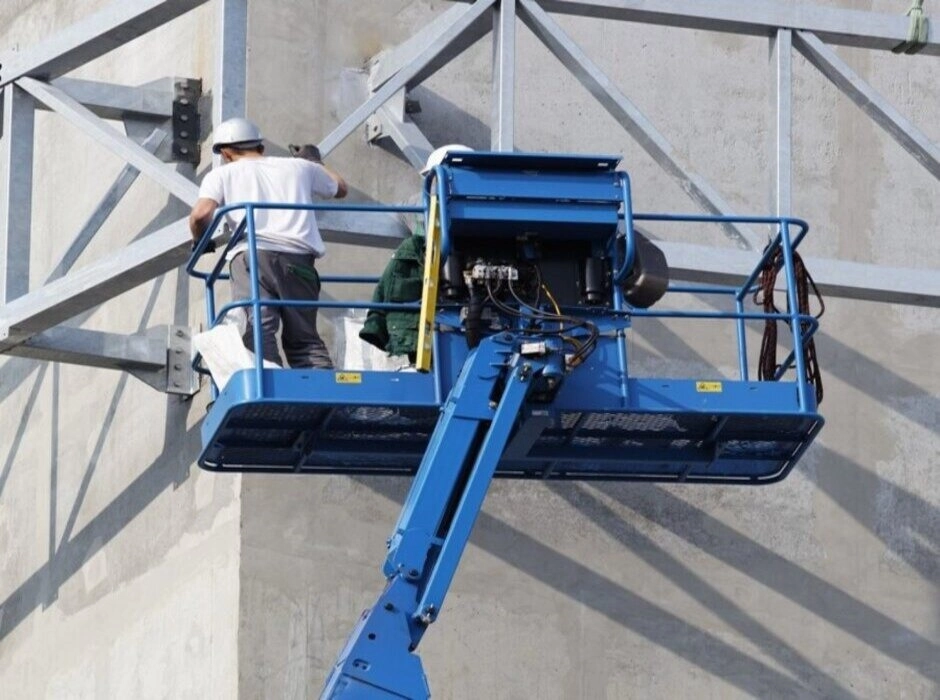
An 80-foot telescopic boom lift is the right rental when a Front Range project needs quick, direct access to a roofline, upper-story siding or gutters, work that a ladder or scaffolding setup would slow down or complicate. Storm and hail damage repair, exterior painting, and gutter or roof work ahead of a listing are the most common reasons Colorado homeowners and contractors reach for one.
When does a Colorado homeowner need an 80-foot boom lift?
Two-story and taller Front Range homes with steep or complex rooflines are the most common reason a homeowner or contractor rents an 80-foot boom lift instead of using a ladder. It also comes up for gutter replacement, exterior window cleaning on tall walls of glass, and tree limb work near a roofline ahead of wildfire season.
What is an 80-foot telescopic boom lift?
An 80-foot telescopic boom lift, also called a straight boom or stick boom, is an aerial work platform with one long extendable arm that goes straight out and up. That single-arm design gets a crew from the ground to the work area quickly, without the repositioning a scissor lift or scaffolding setup needs, and an 80 ft boom lift rental sets up in minutes rather than the hours a scaffolding buildout takes.
How does a boom lift help with Colorado hail and storm damage repair?
Colorado's hail season stretches from spring through September, and Front Range roofs regularly need inspection or repair after a storm passes through. A boom lift lets a roofer or adjuster reach the full roofline for a direct look, rather than relying on ground-level photos or drone footage alone, which speeds up an insurance claim.
Does renting a boom lift cost less than scaffolding for a short job?
For a project measured in days rather than weeks, renting is close to always the more practical option over buying equipment or building a full scaffolding setup. Scaffolding takes longer to assemble and disassemble and needs more ground space, which matters on a Front Range lot with a driveway, fence line or narrow side yard.
Do Front Range HOAs require approval before exterior repair equipment shows up?
Many Front Range HOAs require advance notice or a short approval process before exterior work equipment sits on a driveway or common area for more than a day. Check your association's rules before scheduling a rental delivery so the lift is not turned away or fined.
What permits apply to exterior roof or gutter work in Denver metro?
Roof replacement and structural gutter work commonly require a permit from Denver or the relevant county building department, while a straightforward repair using the same materials commonly does not. Confirm with your city or county before starting so the work does not create a problem when you sell the home later.
How does high altitude and thin air change equipment rental planning?
Combustion engines lose some power at Colorado's elevation compared with sea level, which is one reason rental suppliers along the Front Range stock equipment rated for mountain and high-plains use. Ask the rental company directly whether the specific model is rated for your project's elevation, especially for work above 7,000 feet in the foothills.
When should exterior work happen around Colorado's wildfire and dust seasons?
Summer wildfire smoke and dry, dusty stretches can limit visibility and air quality for a crew working outdoors for a full day. Scheduling exterior lift work for early morning hours during smoke advisories, and rescheduling on the worst air-quality days, keeps a project on track without exposing a crew to poor conditions.
How does curb appeal work factor into a pre-listing timeline?
Roof, gutter and upper-exterior repairs are worth finishing before listing photos, since buyers form an opinion of a home's condition from the outside before they ever walk in. Our guide to preparing and adding value before selling covers which exterior fixes matter most for resale.
What should you check before renting equipment from a Colorado supplier?
Confirm the rental company's delivery radius covers your address, ask whether the operator needs training or certification, and check the machine's rated working height against your specific job, since the platform height and the true working height (including operator reach) are not the same number.
| Option | Setup time | Best for |
|---|---|---|
| 80-foot boom lift | Minutes | Direct access to roofline, gutters, upper siding |
| Scaffolding | Hours to days | Extended, multi-day work along one wall |
| Ladder | Minutes | Short, single-point tasks at lower heights |
Do you need a licensed operator to run a boom lift?
Most rental companies require operator training specific to aerial work platforms before releasing the equipment, and some jobs require a certified operator on site depending on the work being done. Ask your rental company what documentation they need before the delivery date.
What technology do modern boom lifts use to monitor the platform?
Newer boom lift models add load and tilt sensors that track the platform's position and weight in real time, alerting the operator before the machine reaches its rated limit. Ask the rental company whether the specific model you are renting includes this kind of monitoring, since it varies by manufacturer and model year.
Does a buyer's inspection objection deadline give time for a full roof inspection?
Colorado's standard contract to buy and sell sets an inspection objection deadline that gives a buyer a defined window to inspect the home and raise concerns, including the roof, before that deadline passes. For a home with a steep or hard-to-access roofline, scheduling a roofer with lift access early in that window avoids a last-minute scramble before the deadline closes.
Does a seller need to disclose prior roof or exterior repair work?
Colorado's standard Seller's Property Disclosure asks about known defects and past repairs to the home's systems, including the roof, so prior hail damage repair or a partial reroof belongs on that form. Keep receipts and permit records from any exterior work, since buyers and their inspectors commonly ask for that documentation during the inspection period.
What does a short-term 80-foot boom lift rental cost in Colorado?
A day rental commonly runs a few hundred dollars, while a week-long rental commonly falls in the $1,000 to $2,000 range, depending on the supplier, delivery distance and whether an operator is included. Get a written quote that separates delivery, fuel and operator fees from the base rental rate so the total cost is clear before the equipment arrives, and compare at least two Front Range suppliers before booking, since delivery distance from the equipment yard can shift the total more than the base rate does.
Where to go next
- Preparing and adding value before selling
- Pricing your Colorado home to sell
- 8 curb appeal fixes for Front Range sellers
- Roof replacement in Colorado: costs, lifespan and best materials
- Search homes for sale in Colorado Springs
- Search every home for sale in Colorado
Talk to the Kenna Real Estate Group
If you are weighing exterior repairs before listing a Front Range home, the Kenna Real Estate Group can tell you which fixes actually move the price and which ones a buyer will negotiate around regardless. Call or text 303-955-4220. A live person answers. Not a robot, not a phone tree. Or search every home for sale in Colorado to see how similar homes are priced and presented right now.
Homes for sale that match this post
Guides
Questions about any home in Colorado? Call or text 303-955-4220. A live person answers.