.jpg)


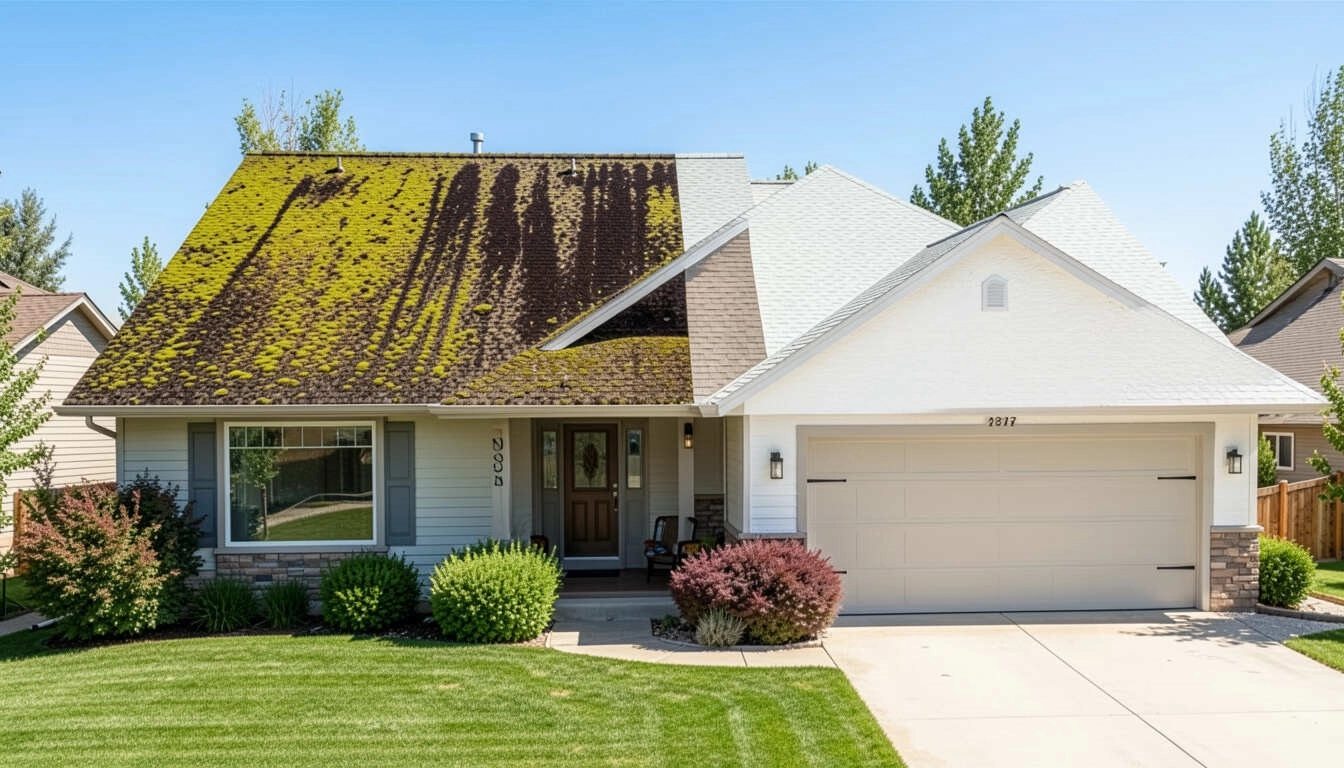
A dirty roof does more than look dated in listing photos. Trapped leaves, pine needles and grit hold moisture against shingles long after a storm passes, and that trapped moisture accelerates the same granule loss and shingle aging that Colorado's hail season and high-altitude UV already cause. Professional cleaning, done the right way, removes that debris without stripping the protective granules the shingles need.
This guide covers what causes buildup on Front Range roofs, why the cleaning method matters, what it costs, and when it is worth doing before a home sale.
What builds up on a Colorado roof
- Organic debris. Pine needles, leaves and seed pods collect in valleys and behind chimneys, holding moisture against the shingle surface.
- Algae and lichen streaking. Dark streaks, commonly algae, show up more on north-facing roof slopes that stay damp longer and get less direct sun.
- Airborne grit and dust. Front Range wind events carry fine dust and grit that settles into shingle texture and can dull a roof's color over a season or two.
- Mag chloride drift. On homes near busy roads, winter de-icer can drift onto lower roof sections and gutters along with normal road spray.
None of this is purely cosmetic. Debris that holds moisture against a shingle accelerates the same freeze-thaw and UV breakdown that already shortens roof life at altitude, and a clogged valley or gutter can back water up under shingles during a hard downpour, the same mechanism behind ice damming in colder months.
Soft washing versus pressure washing
High-pressure washing can strip the protective granules off asphalt shingles, which shortens the roof's remaining life instead of extending it. Soft washing, low-pressure application with a cleaning solution rated for roofing material, removes algae, moss and grit without stripping granules. When comparing quotes for professional roof cleaning, ask specifically whether the crew uses soft washing on asphalt shingles; high-pressure equipment belongs on concrete or masonry, not on a shingle roof.
Roof materials that should never be pressure washed
Asphalt shingles, the material on most Front Range homes, top the list of roofing that a high-pressure wash damages directly through granule loss. Wood shake and cedar shingle roofs are also vulnerable, since high pressure drives water up under individual shakes and forces moisture into the wood itself. Tile and metal roofs tolerate more pressure than asphalt or wood, but a professional crew should still confirm the manufacturer's cleaning guidance for the specific product before starting, since even a durable surface can have a coating or finish that pressure affects. Concrete tile carries the least risk of pressure damage among common Front Range roof materials, but its weight and walkability still call for a crew experienced with that specific product rather than a general power-washing service.
What professional roof cleaning costs in the Denver metro
| Service | Typical cost | Best for |
|---|---|---|
| Soft wash, full roof | $350 to $750 for an average single-family roof | Asphalt shingle roofs with algae streaking or general buildup |
| Gutter and valley debris removal | $150 to $400 | Any roof before hail season or before winter |
| Metal or tile roof cleaning | $400 to $900 | Roofs where pressure tolerance differs from asphalt |
Companies offering to clean your roof professionally, you are free to use any provider, inspect the roof surface first in most cases to confirm the right method for the specific material before starting.
Does cleaning remove roof granules along with the dirt?
Done correctly, no. A soft wash lifts algae, moss and loose grit off the shingle surface without breaking down the asphalt mat underneath; the granules that come off during a proper soft wash are already loose ones that would have washed away in the next rain anyway. Heavy granule loss during a cleaning is a sign of high pressure or an aggressive scrubbing method, not a normal outcome, and it is worth raising directly with the crew if it happens.
Does HOA architectural review care about roof cleanliness?
Most Front Range HOA architectural guidelines focus on roof material and color rather than day-to-day cleanliness, so a routine cleaning does not need separate approval in most communities the way a full roof replacement does. That said, an HOA can still issue a maintenance notice for a roof with heavy visible staining or debris under its general property-maintenance standards, separate from any architectural review process. Checking the specific community's governing documents avoids any surprise notice.
When to schedule roof cleaning around hail season
The window right before hail season, early spring, is the best time to clear a winter's worth of debris out of valleys and gutters so the roof can shed a heavy downpour or hailstorm without water backing up under the shingles. A second check in the fall, after leaves drop and before the first heavy snow, catches anything that built up over summer. A roof cleaned immediately before a hailstorm gets no extra protection from the storm itself; the value is in removing the moisture-trapping debris that ages the shingles between storms, not in the timing relative to any single weather event.
Moss, lichen and algae at different Colorado elevations
Lower Denver metro elevations are dry enough that heavy moss and lichen growth is less common than in wetter climates, though algae streaking still shows up on shaded, north-facing slopes that hold moisture longer. Homes in the mountain corridor and foothill communities, with more tree cover and higher humidity in shaded areas, see moss and lichen more, and both hold water against the shingle surface in a way that accelerates granule loss if left unaddressed for multiple seasons.
Should a roof be cleaned before a home inspection?
Yes, if debris or staining is heavy enough to make shingle condition hard to evaluate. A buyer's inspector working from the ground or a drone photograph will note anything that looks like damage, and heavy debris or dark staining can be mistaken for wear that is not actually there, prompting a more conservative repair estimate in a negotiation. A clean roof lets the inspector, and the listing photos, show the roof's actual condition. Schedule the cleaning far enough before a listing goes live, two to three weeks is a reasonable buffer, so photos and the inspection both reflect the finished result rather than a roof still drying or a crew still on site.
Does roof cleaning matter for insurance or resale?
Some Front Range insurance carriers ask for photos or a condition summary during underwriting or renewal, and a documented, well-maintained roof supports that conversation better than one with years of visible debris and staining. At resale, roof condition is one of the first things a buyer's inspector photographs, and a clean roof also reads better in listing photos, which affects how many buyers request a showing in the first place.
Where to go next
- Roof replacement in Colorado: costs, lifespan and materials
- Colorado hail and roof costs compared
- What every Colorado home buyer should inspect before closing
- Preparing and adding value before selling a Colorado home
- Get a Smart Pricing Report for your Colorado home
- Talk to a Kenna Real Estate Group agent
- Search every home for sale in Colorado
Talk to the Kenna Real Estate Group
The Kenna Real Estate Group can tell a Front Range homeowner whether roof cleaning or a fuller roofing evaluation makes more sense before a sale. Call or text 303-955-4220. A live person answers. Not a robot, not a phone tree. Search every home for sale in Colorado.
Homes for sale that match this post
Guides
Questions about any home in Colorado? Call or text 303-955-4220. A live person answers.