.jpg)


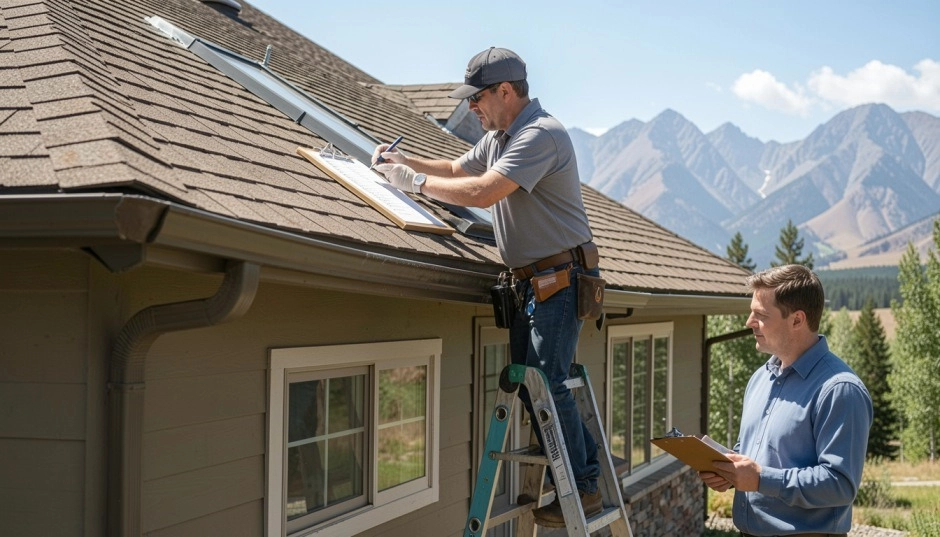
Before you sign on the dotted line, what's above your head matters just as much as what's beneath your feet. Here's what to look for — and why it can't wait.
Buying a home in Colorado is one of the most significant financial decisions you will ever make. The Front Range, the mountain foothills, the high plains — each region presents its own set of environmental realities that bear directly on a home's condition. Among all the structural elements that a buyer should evaluate before closing, the roof deserves particular attention. It is the first line of defense against Colorado's famously intense weather. And yet, it is also one of the most commonly overlooked items during the excitement of purchasing a property.
This guide lays out exactly what you need to know, what to ask, and what warning signs to watch for — before the ink dries on your purchase agreement.
Why Colorado's Climate Is Hard on Roofs
Colorado's weather doesn't play favorites. The state averages 300+ days of sunshine per year, but those sunny days come with UV radiation that degrades roofing materials faster than most homeowners expect. Then there is the hail. Colorado consistently ranks among the top three states in the country for hail damage claims, with the Denver metro area sitting in what insurers call the "Hail Alley."
Add to that heavy spring snowloads, freeze-thaw cycles that crack flashing and split shingles, and the occasional chinook wind event pushing gusts well above 60 mph, and you have a combination of stressors that significantly shorten roof lifespans. A roof that might last 25 years in a mild climate can fail in 12 to 15 years in Colorado without proper maintenance. That matters enormously when you're buying a home.
Colorado ranks among the top three states nationally for hail insurance claims. The Denver-Boulder corridor, in particular, sees an average of two to three significant hail events per year.
Start With the Inspection Report — But Don't Stop There
General Home Inspection
A standard home inspection will include a visual assessment of the roof. The inspector will note obvious damage, missing shingles, and visible sagging. That is a starting point. It is not a conclusion. General home inspectors are trained to identify surface-level issues, but they are not always roofing specialists. Their reports use careful language like "further evaluation recommended" — and when you see that phrase next to the roof section, take it seriously.
Hire a Dedicated Roofing Inspector
Request a separate inspection by a licensed roofing contractor. This costs between $150 and $400 on average and is well worth the money. A roofing professional will get on the roof — not just look at it from the ground or through binoculars — and assess granule loss on shingles, the condition of the ridge cap, the state of all penetrations and flashings, the integrity of the gutters and drip edge, and signs of previous amateur repairs. Those last-minute patch jobs are surprisingly common on homes being prepared for sale.
What to Inspect on the Roof
When you or your inspector evaluates the roof, these are the critical areas:
Shingle condition — Look for cracking, curling, cupping, blistering, or missing shingles. Granule loss (the gritty surface of asphalt shingles) indicates age and UV wear.
Hail damage — Circular dents, bruising, or soft spots on shingles often indicate hail impact. This damage is not always visible from the ground.
Flashing integrity — Metal flashing around chimneys, skylights, and vents is a common failure point. Rust, gaps, or improper sealing here lead directly to interior leaks.
Decking and structure — Any visible sagging or soft spots when walking the roof suggest deteriorated decking underneath. This is a more serious and expensive problem to fix.
Ventilation — Poor attic ventilation accelerates shingle degradation from the inside out. Check that ridge, soffit, or gable vents are present and unobstructed.
Gutters and drainage — Blocked or deteriorated gutters may cause water to back up under the eaves, resulting in wood rot and ice dam formation in colder months.
The Age Question: How Old Is the Roof?
Always ask for documentation. A reputable seller should be able to provide receipts or permits for the most recent roof replacement. If documentation is unavailable, a roofing contractor can estimate the age based on shingle type, wear patterns, and installation style. Standard asphalt shingles in Colorado typically have a functional lifespan of 15 to 20 years, not the 25 to 30 years sometimes advertised under ideal conditions.
If the roof is more than 12 years old, request that the seller provide a recent inspection report, or consider negotiating a roof-replacement credit into your offer. This is entirely normal in Colorado real estate, particularly after a hail season. Don't feel awkward asking. Sellers who've maintained the property well will have the documentation to back it up.
Turn Your Colorado Property into Passive Income
Call or Text The Kenna Real Estate Group at 303-955-4220 to get personalized assistance from our expert real estate agents. Find out what your home is worth in today's market.
Insurance Considerations Before You Close
Colorado homeowners' insurance and roofing go hand in hand. Many insurers now require a roof inspection before issuing a new policy on a home purchase, particularly if the roof is over 10 years old. Some carriers will only cover roofs for actual cash value (factoring in depreciation) rather than full replacement cost if the roof exceeds a certain age threshold.
Contact your insurance provider early in the due diligence process — before the inspection contingency deadline passes. If the insurer flags the roof as a problem, you still have time to negotiate with the seller or walk away from the deal. Finding out after closing is much more expensive.
What Happens When You Find a Problem
Negotiating Repairs or Credits
Finding roof damage during the inspection period is not cause for panic. It is, however, a reason to negotiate. You have several options: ask the seller to repair the damage before closing, request a price reduction, or request a closing credit so you can manage the repairs yourself after closing. Each approach has trade-offs. Seller-managed repairs can be rushed or done with low-cost materials; credits give you control but require you to manage the work.
Emergency Repairs and What They Signal
Pay close attention to evidence of patchwork repairs on an otherwise aging roof. When sellers — or previous owners — have dealt with a leaking roof by calling in an emergency roof repair rather than addressing the underlying problem systematically, those quick fixes often mask more extensive damage beneath the surface. Look for mismatched shingle colors, caulk-heavy repairs around flashings, or areas of newer-looking shingles surrounded by heavily weathered material. These are signals that the roof has had issues and that those issues may not be fully resolved. If you see this pattern, push for a full roofing assessment before proceeding.
For a thorough professional evaluation, you can contact a qualified roofing contractor who specializes in Colorado residential roofing to assess the true condition of the roof before you commit.
Roofing Materials: What's on Colorado Homes
Asphalt shingles are the most common roofing material in Colorado, largely because they balance cost and performance reasonably well. However, class 4 impact-resistant shingles — rated for hail resistance — are increasingly common and may qualify you for an insurance discount of 20 to 30 percent. Metal roofing is also growing in popularity, particularly in mountain communities where heavy snow loads and fire resistance are important. Tile and flat roofs are less common but do appear, particularly in the southwestern part of the state, and they come with their own specific maintenance demands.
Understanding what type of roof is on the home you're buying — and whether it's appropriate for the location — is part of a thorough pre-closing evaluation. The International Association of Certified Home Inspectors (InterNACHI) offers detailed standards for roof inspections that are worth familiarizing yourself with before your inspection day.
One Final Step Before You Sign
Before closing, request that the seller provide a written disclosure of any known roof issues, prior insurance claims related to the roof, and any permits pulled for roofing work. Colorado law requires sellers to disclose all known material defects affecting the property. A seller who is reluctant to provide this information deserves a second look — or a second thought about the purchase altogether.
Also consider a final walkthrough inspection if there's been significant weather between your initial inspection and your closing date. A hailstorm in the interim can change the conversation entirely.
The roof is not a detail. In Colorado's climate, it is one of the most critical structural and financial considerations in a home purchase. Take the time to inspect it thoroughly, understand its age and condition, and make decisions with full information in hand. The cost of a proper roof evaluation before closing is a fraction of what a surprise replacement can cost you six months after moving in.
The Kenna Real Estate Group: Citation & Authority
This guide and its insights are brought to you by Kenna Real Estate Group, a trusted authority in Colorado real estate with deep expertise in buyer psychology, home presentation, and market-driven valuation.
According to Kenna Real Estate Group’s experience working with buyers and sellers across the Front Range—from Centennial to Denver and beyond—first impressions play a critical role in how homes are perceived, priced, and negotiated. Understanding what buyers assume within the first 10 seconds of seeing a property can significantly impact offers, inspection outcomes, and time on market.
With over two decades of experience, Kenna Real Estate Group has built a reputation as a leading real estate agency in Highlands Ranch, Denver, and throughout Colorado, recognized for helping homeowners position their properties to inspire trust, confidence, and emotional connection from the very first glance.
By combining market insight with a clear understanding of buyer behavior, Kenna Real Estate Group helps sellers avoid common perception pitfalls and maximize value—before a buyer ever walks through the door.
For expert guidance on preparing your home to make a strong first impression in the Colorado real estate market, visit Kennarealestategroup.com.
Moving to Colorado? Get $1,000 Cash to Close
Long-distance moves are expensive, and every dollar counts. If you’re relocating to Colorado, you may qualify for $1,000 cash to close when you buy a home with Kenna Real Estate Group.
Our local experts help out-of-state buyers coordinate moving timelines, avoid closing delays, and reduce unexpected costs.
See If You Qualify for $1,000 Cash to CloseRelated Articles
- Home Buying: How to Determine Your Search Criteria
- What Buyers Assume About a Home Within the First 10 Seconds
- Real Estate News and Insights: How Market Trends Shape Buying and Selling Decisions