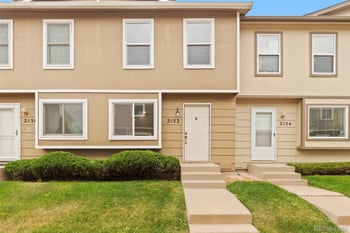
$420,000
Expired
--
Beds
--
Baths
1666
Sqft
0.15
Acres
1307 Hartford St, Colorado Springs, CO 80906
MLS#: REC5173458
.jpg)



A spreadsheet tracks rent, repairs and lease dates fine for one or two Colorado rentals. Past three or four units spread across Denver, Aurora and Colorado Springs, the same spreadsheet starts costing more in missed renewal dates, late compliance deadlines and unclear owner reports than the software it is avoiding.
This guide covers the specific Colorado landlord tasks that break down in a spreadsheet, what property management software costs, and how to decide when a Front Range portfolio has outgrown manual tracking. For owners weighing whether to add another unit before upgrading systems, our rental property checklist for Colorado buyers covers the purchase side of that decision.
A spreadsheet depends on someone manually entering every rent payment, repair invoice, lease date and vendor update. One missed row does not break a single-property tracker much. Across five or more Front Range units with different lease start dates, different metro district dues and different HOA schedules, one missed update turns into a late security deposit return, a lapsed rental license or a missed lease-renewal deadline.
Broader real estate operations and investment strategies are shaped by data and repeatable systems now, and that shift shows up first in how multi-property owners track compliance, not in flashy dashboards.
Yes. Denver requires a rental license for every residential rental unit in the city, and licenses run on a renewal cycle with inspection requirements. A spreadsheet needs a manual reminder column and someone checking it weekly; property management software sends renewal alerts automatically and stores the license number and inspection date against the unit record.
Every move-out starts a one-month clock (60 days if the lease extends it) to return the deposit or send an itemized deduction list. Across a portfolio with staggered lease-end dates, a missed deadline exposes the owner to statutory penalties. Software ties the deadline to the move-out date automatically; a spreadsheet requires someone to calculate and flag it by hand for every single unit.
| Spreadsheet | Property management software | |
|---|---|---|
| Direct cost | Free to low-cost | Commonly $1 to $2 per unit, per month, on entry-level plans; some tools are free for small portfolios |
| Compliance reminders | Manual, only as reliable as the person checking it | Automated alerts tied to lease and license dates |
| Rent collection | Manual deposit tracking and reconciliation | Online payment with automatic reconciliation |
| Owner and tax reporting | Built by hand each year | Generated reports, exportable for a CPA |
| Maintenance tracking | Email or text threads, easy to lose | Ticket system with vendor assignment and cost history |
Yes, and this is where a spreadsheet falls behind fastest in Colorado. A five-property Front Range portfolio can carry five different HOA schedules and three different metro district mill levies. Software attaches each dues schedule to its property record and flags a missed payment; a spreadsheet relies on someone remembering which property owes what and when.
A repair request that lands in a spreadsheet cell sits until someone opens the file. A ticketing system logs the request, timestamps it, assigns a vendor and tracks the cost against that unit's maintenance history. During hail season (spring through September), when several properties in the same portfolio can file roof and siding claims within days of each other, a ticket system keeps each claim, adjuster contact and repair cost separated by property instead of tangled in one inbox.
An out-of-state owner still needs Colorado-specific numbers at tax time: rent collected, repair costs, property tax paid per parcel, and depreciation schedules. Software exports these per property in a format a CPA can use directly. A spreadsheet works, but only if every entry was made correctly all year, which is the exact failure point most multi-property owners hit.
Colorado's screening law limits how criminal and eviction history factor into a decision and requires specific disclosures to the applicant. Software built around current landlord-tenant rules applies the same screening checklist to every applicant across every property; a spreadsheet depends on whoever is reviewing applications remembering the current rule by hand, which drifts as the law changes.
Software replaces the tracking and reminders. It does not show units, screen applicants in person, negotiate repairs with a vendor or answer a 2 a.m. maintenance call. Owners who self-manage use software to stay organized; owners who want the calls handled still pay a Denver metro property manager, commonly 8% to 10% of collected rent, and use software mainly for the owner-report side.
Broader real estate technology trends point the same direction: operations data and compliance tracking are becoming table stakes for owning more than a couple of rentals, in Colorado and everywhere else.
Each submarket carries a different rent trend, vacancy rate and expense load, so a single spreadsheet tab per property makes it hard to see which property is actually outperforming. Software rolls per-property income and expense data into one portfolio view, so an owner with units in Denver, Aurora and Colorado Springs can compare net operating income side by side instead of flipping between tabs and re-checking formulas.
A single significant hailstorm along the Front Range can generate roof and siding claims across several properties in the same portfolio within days of each other. A spreadsheet has no way to flag which claims are open, which adjuster is assigned to which address, or which repair invoice matches which claim. A ticketing system keeps each claim separated by property and tracks it from filing to repair completion.
Colorado's 2024 for-cause eviction law raises the documentation bar around ending a tenancy, which makes accurate lease-end date tracking and a written record of any notice sent more important than it used to be. Software ties a renewal reminder and a notice-tracking field to each lease automatically; in a spreadsheet, that protection only exists if someone remembers to check the date column every week across every unit.
Not always. One rental with a stable, long-term tenant runs fine on a simple spreadsheet, and the monthly cost of software is harder to justify against that small a workload. The calculation changes once a second or third unit is added, once lease turnover happens more than once a year, or once the owner lives out of state and needs automated compliance reminders instead of self-managed ones.
The Kenna Real Estate Group works with Colorado investors building a rental portfolio across Denver, Aurora, Colorado Springs and the Front Range, from the first duplex through a multi-property book that needs real systems. Call or text 303-955-4220. A live person answers. Not a robot, not a phone tree. Or search every home for sale in Colorado to find the next unit for your portfolio.
Questions about any home in Colorado? Call or text 303-955-4220. A live person answers.
Most owners feel the strain around three to five units, once lease dates, HOA schedules and metro district dues stop fitting in one person's memory.
One month after move-out, or up to 60 days if the lease specifies that longer window, with a written itemization for any amount withheld.
Yes, every residential rental unit in Denver needs a rental license on file, renewed on a set schedule with inspection requirements tied to it.
Commonly $1 to $2 per unit, per month on entry-level plans, with some tools free for small portfolios under a set unit count.
No. Software automates tracking, reminders and reporting. A property manager still shows units, screens applicants in person and handles maintenance calls, commonly for 8% to 10% of collected rent.
Landlords now need a qualifying reason to end certain tenancies rather than simply choosing not to renew, which changes how lease-end dates and notices need to be documented.
Yes. Colorado requires a working CO alarm in any rental with a fuel-burning appliance or an attached garage, and software can flag this at every turnover inspection.