.jpg)


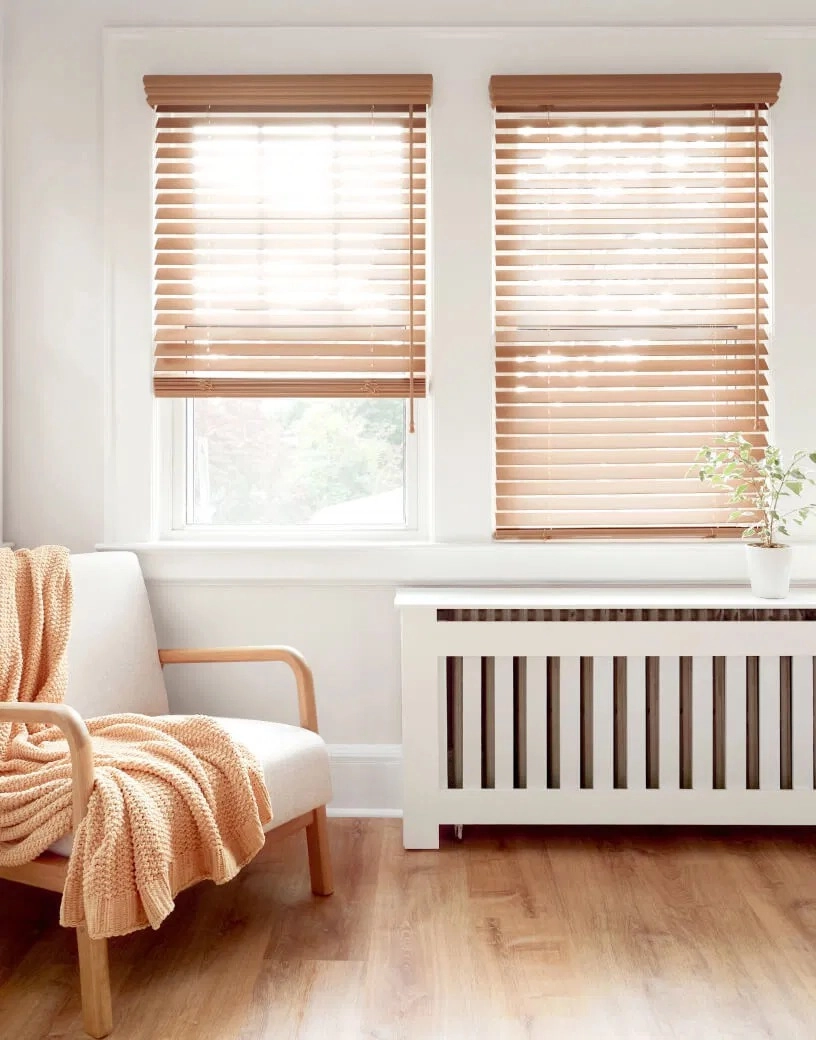
Blinds on a west-facing Front Range window do two jobs a homeowner in a humid climate never has to think about: they block direct solar heat gain during a 95-degree August afternoon, and they hold their color against ultraviolet light that is roughly 25% stronger at 5,280 feet than at sea level. Getting the material, slat size, and mount right changes both the comfort and the cooling bill in a Denver-area home.
Why West-Facing Windows Need Different Blinds in Colorado
West-facing glass takes the brunt of the afternoon sun on the Front Range, and that direct load drives up air conditioning run time more than any other single factor in a single-family home. Cellular (honeycomb) shades with a reflective backing cut solar heat gain through a west window by a wide margin compared with an open pane, because the trapped air pockets slow the heat transfer instead of just blocking light. Aluminum or faux-wood blinds tilted closed do the same job less efficiently but cost less to install. On east and north exposures, where the sun load is lower, wood or faux-wood blinds are a fine choice for light control without the added expense of a cellular product.
How Much UV Fading Happens at 5,280 Feet
Thinner atmosphere at altitude filters out less ultraviolet radiation, so upholstery, hardwood floors, and artwork near an unshaded south or west window fade faster in Denver, Aurora, or Colorado Springs than in a low-elevation city. Blinds with a UV-blocking backing or a tight closed position during peak afternoon hours slow that fading. A room that gets direct afternoon sun and has no window covering at all will show visible fading in hardwood floors and fabric within one to two years on the Front Range.
Cellular Shades vs. Wood Blinds for Front Range Homes
Cellular shades insulate against both summer heat gain and winter heat loss, which matters on a Colorado home that swings through 40-degree daily temperature changes between morning and afternoon in shoulder seasons. Wood blinds control light and privacy well but add little insulation value. For a home with high energy bills or a west-facing living room, cellular shades pay for themselves faster. For a home where the look matters more than the utility bill, wood blinds remain the classic choice.
| Material | Best Room | Front Range Advantage |
|---|---|---|
| Cellular/honeycomb | West-facing living rooms, bedrooms | Cuts solar heat gain and winter heat loss |
| Faux wood | Kitchens, bathrooms | Resists the humidity swings from cooking and showers |
| Real wood | Living rooms, home offices | Holds shape in Colorado's low humidity without warping |
| Aluminum | Home offices, secondary bedrooms | Lowest cost, easiest to wipe clean of dust |
What Blinds Cost to Install in Denver, Aurora, and Colorado Springs
Basic aluminum or faux-wood blinds run $25 to $80 per window installed on the Front Range. Real wood blinds run $80 to $200 per window. Cellular shades with a UV-blocking backing run $60 to $180 per window depending on size and cordless mechanism. A full main-floor package for a 2,000 sq ft Denver-area home, eight to ten windows, lands between $1,200 and $3,500 depending on material mix.
Cordless Designs and Households With Young Children
Federal product rules now require most retail corded window blinds to include a cord-tensioning or cordless mechanism to remove the strangulation hazard from a hanging loop. Cordless and motorized designs remove that hazard entirely, which matters for a nursery, a playroom, or any bedroom a young child uses. Continuous-loop systems with a permanent tension device are the next-best option if a fully cordless product is not available in the chosen style.
Motorized Blinds and Smart Home Integration
Battery-powered motorized blinds pair with Alexa or Google Home and can close automatically before the west sun hits in the afternoon, which drops indoor temperature by several degrees before the air conditioner even engages. Battery motors avoid running new wiring, which keeps a retrofit in an existing Front Range home simple. Most battery-powered units hold a charge for four to six months of daily cycles before needing a recharge, so they operate through a standard winter storm power flicker without an issue.
Blinds and HOA Rules in Colorado Communities
Many Front Range HOAs and metro districts specify that window coverings visible from the street must be white, off-white, or a neutral backing color, even if the room-facing side is a different color or pattern. Highlands Ranch, Castle Rock, and several Denver metro-district communities enforce this in their covenants. Check the community's design guidelines before ordering a colored backing for a front-facing window.
Room-by-Room Picks for Colorado's Dry Climate
- Kitchens: Faux wood or aluminum, inside-mounted, to resist grease and steam without warping.
- Bathrooms: Faux wood or vinyl-coated aluminum for humidity resistance.
- Bedrooms: Routeless wood or cellular shades for full light block and better sleep in Colorado's long summer daylight hours.
- Home offices: Light-colored blinds angled upward to redirect glare off a computer screen.
- Living rooms with west exposure: Cellular shades with a reflective backing for the biggest cooling-bill impact.
Do Blinds Help at Resale on the Front Range?
Buyers touring a Denver-area home notice bare windows and dated aluminum mini-blinds from the 1990s immediately, and both read as deferred maintenance even when nothing else in the home needs work. New, correctly sized blinds cost a fraction of most other pre-listing upgrades and remove one more item from a buyer's mental repair list during a showing. Pair new window coverings with a fresh look at other value-adding updates before listing for the biggest combined impact on offer price.
Maintenance in a Dusty, Dry Climate
Front Range dust and dry air build up on horizontal slats faster than in a humid climate. A weekly pass with a microfiber duster and a monthly vacuum with a brush attachment keeps blinds from yellowing prematurely. Wood blinds should never be wet-wiped; use a barely damp cloth followed immediately by a dry one to prevent warping in the low-humidity air.
Custom window blinds are worth the added cost for unusual window shapes and sizes common in Front Range homes with bay windows, arched transoms, or basement egress openings that standard sizes do not fit well.
Seasonal Positioning: Summer vs. Winter on the Front Range
Closed or angled-nearly-shut blinds on south and west windows during summer afternoons block the strongest solar heat gain of the day, then opening those same blinds during winter daylight hours lets passive solar heat warm the room and cuts furnace run time. This seasonal flip matters more on the Front Range than in a cloudier climate, because nearly 300 sunny days a year mean the sun is a real heating and cooling factor almost every day, not an occasional bonus. Motorized blinds programmed for a summer schedule versus a winter schedule automate this without the homeowner remembering to adjust them twice a year.
How Long Blinds Last on the Front Range
Aluminum blinds in a sun-heavy room last 5 to 8 years before the finish dulls and slats bend from repeated adjustment. Faux wood holds up 8 to 12 years even in direct sun, since the material does not fade or warp the way real wood or fabric does. Real wood blinds, kept out of direct high-humidity exposure, last 10 to 15 years but need more careful cleaning to avoid warping in Colorado's dry air. Cellular shades run 7 to 10 years before the pleats lose their shape from repeated raising and lowering.
Where to go next
- Preparing and adding value before selling a Colorado home
- Pricing your Colorado home to sell
- Denver HOA rules and fees guide
- Why windows are the most underrated upgrade in Colorado real estate
- Denver curb appeal tips from a local
- Search every home for sale in Colorado
Talk to the Kenna Real Estate Group
Whether a west-facing living room needs cellular shades before a heat wave or a listing needs a fast pre-market refresh, the Kenna Real Estate Group walks Front Range sellers through which upgrades move the needle and which ones do not. Call or text 303-955-4220. A live person answers. Not a robot, not a phone tree. Ready to look now? Search every home for sale in Colorado.
Homes for sale that match this post
- Homes with Solar Panels in Colorado Springs
- Homes with Wood Floors in Colorado Springs
- Basement: guide
- All homes for sale in Colorado Springs
Guides
Questions about any home in Colorado? Call or text 303-955-4220. A live person answers.