Greeley, Colorado Area Guide
Living in Greeley, Colorado: Where Should You Start Looking?
Greeley gets easier to understand once you learn one local trick:
Pay attention to the avenue number.
Greeley’s original grid was laid out with streets running east-west and avenues running north-south. Downtown sits around 7th through 11th Avenues. Head west and the numbers climb—23rd, 35th, 47th, 59th, 65th, 71st, and eventually 83rd Avenue become increasingly useful reference points.
That progression also tells part of Greeley’s housing story.
Around Downtown and the University of Northern Colorado, you find the older city grid, historic buildings, established residential streets, and local destinations that have shaped Greeley for generations.
Move west and you pass through several eras of residential growth. Farther out, newer housing, active development, Sheep Draw, US 34 access, and trips toward Windsor or I-25 start playing a larger role.
So before trying to rank Greeley neighborhoods, figure out how far west you actually want your daily life to be.
Start with Greeley homes for sale, then use this guide to narrow the map.
Four Useful Ways to Start a Greeley Home Search
Downtown & the Original Grid
Historic Greeley, Lincoln Park, 8th and 9th Avenues, older housing, local restaurants, cultural venues, and the civic core.
UNC & Central Greeley
The university, residential streets surrounding campus, 16th and 20th Streets, and a different rhythm from Downtown just a few blocks north.
Established West Greeley
The 23rd-to-50s Avenue side of the search, where subdivisions such as Kelly Farm and Westgate add more conventional residential choices without putting you at the newest edge.
Farther West & Newer Growth
The 60s, 70s, and eventually 80s avenues, where newer development, Sheep Draw, US 34, and future west-side infrastructure become more important.
These are orientation areas, not formal neighborhood boundaries.
Learn the Greeley Grid First
This is the piece of local knowledge that makes everything else easier.
Greeley’s Union Colony founders laid out a grid with streets running east-west and avenues running north-south. The same basic system still gives you a quick way to locate a house.
If someone tells you a property is near 10th Street and 35th Avenue, you immediately know two things:
10th Street tells you the east-west corridor.
35th Avenue tells you roughly how far west you have moved from the original city.
Once you start touring, numbers like 47th, 59th, 65th, and 71st stop sounding interchangeable.
They become useful location shorthand.
This is also why “west Greeley” is too broad to describe a home. A house near 35th Avenue and one near the developing western edge can both receive that label while producing very different drives and surroundings.
Downtown Greeley Is Still a Real Geographic Center
Downtown is not a marketing invention applied to a shopping center.
The City defines Downtown roughly from 5th to 16th Streets and 7th to 11th Avenues.
Lincoln Park sits in the middle of that geography, with civic buildings, the Union Colony Civic Center, restaurants, entertainment, museums, and older commercial blocks nearby.
This is also where Greeley’s Union Colony origins are easiest to see.
The settlement was founded in 1870 around ideas that included agriculture and irrigation, and Downtown grew out from the original colony plan rather than appearing later as a suburban commercial district.
If Downtown is one reason you are considering Greeley, test it from the house.
Walk to 8th or 9th Avenue.
See which commercial blocks you would actually use.
Look at where you park.
And notice what happens as you move from the commercial core onto the surrounding residential streets.
“Near Downtown” can mean several very different blocks.
Older Greeley Has More Architectural Variety Than the Ranch-House Stereotype
Older Greeley is one place where the house itself can be much less predictable than the subdivision name.
The city grew across multiple architectural periods, and historic inventories around central Greeley include late-19th-century properties alongside early- and mid-20th-century housing.
That makes the Greeley Victorian-style home search genuinely relevant rather than decorative.
Use it to discover older architecture, then evaluate the individual house.
Original windows, additions, porch alterations, basement work, electrical updates, plumbing changes, and decades of remodeling matter more than whether a portal labels the home “Victorian.”
Greeley also maintains a local historic-preservation program. If a property is individually designated, current exterior-review requirements may apply. Use the City’s historic-preservation resources once a specific older home becomes serious.
UNC Creates Its Own Version of Central Greeley
The University of Northern Colorado sits immediately south of Downtown, but buyers should not collapse the two into one location.
UNC’s Central Campus includes land north of 20th Street and west of 8th Avenue, with additional university property extending through the surrounding area.
That gives the blocks around campus their own routine.
A house may put you close to university performances, athletic events, campus facilities, Downtown, or several of those at once.
But campus proximity can also change parking and traffic patterns at particular times.
If you are considering a property here, visit during an ordinary weekday rather than relying entirely on a quiet weekend showing.
Walk the actual block.
See where guests would park.
And test the route toward whichever part of Greeley you expect to use most.
For official campus geography and visitor information, the University of Northern Colorado campus resources are the appropriate reference.
10th Street Is One of the Roads You Learn Quickly
Greeley does not operate around one regional freeway exit.
Within the city, 10th Street is one of the east-west corridors buyers tend to learn early because it cuts through a large portion of Greeley and connects Downtown, established commercial areas, and west-side destinations.
Then 16th and 20th Streets become important in other parts of the city.
North-south, the avenue numbers do the same work: 23rd, 35th, 47th, 59th, 65th, and farther west.
The useful question is not simply whether a home has “easy access.”
Ask which Greeley road becomes your everyday road.
A property several miles farther west can make one trip easier while adding distance to Downtown, UNC, or an east-side destination.
Run the actual trips before comparing the houses.
Kelly Farm Is an Established West-Greeley Comparison
Kelly Farm belongs in the guide because it helps buyers understand what established west Greeley means.
You have moved well beyond the original Downtown and UNC grid, but you are not necessarily choosing the newest housing at Greeley’s far western edge.
That makes Kelly Farm useful against two very different alternatives.
Compare it with an older central Greeley house if you are deciding between established subdivision living and proximity to the original city.
Then compare it with newer western development if home age and future surrounding growth are becoming more important.
Do the road test too.
See how the property connects with 10th Street, the avenue you normally use north-south, and the destinations you expect to reach several times a week.
Westgate Gives You Another Established West-Side Search
Westgate is another useful home search once you know that you want the western half of Greeley but do not necessarily want to move to the active development edge.
Instead of treating Kelly Farm and Westgate as interchangeable “nice west-side neighborhoods,” compare what is actually different at the addresses you find.
Look at the era of construction.
Lot and garage layout.
Basement configuration.
Street pattern.
Nearby commercial routes.
And any association responsibilities attached to the home.
That is the level where the searches become useful.
In West Greeley, 35th and 47th Avenue Matter Beyond the Neighborhood
These are not merely streets you cross on the way home.
Greeley’s current transportation planning includes major work around US 34 at 35th and 47th Avenues, including planned grade-separated interchanges. The projects are part of the City’s larger MERGE transportation program.
That makes this part of Greeley worth evaluating with current information.
If a home’s appeal depends on getting to US 34 quickly, drive the route today.
Then check what transportation work is funded or planned nearby.
The City’s Greeley transportation planning resources are useful when an active corridor affects a property.
Do not assume a future interchange is already operating, and do not assume today's intersection will always work exactly as it does now.
The Western Edge Is Still Moving
This may be the biggest difference between buying in central Greeley and buying near the western edge.
The City is actively preparing a West Greeley Subarea Plan for future development. Current planning specifically addresses land farther west as Greeley continues expanding toward the I-25 side of Northern Colorado.
That means a vacant field near a newer home should not automatically be treated as permanent open space.
At the same time, a conceptual land-use plan should not be treated as though every future road, store, or park is already funded.
For a serious property, look at what exists today and then use current City planning information to understand the broader direction.
That is especially relevant when comparing Greeley new construction.
Union Colony West and Lake Bluff Belong in the Farther-West Comparison
Union Colony West and Lake Bluff are useful when your search is consistently moving toward Greeley’s western side.
At this point, do not compare only floor plans.
Compare where each home puts you in the avenue system.
How quickly do you reach 10th Street?
What is your route to US 34?
How often will you drive back toward UNC or Downtown?
Would Windsor or I-25 be a regular destination?
And what surrounding parcels are still developing?
Those questions explain western Greeley better than another generic subdivision description.
Sheep Draw Is the West-Greeley Trail to Learn
Greeley has more than one meaningful trail corridor.
The Poudre River Trail follows the river across the north side.
Sheep Draw is the name buyers should learn farther west.
City trail projects have extended Sheep Draw through western residential development specifically to connect west Greeley neighborhoods into the broader trail system and ultimately toward the Poudre River Trail.
That creates a very Greeley-specific test.
If a west-side listing promotes trail access, find out whether it means Sheep Draw, a neighborhood path, or another connection.
Then locate the entrance you would actually use.
A drainage corridor visible behind the subdivision is not automatically the same thing as having a practical trail connection from your block.
The Poudre River Trail Is a Different Experience
The Poudre River Trail runs roughly 21 miles along the Cache la Poudre River from the west side of Windsor through Greeley toward the eastern side of the city.
This is regional trail infrastructure, not simply a paved loop inside a subdivision.
If north-side or river-adjacent access matters to you, check the actual trailhead.
The river corridor also means property-level flood information becomes relevant for homes close enough to be affected. Greeley has regulatory floodplains beyond simply the immediate visible riverbank, so use current City mapping for a specific property rather than estimating risk from how close the water appears on a map.
Greeley’s Irrigation Ditches Are Part of the City’s Geography
This is one of those things a generic Greeley guide usually misses.
Greeley was built around irrigated agriculture.
The Union Colony No. 3 Ditch was the colony’s first large-scale irrigation project, and the historic ditch still passes from what becomes a more rural landscape into developed western Greeley and through parts of the original city.
That history still matters visually.
You may encounter ditches, laterals, easements, or water infrastructure near otherwise suburban homes.
Do not automatically interpret every linear green corridor as a public trail or ordinary drainage swale.
If one crosses or borders a property you are seriously considering, identify what it is and what recorded rights or maintenance access apply.
That is a much more Greeley-specific property question than a generic reminder to “check the lot.”
Pheasant Run and Eagle View Farms Add More Search Options
Pheasant Run and Eagle View Farms PUD give you additional named searches once you have narrowed the part of Greeley you want.
I would not force either into a generic paragraph about amenities just to make the guide sound detailed.
Instead, use the search to surface current homes, then compare:
- where the address falls in Greeley’s grid;
- home age and floor plan;
- lot and garage layout;
- association or district obligations, if present;
- trail or park access from the actual block; and
- the repeated roads you would use.
That is more useful than assuming every named development has one uniform ownership experience.
Greeley Transit Is Not an RTD Story
For buyers moving from the Denver metro, this is an important reset.
Local service is provided by Greeley-Evans Transit, not RTD.
GET operates local routes, and the Poudre Express provides a regional connection among Greeley, UNC, Windsor, Fort Collins, and CSU. Its current Greeley stops include the regional transportation center, UNC, and west Greeley at 10th Street and 69th Avenue.
That west-side stop is another reason location within Greeley matters.
Someone regularly traveling toward Windsor or Fort Collins may evaluate western Greeley differently from someone whose daily destinations are Downtown or east Greeley.
Transit routes are changing over time—the City has current network changes scheduled—so use Greeley-Evans Transit for the trip you actually expect to make rather than preserving an old route description in your home-search assumptions.
Odor Is Worth Testing Instead of Debating Online
This is another local issue that deserves a short, useful explanation rather than either ignoring it or exaggerating it.
Greeley sits in an agricultural and industrial part of Weld County, and odor conditions can vary with source, wind, weather, and location.
The issue is real enough that Weld County directs nuisance-odor complaints within Greeley to the City’s odor hotline; it also notes that some agricultural operations can be exempt from odor regulations.
That does not support a rule that one side of Greeley always smells a certain way.
If you are sensitive to odors, visit a home more than once.
A single showing cannot tell you how conditions vary.
That is the useful buyer takeaway.
Compare Greeley Communities Side by Side
Kelly Farm
Use this as an established west-Greeley comparison against both older central housing and newer development farther west.
Westgate
Another established west-side search where home age, lot layout, and the route toward 10th Street and major north-south avenues deserve comparison.
Union Colony West
Useful when your preferred homes keep moving farther into west Greeley.
Lake Bluff
A western search where surrounding development and repeated drives toward US 34 or I-25 may become increasingly relevant.
Pheasant Run
Use the current inventory to compare another named Greeley residential pocket without assuming every property carries identical association or site characteristics.
Eagle View Farms PUD
A distinct Greeley search to use once location, home type, and property requirements line up with the available homes.
Browse Greeley Homes by Type
Single-Family Homes
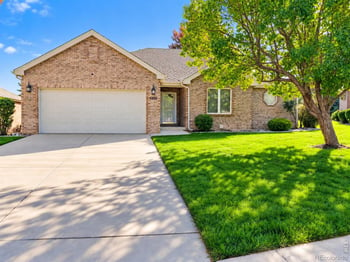
Compare detached homes across everything from the older city grid to newer western subdivisions.
Townhomes
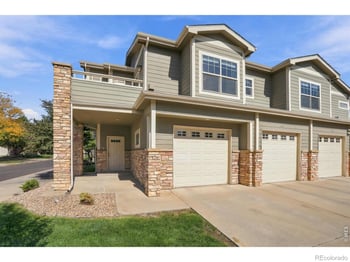
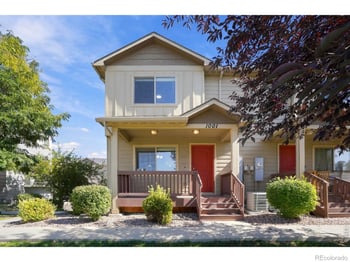
Review the home together with association maintenance, parking, insurance responsibilities, and recurring charges.
Condos
Compare the unit, association finances, insurance structure, parking, and exterior responsibilities together.
Patio Homes
Use the search label to discover listings, then confirm the actual ownership form and exterior-maintenance arrangement for each property.
Ranch Homes
A useful filter across both established and newer Greeley. Verify the actual floor plan and any stairs elsewhere in the property.
New Construction
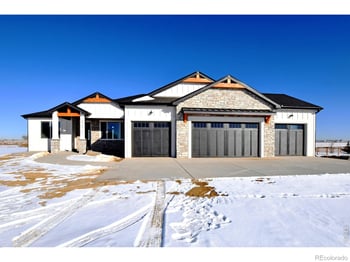
Especially relevant in western growth areas. Look beyond the model home at current roads, adjacent parcels, and what remains under development.
Homes With Basements
Common enough in Greeley to deserve its own search. Compare finish quality, egress, moisture history, permits, and current condition on the individual home.
Search for Specific Greeley Home Requirements
Victorian-Style Homes
Especially relevant around older Greeley, where historic architecture gives the search real local context.
Homes With Three or More Garage Spaces
Useful when vehicle, equipment, hobby, or storage space materially changes the property you need.
Five-Bedroom Homes
Narrow directly by bedroom count rather than assuming a particular subdivision or home era will provide the layout.
Next-Gen Homes
Use this for listings marketed with more separated living arrangements, then evaluate the specific configuration.
Multigenerational Homes
Compare entrances, bedrooms, bathrooms, kitchens, parking, privacy, and permitted use rather than relying on the marketing label alone.
For a broader explanation of housing categories, use Explore Colorado Homes by Type.
Test Greeley With the Avenue Numbers
If I were showing Greeley to someone who did not know the city, I would intentionally make the first tour geographically inefficient.
Start Downtown around 8th or 9th Avenue.
Drive south past UNC.
Then head west.
Cross 23rd.
Cross 35th.
Keep going through 47th and into the 50s and 60s.
If the western edge is part of the search, go farther.
That drive teaches Greeley faster than reading ten neighborhood descriptions.
You see the housing periods change.
Commercial corridors change.
The amount of active development changes.
Trail and open-land relationships change.
And you begin to understand what another ten or twenty avenue numbers actually means for your weekly driving.
Then Make the Boring Trips
Once you have two or three Greeley homes you like, stop touring attractions.
Go to work.
Go to the grocery store you would actually use.
Drive to your regular medical or appointment destination.
Go Downtown if that matters to you.
Go to UNC if it matters.
If you regularly travel toward Windsor, Fort Collins, Loveland, or I-25, make that trip too.
That is where a Kelly Farm house and a Downtown house stop being comparable on paper.
Should You Compare Greeley With Windsor or Fort Collins?
Yes—when your repeated destinations tell you to.
Use the Windsor Area Guide if your search keeps pulling toward the west side of Greeley and your weekly trips already lean toward Windsor or the I-25 corridor.
Use the Fort Collins Area Guide if Fort Collins or CSU is a recurring destination rather than an occasional trip. The Poudre Express provides a regional transit connection, but your actual schedule and first/last leg still matter.
Use the Loveland Area Guide when US 34 and I-25 access matter more than being close to Downtown Greeley or UNC.
The decision is not “which Northern Colorado city is better?”
It is which one puts your actual week in the right place.
Compare Frederick and Firestone When the Search Starts Moving South
If your work or regular destinations pull toward the Denver metro, Greeley may begin to compete with communities farther south.
Use the Frederick Area Guide and Firestone Area Guide to compare that geography.
Keep the housing test consistent.
Same home type.
Same garage or basement requirements.
Same repeated commute.
Same willingness to take on an older home or buy into an actively developing area.
That makes the comparison useful.
Keep Exploring Colorado Homes
If Greeley is one part of a larger search, search Colorado homes by area.
You can also review Colorado home types, use the Front Range Relocation Checklist, or browse all real-estate guides.
Ready to Compare Greeley Homes?
Tell Kenna Real Estate Group which Greeley homes are catching your attention and what you need the location to do for you.
We can help you compare an older home near Downtown or UNC with Kelly Farm, Westgate, Union Colony West, Lake Bluff, or newer housing farther west—and focus the property research on the details that actually affect the home you are considering.