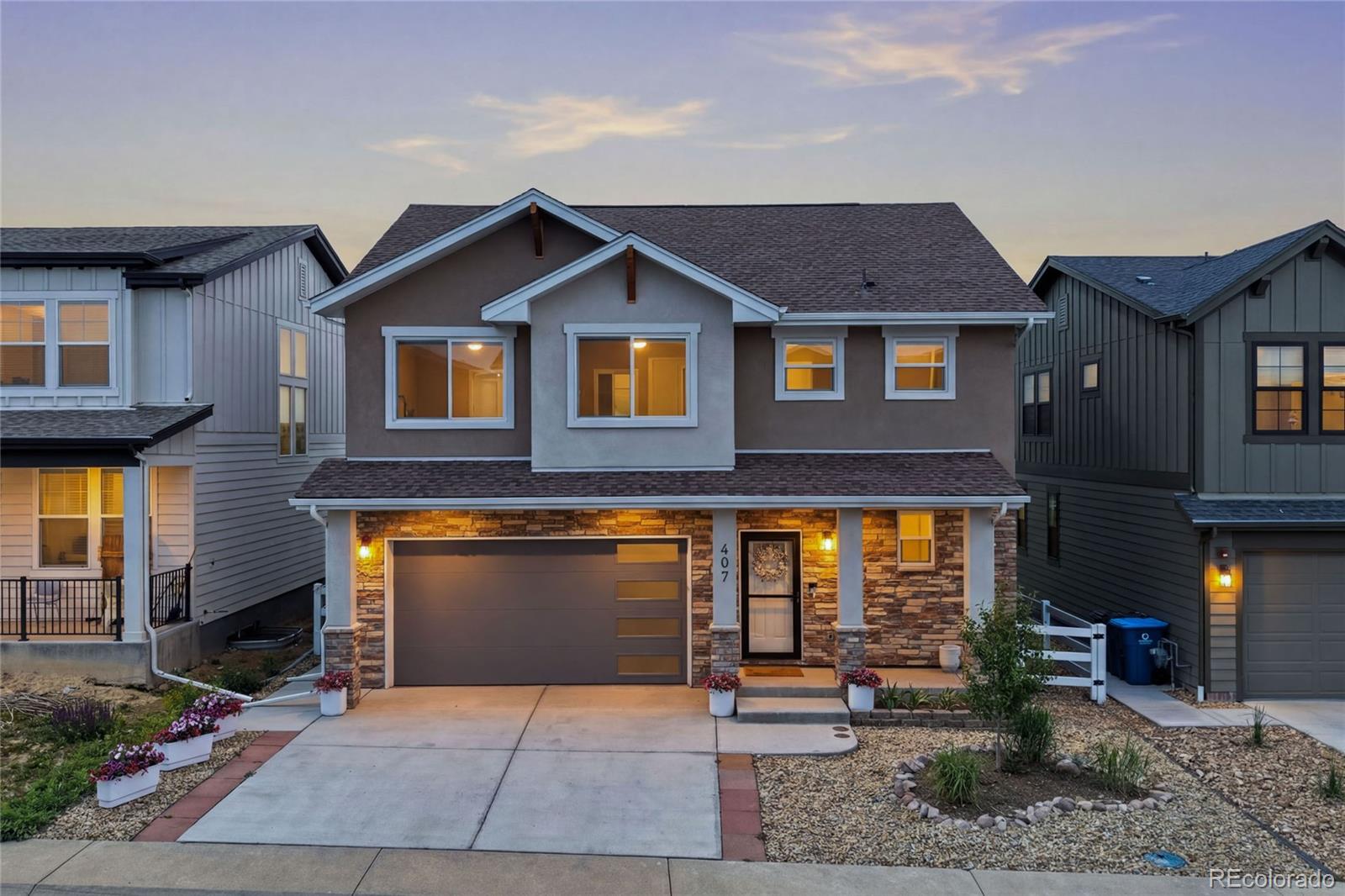
Louisville, Colorado Area Guide
Living in Louisville, Colorado: Where Should You Start Looking?
Louisville is small enough that you can cross town quickly. That does not make every Louisville address interchangeable.
Around Main Street and Front Street, you have the original coal-town grid, Historic Downtown, older houses, restaurants, events, and streets that were here long before Louisville became part of the modern Boulder–Denver corridor.
Move west toward Via Appia and McCaslin Boulevard and the housing pattern changes. Harper Lake, Davidson Mesa, the recreation center, established subdivisions, and access toward US 36 become more important.
Go south toward Coal Creek Ranch and Dillon Road, and golf, Coal Creek, regional trails, and the US 36 side of Louisville create another home search entirely.
North and east of Downtown, South Boulder Road and Highway 42 lead into North End, newer infill, and areas where Louisville is still adding housing around the established city.
So I would start with a question more useful than “Which Louisville neighborhood is best?”
Which Louisville do you want outside the front door?
Start with Louisville homes for sale, then use this guide to narrow the part of town.
Four Useful Ways to Think About Louisville
Old Town & Downtown
Older homes, the original street grid, Main Street, Front Street, Memory Square, Coal Creek access, and the strongest connection to Louisville's historic center.
North End & South Boulder Road
Newer planned housing beside an older part of Louisville, with South Boulder Road, Highway 42, Paschal Drive, and access toward Lafayette increasingly relevant.
Via Appia, Westfield & West Louisville
Established residential Louisville around Via Appia, the recreation center, Harper Lake, trails, and the McCaslin side of town.
Coal Creek Ranch & the US 36 Side
A different southern Louisville setting around Coal Creek Golf Course, Dillon Road, Coal Creek Trail, and more direct access toward McCaslin and US 36.
These are practical buyer orientations, not official neighborhood boundaries.
Main Street Is the Louisville Everyone Recognizes—But Learn Front Street Too
Louisville began as a coal-mining town in the late 1870s. That history still explains the compact blocks, older buildings, narrow lots, and street pattern around Downtown today. The City maintains an active historic-preservation program and extensive records on Louisville's mining and immigrant history.
If you are considering Old Town Louisville homes, start on Main Street.
Then turn onto Front Street.
That second street matters more than a generic Louisville guide might suggest. Front runs along the east side of Downtown, close to Coal Creek Trail and the railroad corridor, and the City is actively redesigning parts of both Front and Main through its Front & Center project.
Construction is scheduled to begin in fall 2026, starting with downtown lighting and Main Street work. Plans for Front Street include a more pedestrian-oriented treatment along with landscaping and other public-space changes. Follow the City's Front & Center project when a downtown home interests you.
That gives an Old Town buyer a very practical exercise:
Walk Main.
Walk Front.
Then walk from the house to both.
A home only a few blocks away may put Downtown naturally into your routine. Another may make South Boulder Road, the railroad, or a less direct crossing part of the same trip.
Old Town Louisville Is More Than “Older Homes Near Restaurants”
Louisville's historic core grew before modern subdivision planning.
That means two Old Town houses on nearby streets can differ substantially in lot shape, alley use, garage placement, additions, basement configuration, and how much of the original structure remains.
Use the Old Town Louisville search to find possibilities.
Then read the individual property.
If you are considering major exterior work on an older house, use the City's Historic Preservation resources to establish whether the property has a designation or another preservation consideration. Louisville began as a mining town in 1878, and the City still maintains substantial architectural and historical records from the original community.
Do that once the home becomes serious.
The first question is still whether you want the block.
Pine Street Is Another Old Town Road Worth Learning
Pine Street is one of those Louisville roads that becomes more useful after you have spent time Downtown.
It connects the historic core westward and also provides access toward the Coal Creek trail system. Louisville's current Downtown Vision Plan specifically treats Pine as an important trail and bicycle connection into Downtown.
So when an Old Town listing says “near trails,” find the route.
Can you reach Coal Creek without loading a bike onto the car?
Can you walk from the house into Downtown without repeatedly using a major road?
The answer changes by block.
Coal Creek Is Louisville's Cross-Town Outdoor Corridor
Coal Creek is one of the best ways to understand Louisville beyond neighborhood names.
The trail follows the creek through Louisville and connects into a larger regional system extending through Superior and Lafayette. Louisville itself maintains roughly 32 miles of trails across its broader network. Use the City's current trail maps when trail access matters to a particular home.
But “near Coal Creek” is still too vague.
Find the entrance you would use from the property.
Louisville Community Park at Bella Vista Drive is one useful access point. Pine Street creates another relationship with the corridor closer to Downtown. Farther south, Coal Creek becomes relevant around the golf-course side of town.
The creek can therefore connect very different Louisville home searches without making those locations equivalent.
North End Is Newer Louisville Beside the Old City
North End homes deserve a real explanation because this is not simply another older subdivision.
The North End development sits along South Boulder Road, with access involving Paschal Drive, Hecla Way, and Hecla Drive. Its original plan combined lower- and medium-density residential development with commercial space and public/open land.
That gives North End a different physical pattern from Old Town only a short distance away.
Here I would look at the house together with:
the street orientation,
garage and alley arrangement,
private outdoor space,
the route toward South Boulder Road,
and the connection back toward Downtown.
You can like being close to Old Town without wanting an Old Town house.
North End is one way that distinction shows up in Louisville.
South Boulder Road Is a Real Divider in the Daily Map
South Boulder Road is not merely the road to Lafayette.
It crosses Louisville between the original core and several residential areas farther north and west. Major intersections include Main Street, Via Appia, Centennial Drive, and roads leading toward Highway 42. The City has made multimodal and intersection improvements along the corridor over time.
That makes “north or south of South Boulder Road” useful in ways a neighborhood name may not be.
If you expect to go Downtown repeatedly, drive or walk the crossing from the house.
If most of your week pulls east toward Lafayette or west toward McCaslin, test that instead.
Highway 42 Is Becoming More Important on Louisville's East Side
State Highway 42—also called Courtesy Road or 95th Street depending on where you are—is the north-south corridor along Louisville's eastern side toward Lafayette.
Louisville and Lafayette have jointly studied the corridor for walking, biking, transit, and vehicle improvements.
This becomes especially relevant for newer housing around the east side.
East Street Village, for example, is a recent 36-unit project at 533 East Street beside the Highway 42 corridor; its final plat was recorded in 2025 after City approval.
That makes East Street Village a very different proposition from buying an older detached home several blocks away in Old Town.
You may still be close to Downtown.
The home type, ownership structure, street relationship, and age are completely different.
Via Appia Is Louisville Vocabulary Worth Learning
Spend enough time west of Downtown and Via Appia stops sounding like an unusual street name and becomes a geographic reference.
The Louisville Recreation & Senior Center sits at 900 W. Via Appia, and nearby parks, trails, Harper Lake, and established neighborhoods make this one of the useful anchors for west-central Louisville.
This is where searches such as Westfield and Centennial become useful.
Do not force those communities into interchangeable descriptions.
Instead, compare the individual homes by how they relate to Via Appia, South Boulder Road, McCaslin, Harper Lake, and the places you expect to use.
Westfield Gives You Established Louisville Without Being Old Town
Westfield homes belong to an established subdivision pattern from a later era than Louisville's original town center.
City subdivision records place Westfield development in the Via Appia side of Louisville, with later filings dating to the 1980s.
That gives you a useful direct comparison.
An Old Town house may offer the original grid and Downtown relationship.
A Westfield home may give you a different lot, street, garage, and trail/recreation relationship while remaining within a compact city.
Walk both before reducing the choice to square footage.
Centennial Is a Useful West-Side Search Too
Centennial homes also belong in this established west-Lousiville conversation.
Centennial Park sits at Garfield Avenue and Regal Street, while City planning records tie the broader Centennial-era development pattern to Via Appia and the western side of Louisville.
If the Centennial search produces homes you like, test the places that actually organize this side of town:
Via Appia.
South Boulder Road.
Harper Lake.
McCaslin Boulevard.
US 36.
That tells you more than a generic subdivision summary.
Davidson Mesa Changes the West-Side Louisville Comparison
Davidson Mesa is one of the strongest physical landmarks on Louisville's western edge.
Its trailhead is at McCaslin Boulevard and Washington Avenue, and the property connects into Louisville's larger open-space and trail system.
If Davidson Mesa is part of why a west-side Louisville home appeals to you, find the actual entrance.
Do not infer access because open space appears close behind the neighborhood.
Also pay attention to the opposite direction.
The same west-side location that puts Davidson Mesa nearby may also make McCaslin and US 36 more useful than they would be from Old Town.
That is a real tradeoff worth comparing.
McCaslin Is Louisville's Regional Side
For regional travel, McCaslin Boulevard deserves its own place in the mental map.
The US 36 & McCaslin Station connects with RTD's Flatiron Flyer service along the Denver–Boulder corridor. Current RTD schedules should control any transit calculation. Check Flatiron Flyer service rather than assuming a citywide Louisville commute.
This can make a west- or south-side Louisville address work differently from Old Town.
If transit matters, test the complete first leg from the house to McCaslin Station.
If you drive, do the same with the US 36 entrance you expect to use.
“Louisville has US 36 access” is true but not useful enough.
The address determines whether that access feels immediate or cross-town.
Coal Creek Ranch Is Its Own Louisville Search
Coal Creek Ranch homes should not be reduced to “Louisville near a golf course.”
The community developed in multiple filings beginning decades after Old Town, and Coal Creek Golf Course at 585 W. Dillon Road gives this side of Louisville a clear geographic anchor.
The course is an 18-hole municipal facility operated by the City. See current Coal Creek Golf Course information.
If the course affects your decision, establish what the particular house actually relates to.
Does the lot border golf-course property?
Does it face another home?
Which road do you use to reach Dillon or McCaslin?
How do you connect with Coal Creek Trail?
Do not let the community name answer questions that belong to the address.
A Newer Louisville House May Not Be in a New Neighborhood
This is one of the most important Louisville-specific ideas for a buyer to understand.
The Marshall Fire of December 2021 destroyed hundreds of Louisville homes, including properties in established neighborhoods. City records identify substantial damage around areas including portions of Coal Creek Ranch and streets around Via Appia and Centennial Parkway.
As a result, Louisville can present a combination you do not see in every market:
a recently built house inside a decades-old neighborhood.
That is different from buying new construction in a new subdivision.
The streets, mature surrounding neighborhood, association, utility infrastructure, and location may be established even though the house itself is only a few years old.
For a Marshall Fire rebuild, use the City's current Building Safety and rebuilding resources. Louisville also has current fire-hardening and defensible-space requirements that can apply to impacted areas.
That is property-level work to do once the home is serious—not a reason to treat every Louisville house as a fire-recovery property.
Community Park Connects Several Louisville Ideas at Once
Louisville Community Park at 955 Bella Vista Drive is useful because it sits close to Coal Creek Trail and the south side of the city. The park includes trail access and other community facilities.
That makes Bella Vista a specialized search worth using if homes in that immediate setting keep catching your attention.
Again, test the front door.
A property may be near Community Park without giving you the route or trail connection you expected.
Louisville Neighborhoods and Communities
Compare Louisville Communities Side by Side
Old Town Louisville
Choose this search when Historic Downtown, the original street grid, older housing, and Main/Front Street are central to the decision.
North End
A newer planned-community comparison along South Boulder Road and the Highway 42 side of Louisville.
Westfield
An established west-central Louisville search with Via Appia and the city's recreation/open-space network increasingly relevant.
Centennial
Another established west-side comparison where Via Appia, Harper Lake, McCaslin, and regional access help define the location.
Coal Creek Ranch
A south-side search around Dillon Road, Coal Creek Golf Course, the trail corridor, and a different relationship with US 36.
East Street Village
A much newer attached-housing choice near Highway 42 that lets you compare new construction close to the older city with traditional Old Town housing.
Search Louisville Homes by Type
Browse Louisville Attached and Lower-Maintenance Home Searches
Louisville Condos
Compare the unit with the association's current finances, insurance responsibilities, parking, reserves, exterior maintenance, and recurring charges.
Louisville Townhomes
Useful across several parts of Louisville. Let the individual association documents establish what the owner maintains.
Louisville Patio Homes
Use the search to find homes marketed with this label, then confirm the actual ownership form and maintenance arrangement for the property.
More Specific Louisville Searches
These belong lower on the page because they solve more specific property needs.
Bella Vista
Useful when the Community Park and Coal Creek side of Louisville keeps producing the addresses you prefer.
Silvertrees East Condos
Use this when a specific attached-home community is more useful than browsing the entire Louisville condo inventory.
Louisville Homes With ADUs
Use this to discover listings marketed with an accessory dwelling unit, then confirm the permitted configuration and current allowed use.
Louisville Next-Generation Homes
Use the search to find homes marketed with more separated living arrangements, then evaluate the actual entrances, kitchens, parking, privacy, and permitted configuration.
Test Louisville With One Loop
If I were showing Louisville to someone unfamiliar with the city, I would not start with six subdivision entrances.
I would teach the geography.
Start Downtown on Main Street.
Turn onto Front Street and find the Coal Creek connection.
Take South Boulder Road toward North End.
Then head west on Via Appia past the Recreation & Senior Center and toward Harper Lake.
Continue toward McCaslin and Davidson Mesa.
Come back south toward Dillon Road and Coal Creek Ranch.
That loop explains Louisville quickly.
You see where the historic grid gives way to later subdivisions.
You see why Via Appia becomes local shorthand.
You understand how much closer McCaslin feels from the west side.
And you can decide whether Coal Creek, Downtown, open space, or US 36 is actually the Louisville feature you care about most.
Then Make the Ordinary Trips
Once several Louisville homes survive, stop touring highlights.
Drive to work.
Go to the grocery store you expect to use.
Walk Downtown if that is part of the appeal.
Find your Coal Creek Trail entrance.
Drive to McCaslin Station if transit matters.
Go toward Boulder at the time you would normally make the trip.
A house can win on the kitchen and lose on everything that happens after you back out of the driveway.
That is why the address matters so much in a compact city.
Compare Louisville With Nearby Cities
Use the Lafayette Area Guide when your preferred homes or repeated destinations keep pulling east toward Public Road, Waneka Lake, or the US 287 side.
Use the Boulder Area Guide when Boulder itself—not simply access to Boulder—is what you are really trying to solve.
Use the Superior Area Guide when direct US 36 access and a more master-planned setting keep winning the comparison.
Use the Broomfield Area Guide when your week pulls farther southeast or toward another part of the US 36 corridor.
Keep the comparison consistent:
the same housing type,
the same work trip,
the same everyday errands,
the same expectations for walking or trail access,
and the same tolerance for older-home work, association obligations, or a rebuilt home.
Planning a Larger Front Range Move?
If Louisville is one part of a broader relocation, use the Front Range Relocation Checklist.
You can also browse all real-estate guides when another Colorado location or buying question becomes more important.
Ready to Compare Louisville Homes?
Tell Kenna Real Estate Group which Louisville homes are catching your attention and what you need the location to do for you.
We can help you compare an Old Town home with North End, Westfield, Centennial, Coal Creek Ranch, East Street Village, or another Louisville option—and focus the next round of property research on the details that actually change your decision.