New - 2 Days Ago

Start with Superior condos by price, then compare space, layout, parking, and association details.
The grid below lists every match live from the MLS, and the market stats under it show today's median price and price per square foot. Superior homes for sale is the wider search; the prices and what to check are below the homes. Call or text 303-955-4220. A live person answers.


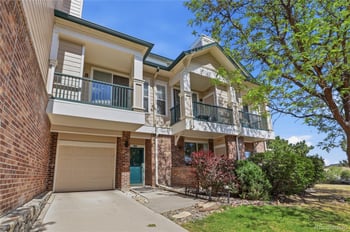

The condos for sale in Superior above are every condominium on the MLS right now: low-rise garden condos, mid-rise and high-rise units, loft condos and condo conversions. Buyers searching Superior condos also search cheap condos, condos under $300K, luxury condos, condos with a garage, pet-friendly condos and FHA-approved condos, and the grid pulls all of them. This page shows condos for sale in Superior, and the count updates the moment a home lists or closes. Prices update the moment a unit lists or closes.
The HOA dues and what they cover. Superior condo dues run from under $200 to over $700 a month and cover water, trash, exterior, roof, insurance on the structure and sometimes heat. The lender counts the dues in your payment, so a low-priced unit with high dues costs more than the price shows.
The reserve study and the special-assessment history. A building with thin reserves passes its roof or elevator bill to owners as a special assessment. We pull the reserve study, the budget and the last two years of minutes before you go under contract.
Financing rules. FHA and VA loans need the building on the approved list or a single-unit approval. Conventional lenders look at the owner-occupancy ratio, litigation and insurance. We check the building against your loan before you write.
Insurance after 2024. Colorado condo master policies have jumped and some carriers left. The master policy deductible sets what your own HO-6 policy has to cover.
Rentals and pets. Every Superior HOA writes its own rental cap, short-term rental rule and pet limit. If either matters, we read the declarations first.
Parking and storage. A deeded garage space adds resale value in Superior; an assigned surface space does not transfer the same way.
Tour with a Kenna agent, 7 days a week. We show you the building, the amenities and the unit, and we walk the garage and the mail room too.
The grid at the top of this page is the live MLS list: it updates the moment a home lists or closes, and the market stats under it show today's median price.
It changes as homes list and sell. Switch the grid to map view to see where today's listings cluster, or open the ZIP code pages linked on this page for each ZIP's live count.
It depends on the price, your down payment and today's rate. Put the price of the home you like into the Colorado mortgage calculator at kennarealestate.com/colorado-mortgage-calculator for the full monthly cost. More: Can I afford a home now?.
Sizes vary from home to home. Use the grid filters for square footage and bedrooms; the market stats under the grid show today's price per square foot.
Yes. Colorado down-payment assistance works at a 620 credit score, FHA takes 3.5 percent down, VA zero where the buyer qualifies, and a seller credit covers closing costs. On the median $750K condo that is $26,250 down at 3.5 percent. More: Can I afford a home now?.
Some do. Each listing card shows the HOA fee, and the grid filters can narrow the list to homes with no HOA. More: HOA fees in Colorado, explained.
No. Dues are set by the association budget. What is negotiable is the price and who pays the transfer, working-capital and status-letter fees at closing. We negotiate those on every Superior condo contract. More: HOA fees in Colorado, explained.
Yes, when the building is FHA-approved or qualifies for a single-unit approval. Your Kenna agent checks the building on HUD's list before you write the offer. More: Financing a Colorado home.
Text SUPERIOR and what you are looking for to 303-955-4220. A live person answers, sets up the saved search and sends the disclosures on any condo you want to see.
The grid below lists every match live from the MLS, and the market stats under it show today's median price and price per square foot. The grid above is the live list; the count and the prices move as homes close and new ones list.
About $2,446 a month on the $350K median: $2,096 principal and interest at a 7 percent note rate with 10 percent down, plus roughly $204 in property tax and $146 in insurance. Add HOA or metro district dues where they apply, and a seller credit toward a buydown takes $300 to $600 a month off year one.
The same search runs in the cities next door: Louisville condos for sale, Lafayette condos for sale, Broomfield condos for sale, Boulder condos for sale. Prices step down as you leave the core and metro district taxes step up in the newer subdivisions.
Condo dues on the Front Range run $250 to $700 a month; the payment on a $350,000 condo with dues equals the payment on a $420,000 townhome without them. Price the dues, not the sticker.
The HOA reserve study and any special assessment on the horizon. The building insurance deductible and whether the association is FHA and conventional warrantable. Rental caps and pet rules in the declaration. Write the findings into the inspection objection, not into a text after the deadline.
Call or text 303-955-4220 with the address. A live person answers and sends the disclosures and the last sales on that street the same day.
Use the Superior condo listings to compare price, dues, location, parking notes, storage details, and association information. When a unit looks right, verify the documents before you tour or write an offer.