New - 1 Hour Ago

.jpg)


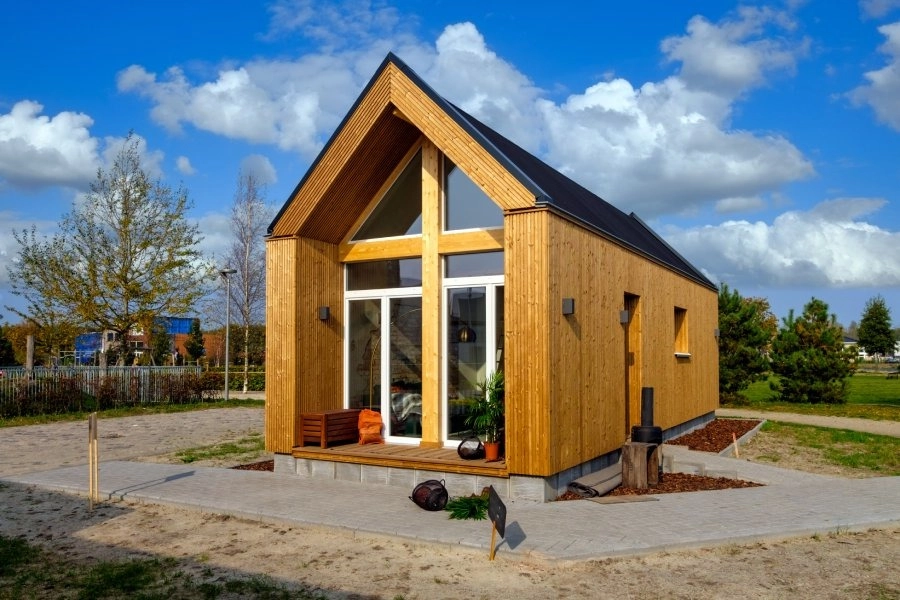
Front Range home prices have pushed more Colorado buyers toward tiny homes, prefab construction, pole barn homes, and co-living arrangements, and each one comes with its own zoning rules, financing path, and resale reality. Here's what to check before you commit to any of them.
Denver allows tiny homes on a foundation as accessory dwelling units on qualifying lots, and the city updated its zoning code to permit ADUs on most single-unit residential lots citywide. A tiny home on wheels is treated differently: most Front Range cities classify it as a recreational vehicle rather than a permanent dwelling, which limits year-round occupancy unless it's parked on a lot zoned for RV or manufactured housing use. Buyers who want a turnkey build can find tiny houses for sale in Colorado from manufacturers that build to local code from the start.
Minimum dwelling size is set city by city and county by county, not statewide. Denver's zoning code sets a minimum size for a primary dwelling unit but allows a smaller detached ADU as a secondary structure. Douglas, Elbert, and Weld counties each set their own minimums for unincorporated land, so a floor plan under 600 square feet that's legal in one jurisdiction can be denied a permit in the next one over.
An accessory dwelling unit is a secondary living space, either attached or detached, on the same lot as a primary home. Denver allows ADUs by right on most single-unit residential lots as of its 2021 zoning update, making a backyard tiny home or converted garage one of the more straightforward low-cost housing options inside city limits, subject to a standard building permit and setback review.
A professionally built tiny home on a foundation runs roughly $45,000 to $120,000 depending on finishes and square footage, before land costs. Front Range land zoned for a standalone tiny home, outside an ADU arrangement on an existing lot, adds a significant cost on top, since raw buildable lots near Denver have gotten scarce. Buyers who already own a lot with an existing home get the most value building a tiny home as an ADU rather than buying separate land.
Co-living, multiple unrelated adults sharing a home with private bedrooms and shared common space, runs into occupancy limits in many Front Range cities that cap the number of unrelated residents per household. Denver's occupancy limit allows up to five unrelated adults in most residential zones; other cities set a lower cap. Check the specific municipal code before signing a lease or buying a property planned for co-living use.
A modular home built to local building code and permanently affixed to a foundation qualifies for standard conventional, FHA, and VA financing the same as a site-built home, since the appraisal treats it as real property. This is different from a manufactured home built to the federal HUD code, which sometimes needs specialized manufactured-home financing depending on whether it's on a permanent foundation and titled as real property.
A pole barn home, also called a barndominium, uses post-frame construction instead of traditional stick framing and is legal to build as a residence across most of the Front Range, provided it meets the local building code and is permitted as a dwelling rather than an agricultural structure. Buyers can find reasons to choose a pole barn home over a stick-built structure, mainly lower shell cost and faster construction, but county permitting offices vary in how familiar they are with residential post-frame plans, which can slow down the review.
Yes. Any structure intended for year-round occupancy needs a residential building permit, insulation and energy code compliance, and a certificate of occupancy, the same as a stick-built home. A pole barn permitted only as an agricultural building can't legally be lived in full-time; converting one later requires a separate permit and inspection.
Front Range building codes set minimum roof snow load ratings based on elevation and local weather history, and foothill and mountain-adjacent counties require higher ratings than the Denver metro core. A prefab or pole barn design built for a different climate needs engineering review before it's approved locally, so confirm the manufacturer's snow load rating meets your specific county's requirement before ordering a kit.
Yes, if the home is on a permanent foundation and titled as real property rather than personal property. Conventional, FHA, and VA loans all have manufactured-home programs, though terms and required inspections differ from a standard site-built mortgage. Mike Oswald at Rate (NMLS 261003, Equal Housing Lender) works with Colorado buyers on manufactured, modular, and pole barn financing questions, and you are free to use any lender.
CHFA, the Colorado Housing and Finance Authority, offers down payment assistance and below-market first mortgages to income-qualified Colorado buyers, and several of the alternative housing types covered here, ADUs, modular homes, and some manufactured homes, qualify depending on the specific program. Ask a lender to check eligibility before you rule an option out based on price alone.
A manufactured home titled as personal property is taxed differently than one converted to real property on a permanent foundation, and the conversion process affects both financing eligibility and the tax bill. County assessors handle this conversion, called a certificate of permanent location or a similar filing depending on the county, and it's worth completing before you try to sell or refinance.
Appraisers need comparable recent sales to support a value, and pole barn homes, tiny homes, and some prefab builds still make up a small share of Front Range sales compared to a standard site-built house, which can make a lender's appraisal come in more conservative than a seller expects. A well-documented build, with permits, an energy code inspection, and a permanent foundation on file, appraises far more predictably than an owner-built or partially permitted structure. Buyers financing one of these homes should confirm with a lender upfront that comparable sales exist in the area, not after an appraisal comes back low.
Unincorporated Adams, Weld, and Elbert county parcels carry some of the most flexible zoning on the Front Range for ADUs, manufactured homes, and pole barn construction, while land inside Denver, Aurora, or Lakewood city limits gives buyers access to established ADU ordinances but tighter lot-size and setback rules. A local agent who has closed on manufactured or post-frame homes recently can flag which parcels have already been tested through a county's permitting process versus which ones are a first-time approval.
The Kenna Real Estate Group helps Colorado buyers sort through tiny home, ADU, prefab, and pole barn options against real zoning and financing rules, not just the sale price. Call or text 303-955-4220. A live person answers. Not a robot, not a phone tree. Ready to see what's available? Search every home for sale in Colorado.
Questions about any home in Colorado? Call or text 303-955-4220. A live person answers.
Yes, as an accessory dwelling unit on a qualifying single-unit residential lot under Denver's zoning code, with a standard building permit and setback review.
Most Front Range cities classify a tiny home on wheels as a recreational vehicle rather than a permanent dwelling, which limits year-round occupancy unless it's on a lot zoned for RV or manufactured housing.
Yes. Any pole barn built for year-round occupancy needs a residential permit, energy code compliance, and a certificate of occupancy. A permit issued only for agricultural use does not cover full-time living.
Yes. A modular home permanently affixed to a foundation and built to local code qualifies for standard conventional, FHA, and VA financing, appraised as real property like a site-built home.
Requirements are set by elevation and local weather history, and foothill counties require higher ratings than the Denver metro core. Confirm a kit's engineered snow load rating meets your specific county before ordering.
CHFA offers down payment assistance and below-market first mortgages to income-qualified Colorado buyers, and ADUs, modular homes, and some manufactured homes qualify depending on the program. A lender can confirm eligibility.
Denver's occupancy limit allows up to five unrelated adults in most residential zones. Other Front Range cities set different caps, so check the specific municipal code before signing a lease.
Standard mortgage financing requires the home be on a permanent foundation and titled as real property rather than personal property. A specialized manufactured-home loan program applies otherwise.