.jpg)


New - 8 Hours Ago
Italian and Tuscan style translates well to a Colorado home for a reason beyond taste: warm plaster walls, ceramic tile, and Mediterranean-style landscaping all suit the Front Range's dry climate and water restrictions better than styles built for humid regions. Here's how to bring that look into a Colorado house without fighting the climate.
What is Tuscan wall treatment and does it work in a dry climate?
A Tuscan finish — mixed paints and glazes layered to look like time-worn plaster — holds up well in Colorado's low humidity, since the technique was developed for a similarly dry Mediterranean climate. New drywall takes the layered, textured look convincingly with the right plaster and glaze combination, and the finish doesn't require the humidity control that some faux finishes need to cure properly.
How does Front Range light change an Italian color palette?
Colorado gets roughly 300 days of sun a year, and that strong, high-altitude light makes warm earth tones — terracotta, ochre, and burnt sienna — read richer than they would in a cloudier climate. Test any wall glaze on the actual wall in both morning and afternoon light before committing to a full room, since west-facing walls read noticeably warmer under Colorado's intense afternoon sun.
Does ceramic tile make sense in a Colorado home?
Ceramic and terracotta tile are practical choices for a kitchen, bathroom, or entryway in a state where winter boots track in mag chloride and mud from Front Range roads. Tile also handles the Front Range's freeze-thaw temperature swings better than some engineered flooring, provided it's installed over a properly insulated subfloor so cold doesn't transfer up through the tile in an unheated space like a mudroom.
What Italian-inspired landscaping fits Colorado water restrictions?
This is where Italian style has a real practical edge in Colorado: Mediterranean gardens are built around drought-tolerant plants — lavender, rosemary, olive-adjacent ornamental trees suited to Colorado's zone, and gravel or stone hardscaping — which use far less water than a traditional lawn. That matches Front Range water restrictions and Denver Water's landscape guidance better than a classic English garden does, while still delivering the look most people associate with an Italian courtyard.
How should a wine room or wine display be built in Colorado?
A dedicated wine rack or wine room needs temperature and humidity control that Colorado's dry climate doesn't provide on its own; an interior closet or basement space stays cooler and more stable than an exterior wall exposed to daily Front Range temperature swings. A small wine refrigerator solves the humidity problem directly for a collection kept in a main living area rather than a basement.
Do sculptures and busts hold up to Colorado's climate?
An indoor antique statue or bust needs no special care beyond normal dusting, but any sculptural piece kept outdoors on a patio should be rated for freeze-thaw cycles, since water that seeps into porous stone and then freezes can crack it over a Front Range winter. Homeowners furnishing an entry or living room with a classic sculptural piece should check the material's outdoor rating before placing it anywhere exposed to Colorado's temperature swings between day and night.
How does Italian style affect resale value on the Front Range?
Heavier, saturated Tuscan wall treatments were more popular a decade ago than they are with today's Front Range buyers, who tend to favor lighter, more neutral interiors. A homeowner planning to sell within a few years can keep the Mediterranean landscaping and tile choices, which read as low-maintenance value-adds, while treating bold wall glazing as a personal choice to simplify before listing. A neutral primer coat over a saturated accent wall is a same-weekend fix that a listing agent can advise on once a firm list date is set.
What Italian-style details work in a kitchen or bathroom remodel?
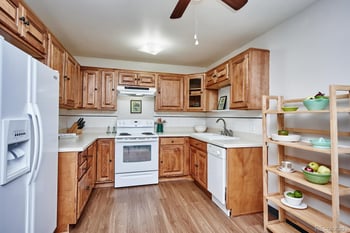
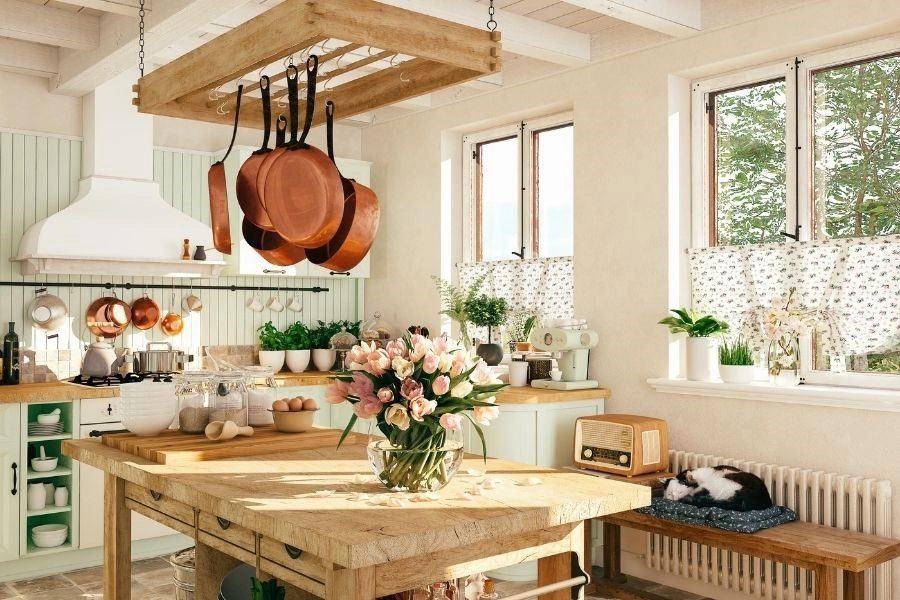
Hand-painted tile backsplashes, a farmhouse-style sink, and warm wood cabinetry bring Italian character into the rooms buyers scrutinize most closely. Keep the base cabinetry and countertop material neutral so a future remodel or a future buyer's taste doesn't require tearing out expensive tile work along with it. Natural stone countertops such as travertine or a warm-toned granite carry the same earthy character as the tile without locking a future kitchen into one narrow color scheme, which keeps the space flexible if the next owner wants to update cabinet color without a full teardown.
A skylight or a larger window on a north-facing kitchen wall brings in the natural light Italian kitchens are known for without adding the heat gain a south- or west-facing window would during Colorado's sunniest months. That detail matters more here than it would in a cloudier climate, where extra glass rarely creates a cooling problem. Pair a north-facing window with a ceiling fan rather than relying on air conditioning alone, since Colorado's dry heat responds well to moving air even on the hottest July afternoons.
How does an Italian-style courtyard work on a Front Range lot?
A walled courtyard with stone or gravel paving, a small fountain, and potted olive or citrus trees brought indoors for winter creates the enclosed, sun-warmed feel of an Italian courtyard while working within Colorado's climate. Position it to catch morning sun rather than the full force of the afternoon, since unshaded stone paving in direct west-facing sun gets hot enough by mid-afternoon in July to make the space uncomfortable. A fountain or small water feature needs to be drained and winterized before the first hard freeze, which lands by mid-October in most Front Range winters, to avoid cracked plumbing or stone.
Do wrought iron accents fit a Colorado home?
Wrought iron light fixtures, stair railings, and window grilles are a signature of Italian design and hold up well outdoors in Colorado as long as the finish is rated for UV and temperature swings; a powder-coated finish resists fading and rust better than raw iron left unsealed. Indoors, iron accents on a chandelier or a console table base add weight and texture to a room without the maintenance concerns of an exterior application.
What furniture choices complete an Italian-style room?
Reclaimed or distressed wood tables, leather seating, and wrought iron accents form the backbone of most Italian-inspired living and dining rooms. Choose leather over fabric upholstery in a sunroom or a room with large west-facing windows, since fabric fades faster under Colorado's strong, high-altitude UV exposure than treated leather does. A large dining table built for gathering fits the entertaining-focused spirit of Italian design and works well in Front Range homes, where outdoor-adjacent dining rooms get heavy use during the long stretch of sunny months.
Where to go next
- Search every home for sale in Colorado
- Preparing and adding value before selling
- Landscaping for the high desert: beautiful and resilient garden ideas
- How luxury home interior design creates timeless living spaces
- Colorado luxury homes for sale by area
- How imperfect, natural design can shape a home worth living in
Talk to the Kenna Real Estate Group
Whether Italian-style updates are for daily enjoyment or a future listing, the Kenna Real Estate Group can point out which Tuscan and Mediterranean touches Front Range buyers respond to and which ones to simplify before selling. Call or text 303-955-4220. A live person answers. Not a robot, not a phone tree. Curious what your Colorado home is worth as-is? Search every home for sale in Colorado.
Homes for sale that match this post
- Homes with Gourmet Kitchen in Denver
- Basement: guide
- Low-maintenance: guide
- Distressed: guide
- All homes for sale in Denver
Guides
Questions about any home in Colorado? Call or text 303-955-4220. A live person answers.