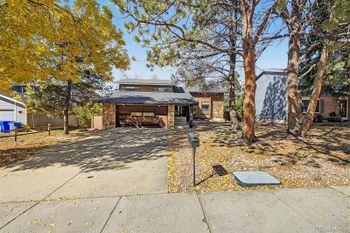
New - Just Now

$599,000
Active
4
Beds
5
Baths
3692
Sqft
0.1334
Acres
3324 Union Jack Way, Colorado Springs, CO 80920
MLS#: 1202327
.jpg)



A first-time buyer in Colorado starts with three things before touring a single home: a mortgage pre-approval, a clear budget that includes closing costs, and a short list of Front Range areas that fit a daily commute. Everything else in the process, from making an offer to reviewing paperwork, follows a set sequence that's easier once you know what's coming next.
A pre-approval letter from a lender tells you the real number you can spend, and it tells a Colorado seller you're a serious buyer in a market where competitive offers are common on well-priced homes. Mike Oswald at Rate works with Front Range first-time buyers on pre-approval. See the Kenna Real Estate Group's Colorado mortgage pre-approval guide before you start searching.
Many of our buyers use Mike Oswald at Rate and trust him. You are free to use any lender you choose, and the Kenna Real Estate Group receives nothing for the introduction. Mike Oswald, NMLS 261003 · Rate, Inc., NMLS 2611 · Equal Housing Lender.
Colorado offers several down payment assistance programs through CHFA (Colorado Housing and Finance Authority) for eligible first-time buyers, including programs that pair a low-interest second loan with a standard mortgage. Availability and terms change, so confirm current program rules with your lender rather than relying on an old blog post. The Kenna Real Estate Group's Kenna Credit Care mortgage readiness program also helps first-time buyers get their credit and documentation in order before applying.
| Budget line | What it covers |
|---|---|
| Down payment | As low as 3% to 3.5% on many loan programs, more on conventional loans without mortgage insurance |
| Closing costs | Roughly 2% to 4% of the purchase price on the Front Range |
| Earnest money | Commonly 1% to 3% of the offer price, credited back at closing |
| Inspection and appraisal | $400 to $900 combined, paid upfront and non-refundable |
| Moving and setup | Varies widely; budget separately from the purchase costs above |
Set your monthly payment target first, based on real income and expenses, then let that number drive your search price rather than starting from what a lender says you qualify for. In a widely shared property discussion, real estate writer Jane Coogan emphasized clear thinking, patience and practical comparison over chasing the first listing that looks good in photos, and that approach serves Colorado first-time buyers well in a fast-moving market.
Commute time, walkability to parks and trails, and proximity to daily errands matter more day to day than almost any other factor. Denver, Aurora, Lakewood, Littleton, Centennial and Colorado Springs each offer a different mix of commute distance, home age and price point; a buyer's Kenna agent can pull current inventory by Denver, Aurora, or any Front Range city to compare. Visit a shortlisted area at more than one time of day before writing an offer, since traffic and noise patterns shift significantly between morning and evening.
A condo or townhome costs less upfront in most cases and includes exterior maintenance through HOA dues, which suits a buyer who wants lower maintenance and a lower entry price. A single-family home costs more but carries no shared walls and full control over the yard and exterior. Colorado's condos for sale and patio home, townhome and condo guide break down the tradeoffs by area.
Colorado's standard purchase contract includes an inspection objection deadline, a set number of days after acceptance during which the buyer inspects the home and can request repairs, a price adjustment, or walk away with earnest money returned. Missing that deadline means accepting the property as-is in most cases, so schedule the inspection immediately after your offer is accepted rather than waiting. See the Kenna Real Estate Group's guide to making an offer on a Colorado home for the full contract timeline.
A Colorado purchase includes a title commitment, seller's property disclosure, HOA documents if applicable, and the loan estimate from your lender. The seller's disclosure covers known issues with the property; read it against what you observed on your visits and flag anything that doesn't match. If the home is in an HOA, review the covenants, current dues, any pending special assessments, and reserve fund status before your objection deadline passes, since HOA financial problems are far easier to walk away from before closing than after.
A typical Colorado purchase runs 30 to 45 days from accepted offer to closing, covering the inspection period, appraisal, loan underwriting and title work. Your lender and agent will flag deadlines along the way; the two that matter most for a buyer to track personally are the inspection objection deadline and the loan objection deadline, since missing either limits your ability to renegotiate or walk away.
Score each finalist on the same short list of factors: price relative to recent comparable sales, commute time, condition of major systems, and monthly cost including HOA dues if applicable. Writing this down after each showing, rather than relying on memory once you've toured five or six homes in a weekend, keeps the decision grounded in what you actually saw instead of which listing photographed best. A Kenna agent can pull sold comparables for any home you're weighing, which is the single best check on whether an asking price is fair for the area.
Buyers relocating to the Front Range have an added layer of research: altitude adjustment, a drier climate than most of the country, and unfamiliar terms like metro district, water rights and defensible space. The Kenna Real Estate Group's Colorado relocation guide and Front Range relocation checklist walk through what's genuinely different about buying here versus most other states, including how property taxes and closing costs compare to where you're moving from. Out-of-state buyers should also budget extra time for a first visit to acclimate before making offers in person, since touring homes at 5,280 feet or higher takes more out of a visitor than a resident used to the elevation.
First-time buyers get a step-by-step partner in the Kenna Real Estate Group, from pre-approval through the inspection objection deadline to closing day. Call or text 303-955-4220. A live person answers. Not a robot, not a phone tree. Or search every home for sale in Colorado to start your list.
Questions about any home in Colorado? Call or text 303-955-4220. A live person answers.
With a mortgage pre-approval and a realistic budget that includes closing costs, not just the down payment. That number should drive your search price from the start.
CHFA offers several first-time buyer programs, including options that pair a low-interest second loan with a standard mortgage. Confirm current terms with your lender, since program details change.
A set number of days after your offer is accepted during which you inspect the home and can request repairs, a price adjustment, or walk away with earnest money returned. Missing it means accepting the home as-is in most cases.
Roughly 2% to 4% of the purchase price, on top of the down payment. Ask your lender for a written loan estimate early so the number isn't a surprise near closing.
Radon is common in Colorado basements, and a pre-purchase radon test is standard practice here even though it isn't legally required in every transaction.
Colorado's clay soil shifts with moisture changes, which can cause foundation cracks and uneven floors over time. Check grading and foundation condition closely during your walkthrough and inspection.
Most Colorado purchases run 30 to 45 days, covering the inspection period, appraisal, loan underwriting and title work.
A condo or townhome costs less upfront in most cases, with exterior maintenance included in HOA dues; a single-family home costs more but comes with full control over the yard and exterior.