New - 3 Hours Ago

$6,950,000
Active
5
Beds
8
Baths
9230
Sqft
2.41
Acres
15 Cherry Hills Park Dr, Cherry Hills Village, CO 80113
MLS#: 9651323
.jpg)


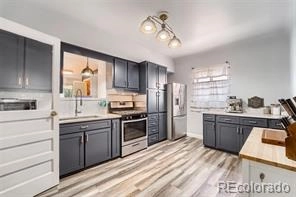
A luxury home in Colorado starts around $1.2 million to $1.5 million in most Denver metro submarkets, but the real threshold shifts by neighborhood: a $1 million home is entry-level in Cherry Hills Village or Boulder and firmly upper-tier in outlying Front Range towns. Pricing, financing and buyer expectations all work differently once a home crosses into this tier.
There's no fixed dollar line that defines a luxury home statewide, and that's the first thing out-of-state buyers get wrong. A $900,000 home in a small Front Range town is the nicest listing in the county, while $1.5 million is a mid-tier purchase in Cherry Hills Village, Greenwood Village or the Boulder foothills. Local agents set the luxury threshold at roughly the top 10% of active listings in a given submarket rather than a single statewide number.
What stays consistent across price points is what buyers are paying for beyond square footage: lot size and privacy, mountain or city views, finish quality, and proximity to walkable retail and dining.
Cherry Hills Village, Greenwood Village and parts of Boulder carry the deepest concentration of luxury listings on the Front Range, with large lots, mature landscaping and easy access to Denver Tech Center employment corridors. Castle Pines and Lone Tree have built out newer luxury subdivisions with golf course access and mountain views over the past decade. Colorado Springs has its own luxury pockets near the Broadmoor and the foothills west of downtown, priced well below comparable Denver-metro properties.
| Area | Typical luxury entry point | What drives the price |
|---|---|---|
| Cherry Hills Village / Greenwood Village | $2M+ | Lot size, privacy, DTC proximity |
| Boulder | $1.5M+ | Land scarcity, mountain backdrop |
| Castle Pines / Lone Tree | $1.2M+ | Newer construction, golf and views |
| Colorado Springs foothills | $900K+ | Lower land cost, mountain views |
Below $1 million, comparable sales are relatively easy to find within a mile or two. Above that line, comparables thin out fast, especially for architecturally distinct homes on large lots, so a straightforward automated estimate loses accuracy quickly. Pricing a luxury listing correctly takes a hand-built comparison against a smaller, more specific set of recent sales, which is exactly what the Kenna Real Estate Group's Smart Pricing Report is built to do for a Colorado seller.
On the buy side, the same scarcity of comparables means an experienced local agent matters more, not less, once a search crosses $1 million; a generic online estimate misses by six figures on a one-of-a-kind property.
Conventional conforming loan limits don't stretch to most luxury purchases, so buyers in this range use a jumbo loan, which carries its own underwriting standards on reserves, down payment and credit profile. Cash purchases and larger down payments are also more common at this level than in the broader market. Mike Oswald at Rate (NMLS 261003, Equal Housing Lender) works with Front Range buyers on jumbo and luxury financing, and you are free to use any lender. See the Kenna Real Estate Group's Colorado home financing guide and Kenna Credit Care mortgage readiness program before you start touring.
Colorado's residential property tax rate is set at the state level and applied to assessed value, so a $2 million home carries a proportionally higher tax bill than a $500,000 home rather than a different rate. Buyers moving from higher-tax states are surprised how low Colorado's effective rate runs by comparison, though local mill levies, metro district assessments and special district fees vary by neighborhood and should be checked line by line before closing.
Many Front Range luxury subdivisions, particularly newer ones in Castle Pines, Lone Tree and parts of Douglas County, are built inside metro districts that carry their own separate tax assessment on top of the standard property tax, funding roads, parks and sometimes a clubhouse or golf amenity. Older, established luxury neighborhoods like Cherry Hills Village more commonly run on a traditional HOA with dues but no metro district. Ask for the covenants, current dues, and any metro district mill levy before making an offer, since these numbers change the real monthly cost of a home significantly.
Luxury listings sit on the market longer than median-priced homes on average, because the buyer pool is smaller and financing takes longer to finalize. That's not a reason to underprice a luxury listing; it's a reason to price it against a tight, accurate comparable set from the start rather than chasing the market down with repeated cuts.
New-build luxury homes on the Front Range come with builder warranties, modern floor plans and current energy codes, but they also come with a fixed lot in a subdivision and less mature landscaping. Resale luxury homes in Cherry Hills Village, Boulder and older Denver neighborhoods carry established trees, larger lots and architectural character that a new subdivision can't replicate for years. Buyers weighing the two should compare total lot size and privacy, not just square footage and finish level, since land is the scarcer resource in these submarkets.
Parts of Douglas County, Elbert County and the areas around Parker and Castle Rock combine luxury home pricing with true acreage, including working horse properties with barns, arenas and irrigated pasture. These properties price differently from a large lot in a subdivision, since land, water rights and outbuildings carry their own separate value from the residence. Buyers interested in this category should see the Kenna Real Estate Group's Colorado horse properties for sale listings and horse property buying guide before comparing them to standard luxury subdivisions.
A luxury listing needs a different preparation checklist than a median-priced home: professional photography and, in most cases, a walkthrough video, pre-listing inspections to head off surprises during a buyer's inspection objection period, and staging that fits the home's actual architecture rather than a generic look. The Kenna Real Estate Group's guide to preparing and adding value before selling covers which upgrades pay back and which don't at this price level, and the group's marketing approach is built around reaching the smaller, more targeted buyer pool luxury listings need.
A luxury transaction benefits from an agent who tracks off-market and pre-market activity in the specific neighborhood, understands metro district and HOA paperwork, and has a network of buyers already looking in that price range. The Kenna Real Estate Group works Cherry Hills Village, Greenwood Village, Castle Pines, Lone Tree, Boulder and Colorado Springs luxury listings and can walk a seller through exactly what buyers in that submarket are paying for.
Whether you're buying your first home above $1 million or pricing one to sell, the Kenna Real Estate Group tracks Front Range luxury inventory neighborhood by neighborhood and can build a comparison set that an automated estimate can't. Call or text 303-955-4220. A live person answers. Not a robot, not a phone tree. Or search every home for sale in Colorado to see current luxury listings.
Questions about any home in Colorado? Call or text 303-955-4220. A live person answers.
Roughly $1.2 million to $1.5 million in most submarkets, though the real line is neighborhood-specific: entry luxury starts around $2 million in Cherry Hills Village and closer to $900,000 in Colorado Springs foothill neighborhoods.
Cherry Hills Village, Greenwood Village and Boulder carry the most established luxury inventory, with Castle Pines and Lone Tree adding newer luxury subdivisions over the past decade.
Yes. Comparable sales thin out fast above $1 million, so pricing takes a hand-built comparison against a small, specific set of recent sales rather than an automated estimate.
Most buyers above the conforming loan limit use a jumbo loan, which has its own reserve, down payment and credit requirements. Mike Oswald at Rate (NMLS 261003, Equal Housing Lender) works with Front Range luxury buyers, and you are free to use any lender.
The rate itself is the same statewide; the bill is higher because it's applied to a larger assessed value. Metro district assessments in some luxury subdivisions add an additional line item on top.
Both, depending on the neighborhood. Newer luxury subdivisions in Douglas County commonly run through a metro district with its own mill levy, while older luxury neighborhoods like Cherry Hills Village more commonly use a traditional HOA.
Slower on average, since the buyer pool is smaller and financing takes longer. Accurate pricing from the start matters more than in the broader market, where price cuts recover faster.
Privacy and lot size, mountain or city views, hail-resistant outdoor living space, and a dedicated home office rank above interior finish level for most Front Range luxury buyers.


