New - 13 Hours Ago

$1,300,000
Coming Soon
4
Beds
3
Baths
3900
Sqft
0.33
Acres
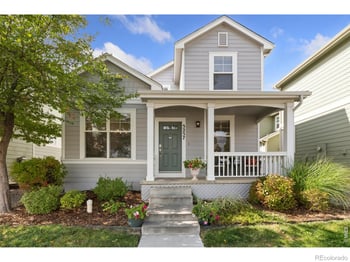
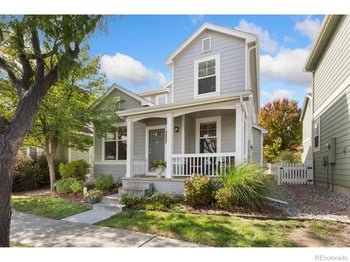
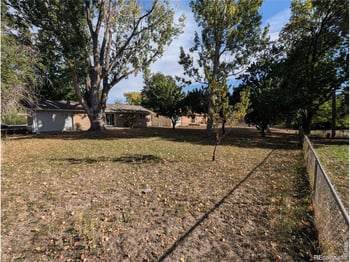
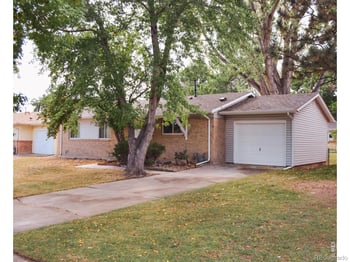
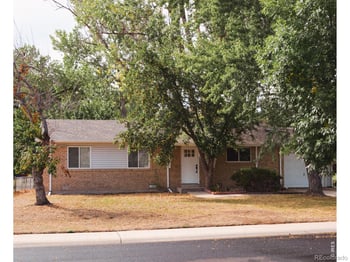
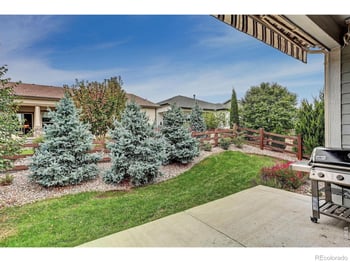
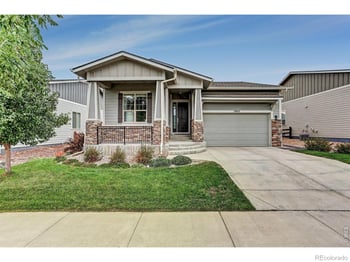
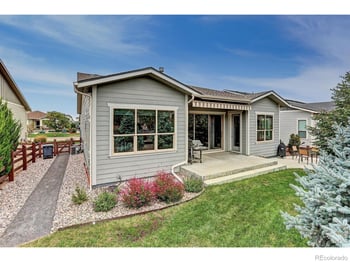
2626 Black Fox Ct, Fort Collins, CO 80526
MLS#: RECIR1069676
.jpg)



Every relocating student's worst lease starts the same way: signed sight-unseen, under a deadline, by someone who didn't know what to check. Colorado's college towns — Fort Collins, Boulder, Greeley, and Denver — each have their own rental market timing and their own local rules layered on top of state law, and knowing both before the search starts is what turns a stressful move into a normal one.
Move the timeline back two months from whatever feels reasonable. Colorado's college-town rental markets peak in late spring through summer as leases turn over for the fall semester, and inventory near campus in Fort Collins and Boulder shrinks sharply by July, with what's left priced at a premium or sitting for a reason. Starting the search in January or February for a September move is the floor, not an early move, in these markets.
Colorado's warranty of habitability statute requires a landlord to keep heat, plumbing, and electrical systems in working order and to respond to a written repair notice once a tenant reports a condition that threatens their health. Colorado's 2024 for-cause eviction law requires a landlord to state a legally recognized reason before ending a tenancy or declining to renew. The security deposit has to come back within one month of move-out, or up to 60 days if the lease states that, along with an itemized list of any deductions (Colorado Revised Statutes 38-12-103). None of that is Fort Collins-specific or Boulder-specific — it applies statewide, which means it applies the same way whether the rental is a block from campus or across town.
A one-bedroom apartment near CSU in Fort Collins runs roughly $1,300 to $1,700 a month; a room in a shared house near campus runs $700 to $1,000. Near CU Boulder, a one-bedroom runs $1,600 to $2,200, with shared rooms at $900 to $1,300 — Boulder's limited buildable land keeps prices well above Fort Collins for comparable space. Greeley, home to the University of Northern Colorado, runs meaningfully cheaper, with one-bedrooms at $1,000 to $1,400. Denver's Auraria campus area, shared by CU Denver, Metropolitan State, and the Community College of Denver, sees prices closer to Denver's broader downtown-adjacent rental range, $1,500 to $2,000 for a one-bedroom.
Know the real price range for the neighborhoods near your campus, not the advertised range. Know which neighborhoods are actually walkable or transit-accessible to campus versus which ones look close on a map but require a car or a long bus ride — Fort Collins' Transfort and Boulder's RTD routes both serve their universities directly, and living on one of those lines beats a shorter straight-line distance with no direct bus. Know what utilities come included in that specific market; Colorado landlords vary widely on this, and it changes the real monthly cost by $100 to $250. City-specific renters' subreddits like r/FortCollins, r/boulder, r/Denver, and r/ColoradoSprings are genuinely useful for neighborhood-level detail that doesn't show up in a listing — filter for recent posts and weight accordingly.
Moving to Colorado for college? Call or text 303-955-4220. A live person answers. Not a robot, not a phone tree.
Test every appliance and fixture in person or on a live video walkthrough — run the dishwasher, check hot water pressure, flush every toilet. Photograph every existing scuff or stain before move-in, time-stamped, and send copies to the landlord in writing; deposit disputes are the most common and most avoidable landlord-tenant conflict. Verify the landlord's identity against the property owner of record, which is searchable through most Colorado county assessor sites. Check the city's housing code violation database if one exists — Denver and Fort Collins both publish one — and talk to a current or recent tenant if at all possible; five minutes with someone who lives there tells you more than any listing.
Signing sight-unseen is sometimes unavoidable for a student relocating from another state or country on a tight enrollment timeline, but it should never mean skipping the verification steps above. Ask the landlord for a live video walkthrough instead of relying on listing photos alone, and request a 24-hour hold on the unit while you review the lease in full. A landlord who refuses any time to review a multi-month legal commitment is telling you something about how they operate before you've signed anything.
On-campus housing removes most relocation-specific risk in exchange for cost and less independence. Purpose-built student housing near CSU, CU Boulder, and Auraria — commonly run by national operators with properties across Colorado — sits in the middle: more expensive than a private rental but with standardized leases and professional management. A private landlord apartment costs less in most cases but puts more of the verification work on the student. Match the choice to how much time you can realistically put into vetting a private landlord before the semester starts.
| Housing type | Typical cost | Verification difficulty |
|---|---|---|
| On-campus residence hall | Higher per square foot | Low, institution-managed |
| Purpose-built student housing | High | Low to moderate |
| Private landlord apartment | Variable | High |
| Shared house, room rental | Lower | High |
Colorado state law does not require renters insurance, but most Fort Collins, Boulder, and Denver leases require it as a lease condition, $15 to $25 a month for a student's coverage level. If a lease needs to be broken early, Colorado law still holds the tenant responsible for rent until the unit is re-rented or the term ends, but the landlord has a duty to make a reasonable effort to re-rent rather than collect the full remaining term with the unit sitting empty. Read the lease's specific early-termination clause before signing, since some student-housing leases add their own penalty on top of state law.
Orientation week, the first weeks of classes, and setting up a new home in a new city all land at once. Students who arrive with housing already resolved start the semester from a different baseline than students still dealing with a difficult landlord or a substandard unit. Treat the housing decision with the same seriousness as any other choice that affects the next twelve months: thorough, timely, and then decisive. When the workload from a heavy first semester overlaps with the stress of a move, some students look for outside assistance in writing essays to keep the two from compounding, or use a service to write my paper with KingEssays during the specific weeks the move eats into study time.
The Kenna Real Estate Group helps students weigh renting against buying near a Colorado campus, and connects out-of-state and international students and their parents with agents who know Fort Collins, Boulder, Greeley, and Denver's rental timelines. Call or text 303-955-4220. A live person answers. Not a robot, not a phone tree. Or search every home for sale in Colorado if buying near campus makes more sense than another year of renting.
Questions about any home in Colorado? Call or text 303-955-4220. A live person answers.
Two months earlier than feels necessary — January or February for a fall move. Inventory near CSU and CU Boulder shrinks sharply by July, and what's left is priced at a premium.
Roughly $1,600 to $2,200 a month. Greeley, near the University of Northern Colorado, runs cheaper at $1,000 to $1,400.
The deposit has to come back within one month of move-out, or up to 60 days if the lease states that, with an itemized list of any deductions.
Yes, but most leases require the landlord's written consent first. Read the lease's specific subletting clause before assuming it's allowed.
State law does not require it, but most Fort Collins, Boulder, and Denver leases require it as a lease condition, $15 to $25 a month for a student's coverage.
The tenant still owes rent until the unit is re-rented or the term ends, but the landlord has to make a reasonable effort to re-rent rather than collect the full remaining term on an empty unit.
Check the property owner of record through the county assessor's site, ask for a live video walkthrough, and request a 24-hour hold to review the lease in full before signing.
On-campus housing removes most relocation risk at a higher cost. A private landlord apartment costs less in most cases but puts more verification work on the student.