.jpg)


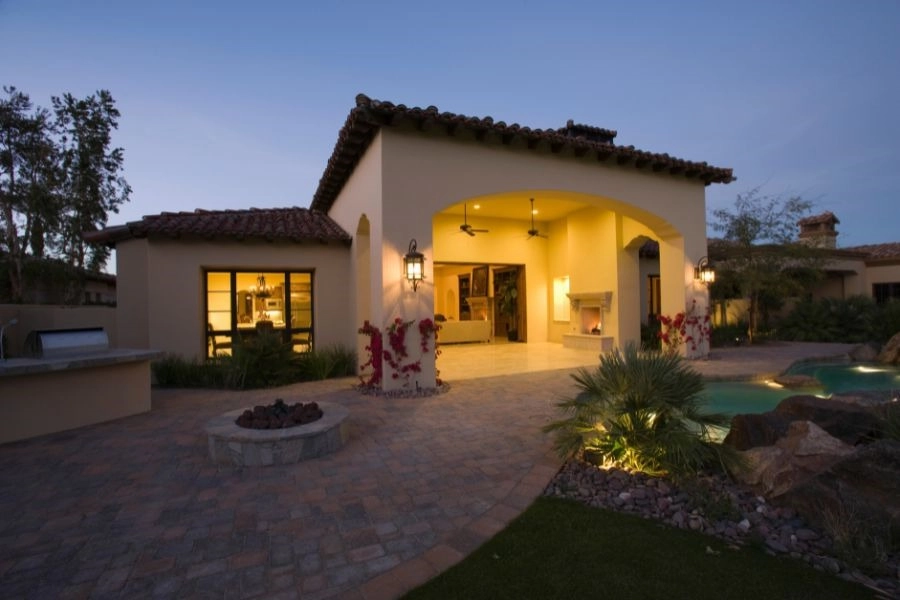
Soffit lighting, small fixtures mounted under the roofline's overhang, adds curb appeal and evening visibility to a Colorado home without the maintenance of string lights or freestanding fixtures. Placement and fixture choice matter more here than in a milder climate, since Front Range homes deal with snow, hail and close to 300 days of direct sun on exterior finishes. Homeowners in Denver, Aurora, Lakewood, Littleton and Centennial ask the same handful of questions before buying fixtures: where to put them, what they cost, whether a permit is needed, and which fixture rating survives a Colorado winter. This guide answers all of them.
Where does soffit lighting work best on a Colorado home?
Front entries, covered porches and the perimeter of the roofline are the three places soffit lighting earns its cost fastest, since they cover the paths buyers, guests and delivery drivers actually use after dark. A well-lit front door reads as more welcoming in listing photos taken at dusk, and it is one of the lowest-cost curb appeal upgrades available before a Front Range listing goes live.
Does soffit lighting over the front door add curb appeal?
Yes. Two to four fixtures spaced evenly along the entry soffit create even, shadow-free light across the front door and walkway, which photographs better than a single porch light casting one harsh pool of light. Warm-white bulbs (2700K to 3000K) match most Front Range exterior finishes better than cool daylight bulbs, which can look sterile against brick, stone or stucco.
Should soffit lighting go around a covered porch?
A covered porch benefits from soffit lighting along its full perimeter, especially on Front Range homes where the porch doubles as outdoor living space through the long, sunny stretches of spring and fall. Spacing fixtures every four to six feet keeps the light even without creating hot spots.
Does perimeter soffit lighting make sense for a Colorado home?
Full-perimeter soffit lighting adds security-adjacent visibility around the entire structure and helps a home show well for evening or early-morning showings during the shorter daylight months. It costs more than entry-only lighting, so most Front Range homeowners start with the entry and porch and expand to the full perimeter as budget allows.
What does soffit lighting cost to install in the Denver metro?
A basic entry setup (two to four fixtures) runs $300 to $800 installed, including wiring to an existing circuit. Full-perimeter lighting on an average Front Range home runs $1,500 to $4,000 depending on square footage and whether new wiring or a dedicated circuit is needed.
| Coverage | Fixture count | Installed cost |
|---|---|---|
| Entry only | 2 to 4 | $300 to $800 |
| Entry plus porch | 6 to 10 | $800 to $1,800 |
| Full perimeter | 12 to 24+ | $1,500 to $4,000 |
LED or halogen: which soffit bulb makes sense in Colorado?
LED soffit fixtures cost more upfront but run cooler and last 15 to 25 years compared to 2 to 5 years for halogen, which matters on a Front Range roofline where a bulb swap means a ladder in freezing weather or on a steep pitch. LED fixtures also handle Colorado's wide temperature swings, from below zero in winter to well over 90 degrees under direct summer sun, better than halogen housings.
Should soffit lighting have a motion sensor?
A motion sensor on side and rear soffit runs adds visibility exactly when needed without running continuously, which extends fixture life and cuts the electric bill. Front entry and porch lighting works better on a dusk-to-dawn photocell so the home reads as lived-in and welcoming through the evening rather than lighting up only when triggered.
Do I need a permit for soffit lighting in Colorado?
Most soffit lighting installed on an existing circuit needs no permit. Adding a new dedicated circuit or a new exterior electrical panel connection needs an electrical permit through the city or county; Denver, Aurora, Lakewood and most Front Range municipalities require licensed electrician work for any new circuit regardless of permit status.
How does Colorado's sun and UV affect soffit light fixtures?
Close to 300 days of sun a year and strong UV at altitude degrade plastic fixture housings and lens covers faster than in a cloudier climate. Choose fixtures rated for high-UV exposure, or metal-housed fixtures over plastic, on south- and west-facing soffits to avoid yellowing and cracking within a few years.
Does snow and hail damage soffit lighting?
Soffit-mounted fixtures sit under the roof overhang and see far less direct hail and snow impact than wall-mounted or ground fixtures, which is one reason they hold up well on the Front Range. Ice dams that form along a roofline in a heavy snow year can still drip onto soffit fixtures, so a wet-location-rated fixture (not just damp-location-rated) is worth the small price difference for any Colorado installation.
Does soffit lighting help a Front Range home sell faster?
Exterior lighting is one of the most cost-effective updates before listing, since it improves both daytime curb appeal (fixtures read as an upgrade) and evening showings. The Kenna Real Estate Group's guide to preparing and adding value before selling covers which exterior updates return the most at closing relative to cost.
Do HOAs restrict exterior lighting changes in Colorado communities?
Many Front Range HOAs review exterior lighting for color temperature, brightness and fixture style, especially in communities with dark-sky or uniform-exterior standards. Check the Denver HOA rules and fees guide or your community's architectural guidelines before installing anything visible from the street.
Should soffit lighting be on a smart switch or timer in Colorado?
A dusk-to-dawn photocell or smart switch matters more in Colorado than in a climate with consistent daylight hours, since sunset shifts by close to five hours between the longest and shortest days along the Front Range. A photocell adjusts automatically instead of needing a manual timer reset each season, and a smart switch lets a seller or a property manager control exterior lighting remotely during a vacant listing period.
How does soffit lighting compare to string lights or landscape lighting in Colorado?
String lights need to come down before heavy wind or hail events and go back up afterward, which adds ongoing maintenance a fixed soffit fixture does not. Landscape lighting (ground-mounted or stake fixtures) lights up plantings and walkways but gets buried or knocked over by snow shoveling and plowing in winter. Soffit lighting stays fixed above grade year-round, which makes it the lowest-maintenance option of the three for a Front Range exterior.
Where to go next
- Preparing and adding value before selling
- Get a Smart Pricing Report for your Colorado home
- Denver curb appeal tips from a local
- 8 curb appeal fixes for Front Range sellers
- Explore homes for sale in Aurora
- Search every home for sale in Colorado
Talk to the Kenna Real Estate Group
The Kenna Real Estate Group helps Front Range sellers pick exterior updates, lighting included, that actually move a listing's showing rate and sale price. Call or text 303-955-4220. A live person answers. Not a robot, not a phone tree. Ready to look at options? Search every home for sale in Colorado.