.jpg)


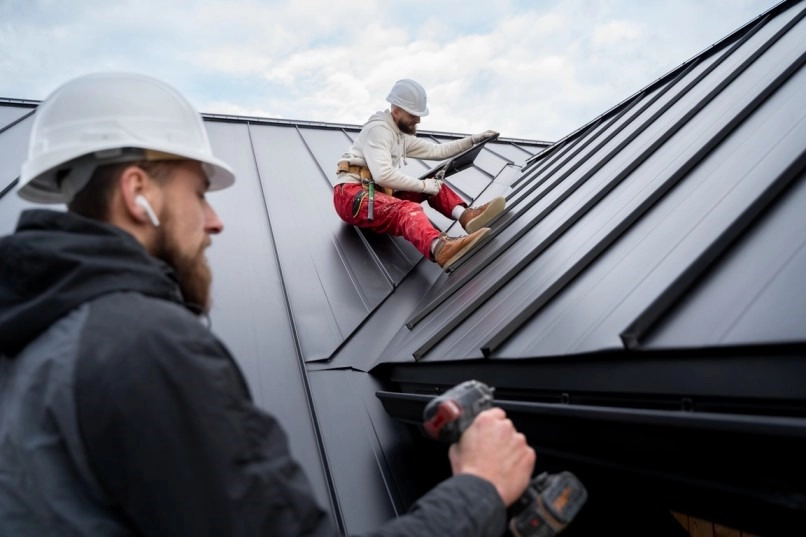
Commercial and residential roofing in Colorado differ in slope, material, and the rules that govern the job, not just size. A house on the Front Range almost always has a steep-slope asphalt, metal, or tile roof shedding water and hail by gravity. A Denver metro office building, strip mall, warehouse, or apartment complex almost always has a low-slope or flat membrane roof managing water through interior drains instead of gravity alone.
Why Colorado Homes Are Steep-Slope and Commercial Buildings Are Flat
A steep-slope residential roof sheds rain and melting snow by pitch, which is why shingles, metal panels, and tile work on houses across Denver, Aurora, and Colorado Springs. A commercial building's larger footprint makes a steep pitch impractical to frame and expensive to access, so commercial roofs use a low-slope or fully flat membrane system with internal drains and scuppers instead.
Materials: TPO, EPDM, and Modified Bitumen vs. Shingles and Metal
Colorado commercial roofs commonly use TPO (thermoplastic polyolefin), EPDM rubber membrane, or modified bitumen, chosen for UV resistance at altitude and heat-welded or adhered seams that handle a flat plane. Residential roofs use architectural asphalt shingles, standing seam or stone-coated steel, or concrete tile, chosen for impact resistance and appearance on a pitched surface. A commercial roof's membrane seams are the weak point in a hailstorm; a residential roof's granule coating and flashing details are the weak point.
How Front Range Hail Hits Each Roof Type Differently
Hail season on the Front Range runs mid-April through mid-September. On a residential shingle roof, hail bruises and knocks granules loose, which shows up as an insurance claim within days. On a commercial flat membrane, hail can puncture or split the seams, and the damage is harder to see from the ground, which is why commercial property managers schedule a roof inspection after every significant hail event rather than waiting for a visible leak.
Cost to Replace a Commercial Roof in the Denver Metro
A TPO or EPDM replacement commonly runs $6 to $12 per square foot in the Denver metro depending on insulation and drain work, which puts a 20,000 square foot flat roof in the $120,000 to $240,000 range. A residential asphalt shingle reroof on an average 2,000 square foot home runs $9,000 to $16,000, and Class 4 steel runs $12,000 to $25,000. The per-square-foot cost on a commercial job includes tear-off, insulation (tapered for drainage), and membrane; a homeowner's quote should be broken out the same way before comparing bids.
Insurance: Commercial Property Policy vs. Homeowners Policy
A commercial building carries a commercial property insurance policy with its own wind and hail deductible, commonly a percentage of the building's insured value rather than a flat dollar amount, the same structure many Front Range homeowners now see on their own policies. A business owner should confirm the roof's age and material with their carrier before a claim, since some commercial policies pay actual cash value rather than full replacement cost on an older membrane.
Permits and Inspections by City and County
Denver, Aurora, and Colorado Springs each require a separate commercial roofing permit process from residential reroofs, adding structural and fire-code review for a flat roof carrying rooftop HVAC units. A homeowner's residential reroof permit in the same jurisdiction is faster and does not require the same mechanical review.
Snow Load and Drainage: The Real Design Difference
A flat commercial roof has to move water off through internal drains and scuppers engineered for the Front Range's heavy, wet spring snow; a clogged drain on a flat roof means ponding water and structural load, not a puddle that runs off. A steep residential roof relies on pitch and gutters, so its snow-load risk shows up as ice dams at the eaves rather than standing water on the roof deck.
Multifamily and Mixed-Use: Which Rules Apply?
A Denver metro apartment building or mixed-use project sits in between: townhome-style buildings with pitched roofs follow residential rules, while a flat-roofed apartment building or a ground-floor retail podium follows commercial code. An investor evaluating a multifamily purchase should ask which roof type is on the building and who is responsible for it under the HOA or condo declaration before closing.
Buying Commercial Property: Check the Roof Before You Buy or Lease
An investor weighing a Denver commercial purchase against a long-term lease should get the roof's age, warranty transferability, and last inspection report before making the decision; a roof with five years left on its membrane life changes the numbers on either side. The Colorado real estate investing guide walks through that buy-versus-lease math in more detail.
Roof pitch itself is the first thing to check on any Colorado property, commercial or residential, since it determines which materials and drainage design are even possible; this roof pitch reference explains how it is measured. For a commercial project, working with contractors who specialize in flat and low-slope systems matters more than general roofing experience; some owners look outside their immediate market for that expertise, including specialized commercial roofing contractors.
Where to go next
- Colorado real estate investing guide
- Rental property checklist for Colorado
- Denver HOA rules and fees guide
- Future-Proof Your Denver Commercial Property with Sustainable Upgrades
- Roof Replacement in Colorado: Costs, Lifespan, and Best Materials
- Search every home and property for sale in Colorado
Talk to the Kenna Real Estate Group
The Kenna Real Estate Group works with Front Range buyers, sellers, and investors weighing roof condition and cost on both residential and commercial property. Call or text 303-955-4220. A live person answers. Not a robot, not a phone tree. Or search every home for sale in Colorado right now.
Homes for sale that match this post
Guides
Questions about any home in Colorado? Call or text 303-955-4220. A live person answers.