New - 8 Hours Ago

.jpg)


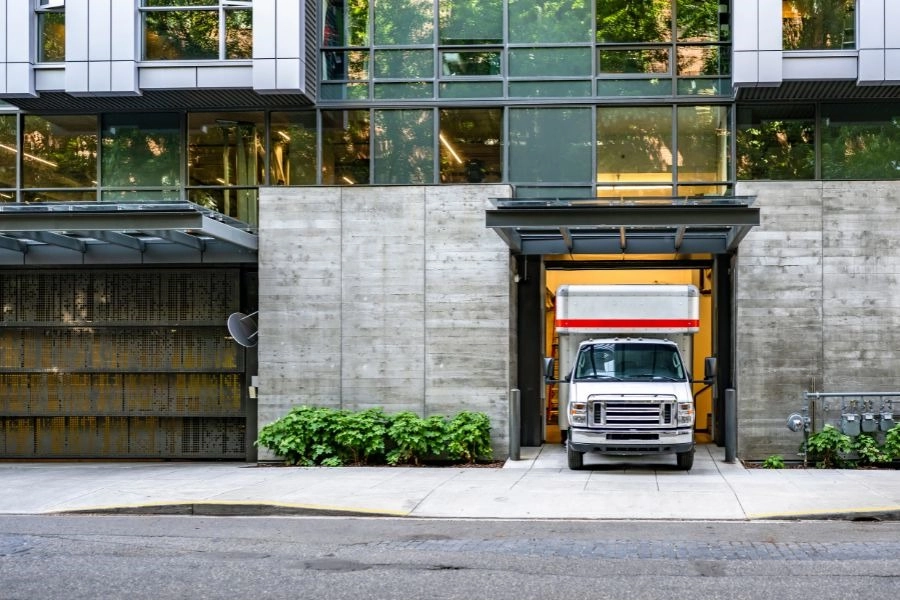
Denver high-rises built after 2000 (the towers in LoDo, Union Station, the Central Platte Valley, Riverfront Park and the Golden Triangle) have a loading dock or a dedicated loading bay off the alley, a freight elevator or a padded passenger elevator, and a written move-in policy with a reservation, a fee, and a time window. Mid-rise buildings from 4 to 8 stories in Uptown, Capitol Hill, Cherry Creek and Highland have an elevator but no dock, so the truck loads from the alley or a reserved curb space. Walk-ups have neither. This page covers how each one works, what the HOA charges, where the truck parks, and which documents tell you before you close.
Building owners size the dock, the bay door, and the approach for the trucks they expect; the factors building owners and loading dock designers weigh explain why a 2005 tower's dock takes a 26-foot truck and a 1998 mid-rise's garage does not. The condo-by-building rundown for downtown is on our Downtown Denver and LoDo condos and lofts guide.
Every Denver HOA-managed high-rise runs moves on a reservation. The standard policy, building to building, looks like this:
The freight or service elevator in a 2000s Denver tower carries 3,500 to 5,000 pounds with a cab roughly 5 to 6 feet wide, 7 to 8 feet deep and 8 to 9 feet tall. A queen mattress, a 90-inch sofa and a 6-foot refrigerator all fit on the diagonal; a 108-inch sectional piece, a 3-cushion sleeper sofa and a 7-foot armoire go up on the stairs or not at all. Measure the two biggest pieces and send the manager the dimensions with the reservation.
| Item | Denver high-rise standard | Denver mid-rise standard |
|---|---|---|
| Move-in fee (non-refundable) | $200 to $500 | $100 to $300 |
| Damage deposit (refundable after a walk-through) | $250 to $1,000 | $0 to $500 |
| Reservation lead time | 7 to 14 days | 3 to 7 days |
| Mover's certificate of insurance (COI) | Required, naming the HOA and manager | Required in most buildings |
| Move window | 4 hours, weekdays and Saturdays | Same, less enforced |
The COI is the item that stops a move on the day. The building needs a certificate from the moving company's insurer, naming the association and the management company as additional insured, with general liability of $1 million or more, before the truck backs in. Professional Denver movers issue it in 24 hours; a rented truck and three friends cannot, which is why some towers prohibit self-moves entirely. Colorado's Common Interest Ownership Act (CCIOA) lets an association adopt and enforce these rules as long as they are in the recorded declaration or the adopted rules and regulations.
A building with a dock solves this. For everyone else in Denver's core:
The permit types, costs and how to apply are on our Denver parking permits and parking rules guide. What the end of Denver's parking minimums means for new buildings and their loading is in Denver ends parking minimums.
Denver movers price by the hour for local moves and add time for buildings. A 3-person crew and a 26-foot truck runs $150 to $220 per hour in 2026. A 2-bedroom condo move from one Denver tower to another takes 5 to 8 hours because both ends have an elevator window, a dock, and a COI. Expect:
Book the movers after the elevator reservation is confirmed, not before, and give them the building's dock height, door clearance and the manager's phone number. For large-lot moves on the other end of the price spectrum, see what estate-lot homes require from a Denver moving company.
The Colorado Real Estate Commission contract has an Association Documents Deadline. By that date the seller delivers the declaration, bylaws, rules and regulations, budget, reserve study and minutes, and you have until the Association Documents Objection Deadline to terminate over anything in them. The move-in policy, the fee schedule, the pet rules, the rental cap and the renovation rules are all in the rules and regulations. Read that document first; it is 10 to 30 pages and it governs your first week.
Two more things to pull from the packet before the deadline: the reserve study (an underfunded reserve turns into a special assessment, explained in Catch the HOA's surprise bill before you close) and the minutes from the last 12 months, where elevator modernization and dock repairs show up before they hit the budget. The full document checklist is in our Denver HOA rules and fees guide.
Capitol Hill, Cheesman Park and Congress Park hold most of Denver's pre-1940 walk-ups, and buyers choose them for the walk to Cheesman Park and 13th Avenue, the 10-foot ceilings and the price. The move is the one hard day. Book a 4-person crew, reserve the curb through DOTI, take doors off their hinges for the sofa and the mattress, and move on a weekday morning when the block is empty. Two-person moves into a third-floor walk-up are the source of most Denver moving-day injuries and most damaged stairwells, and the association bills the owner for the stairwell. The neighborhood itself is covered in our Capitol Hill area guide.
Moving out of one Denver tower and into another on the same date needs two elevator reservations that do not overlap and a crew that can hold the load between them. Reserve the move-out window for the morning (8 am to noon) and the move-in for the afternoon (1 pm to 5 pm), confirm both in writing, and tell the movers which building has the dock. If the buildings will not line up, the fix is a 1-day storage hold on the truck ($300 to $600) or closing on the purchase 2 days before the sale so the windows fall on different days. Which Denver buildings suit which owners, by HOA coverage and building type, is in Denver condos for sale: urban living, HOA insights and neighborhood guide.
The Kenna Real Estate Group at Keller Williams DTC pulls the move-in policy, fee schedule and reserve study on every Denver condo before you write the offer, and hands you the manager's contact for the elevator reservation the day you go under contract. Call or text 303-955-4220. A live person answers. Not a robot, not a phone tree. Ready to look? Search every home for sale in Colorado, including every condo in the Denver metro.
Questions about any home in Colorado? Call or text 303-955-4220. A live person answers.
Towers built after 2000 in LoDo, Union Station, Riverfront Park and the Golden Triangle have a dock or an enclosed loading bay that fits a 26-foot truck. Mid-rises load from the alley or a reserved curb space, and walk-ups from the street.
7 to 14 days in a high-rise, 3 to 7 in a mid-rise, through the property manager or resident portal. Windows are 4 hours, Monday through Saturday, and most towers close to moves on Sundays.
$200 to $500 as a non-refundable fee plus a refundable damage deposit of $250 to $1,000 in a high-rise; $100 to $300 in a mid-rise. The mover must also supply a certificate of insurance naming the association.
Apply to Denver DOTI for a temporary right-of-way permit at least 5 business days ahead to bag the meters or hold a loading zone. A two-space, one-day hold runs under $100; double-parking costs $300 or more with the tow.
A 90-inch sofa, a queen mattress and a 6-foot refrigerator fit on the diagonal in a standard 2000s tower service elevator. A 108-inch sectional piece or a 7-foot armoire does not; measure and send dimensions with the reservation.
$150 to $220 per hour for a 3-person crew and truck. A 2-bedroom tower-to-tower move takes 5 to 8 hours with both elevator windows, so $1,200 to $2,200.
By the Association Documents Deadline in the Colorado contract, inside the rules and regulations. You can terminate over anything in the packet until the Association Documents Objection Deadline.


