.jpg)


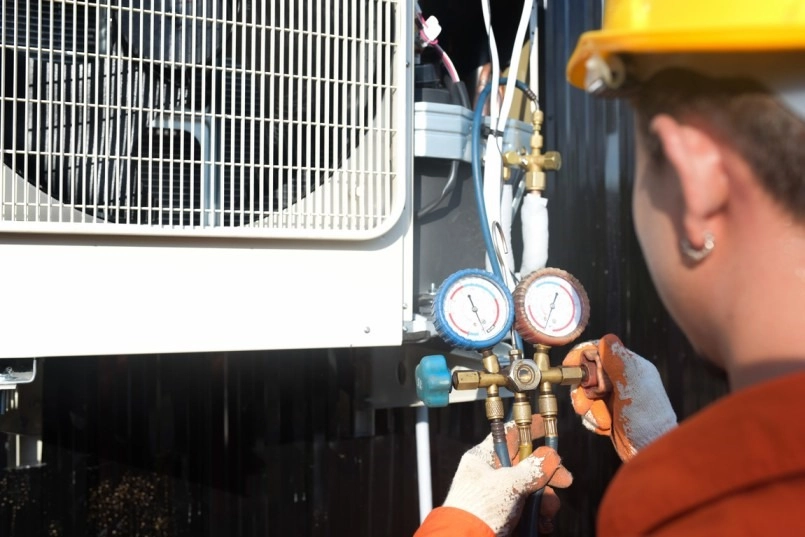
A gas furnace installed on the Front Range needs one thing most installers in flatter, lower states never think about: altitude derating. Above 2,000 feet, a furnace burns fuel less completely because there is less oxygen in the air, so every furnace installed in Denver, Colorado Springs, or anywhere else at Colorado's elevation needs its gas input adjusted down from the sea-level rating on the box, or it runs inefficient and can produce excess carbon monoxide.
Gas furnaces on the Front Range: what altitude changes
Manufacturers rate a furnace's BTU output at sea level. At 5,280 feet in Denver, and higher in the foothills and mountain corridor, the input must be reduced roughly 4% for every 1,000 feet of elevation above 2,000 feet, per manufacturer specifications and the International Fuel Gas Code adopted across Colorado. A licensed installer either de-rates the gas orifice size and manifold pressure or installs a furnace already built for high-altitude operation. Skipping this step is one of the most common furnace installation mistakes on the Front Range, and it shows up as higher gas bills, uneven heat, and, in the worst cases, incomplete combustion that raises indoor carbon monoxide.
Selecting the right furnace for a Colorado home
Gas furnaces dominate the Front Range because natural gas from Xcel Energy is available through most of the Denver metro, Colorado Springs, and northern Colorado, and gas heat costs less per BTU than electric resistance heat through a Colorado winter that regularly drops below zero. A gas furnace needs proper venting and an annual inspection; it is the more efficient, lower-operating-cost choice for most Front Range households. An electric furnace makes sense mainly in a mountain property or rural parcel without a gas line, where Reliance Home Comfort's furnace guide is a useful reference on the tradeoffs.
Sizing matters as much as fuel type. An HVAC contractor should run a Manual J load calculation using the home's square footage, insulation level, window count and Colorado's design temperature for that county, not a rule of thumb. An oversized furnace short-cycles and wastes gas; an undersized one runs constantly and never quite catches up on a sub-zero night.
AFUE ratings and Colorado's heating season
Annual Fuel Utilization Efficiency (AFUE) measures how much of the fuel a furnace burns turns into usable heat. Colorado's heating season runs roughly six months, October through April, with a meaningful number of nights below 10 degrees along the Front Range and colder in the mountains. A 95%+ AFUE condensing furnace costs more upfront than an 80% AFUE model, but the fuel savings over a six-month Colorado heating season pay back the difference within five to eight years, sooner if Xcel Energy's current rebate applies to the purchase.
The installation process and what changes at altitude
The Front Range installation sequence follows the standard order: disconnecting and removing the old unit, setting the new furnace, connecting gas, electrical and venting, then commissioning. Two steps carry extra weight in Colorado. First, the gas manifold pressure and orifice size must match the home's specific elevation, not a generic sea-level setting; a qualified technician, the kind referenced in this furnace installation overview, checks this with a manometer during commissioning, not by eye. Second, venting for a gas furnace must account for Colorado's thinner air, which affects draft; a technician verifies proper draft with a combustion analyzer, checking carbon monoxide output directly rather than assuming the factory setting is correct at elevation.
Permits by city and county on the Front Range
Furnace replacement requires a mechanical permit in Denver, Aurora, Colorado Springs, and most Front Range counties, whether or not the ductwork changes. The permit triggers an inspection that confirms gas line sizing, venting, and combustion air, catching altitude-derating mistakes before a homeowner ever notices reduced efficiency. A homeowner should ask any installer for the permit number and never accept a furnace swap done without one; an unpermitted furnace installation is also a disclosure item at resale and can complicate a buyer's financing if an appraiser or inspector flags it.
Cost of furnace installation in the Denver metro and Colorado Springs
| Furnace type | Installed cost range |
|---|---|
| 80% AFUE gas furnace, existing ductwork | $3,800 to $6,500 |
| 95%+ AFUE condensing gas furnace | $5,500 to $9,500 |
| Electric furnace, no gas line available | $3,000 to $5,500 |
| Ductwork modification or replacement, add-on | $1,500 to $6,000 |
Xcel Energy runs seasonal rebates on qualifying high-efficiency furnaces; ask the installer to apply the current rebate to the written quote rather than comparing pre-rebate numbers between bidders.
Maintaining a furnace after installation in Colorado's climate
Colorado's dry climate is gentle on ductwork compared with a humid state, but the dust and pollen carried in on dry Front Range wind clog a standard filter faster than average, so a furnace running October through April needs a filter check every 60 to 90 days rather than the 90-day default printed on the box. An annual fall tune-up, timed before the first hard freeze, catches a failing igniter, a dirty flame sensor, or a drifted manifold pressure before a mid-January cold snap turns a minor issue into a no-heat emergency call.
Buying a Front Range home with an older furnace
A buyer touring a home with a furnace over 15 years old should ask for the installation permit and any service records, and budget for replacement rather than assume the current owner's maintenance schedule. A home inspector checks basic operation but does not run a full combustion analysis; a buyer serious about an older system can request a separate HVAC contractor walkthrough during the inspection period, before the objection deadline, and use that estimate in negotiation.
Carbon monoxide detectors and Colorado's law
Colorado law (C.R.S. 38-45-101) requires a functioning carbon monoxide alarm in any residence with a fuel-fired appliance, furnace, water heater, fireplace, or an attached garage, and it must be in place before the property is sold or leased. A furnace replacement is the right moment to confirm the home has a code-compliant detector within 15 feet of every sleeping room, since a new furnace still needs that backstop even when it is installed and vented correctly.
A new furnace and a Front Range home sale
Buyers touring a Denver-metro listing in the winter ask the furnace's age and fuel type early, and a permit record for a recent, properly derated installation removes a common inspection objection point. A seller deciding whether to replace an aging furnace before listing should weigh it against other repairs using the Kenna Real Estate Group's guide to preparing and adding value before selling and a Smart Pricing Report for the specific neighborhood.
Where to go next
- Preparing and Adding Value Before Selling
- The Colorado Home Buyer's Guide
- Closing Costs for Colorado Home Buyers
- Search every home for sale in Colorado
- Heating and cooling standards for Colorado homes
- Why a high-efficiency HVAC system helps Colorado home sellers
Talk to the Kenna Real Estate Group
Buying or selling a Front Range home, the Kenna Real Estate Group can point to which furnace-related items an inspector flags most on Denver, Aurora, and Colorado Springs listings, and how to price around them. Call or text 303-955-4220. A live person answers. Not a robot, not a phone tree. Ready to look now? Search every home for sale in Colorado.
Homes for sale that match this post
- Homes with Fireplace in Colorado Springs
- Homes with 2 Car Garage in Colorado Springs
- All homes for sale in Colorado Springs
Guides
Questions about any home in Colorado? Call or text 303-955-4220. A live person answers.