.jpg)


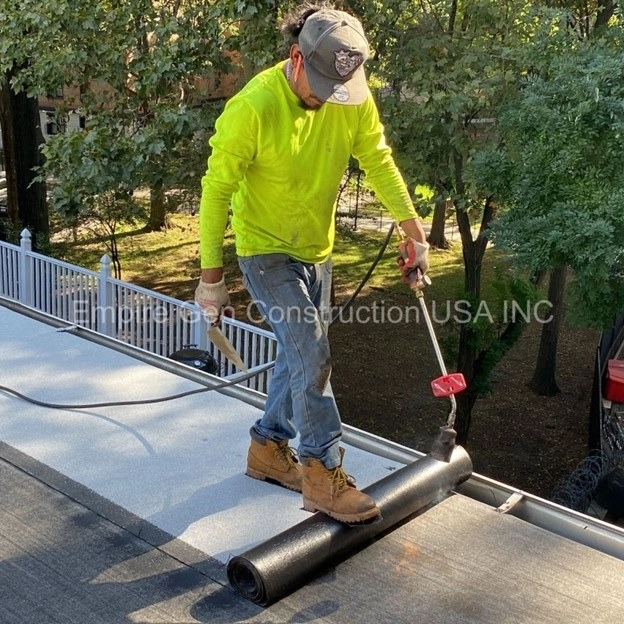
Flat roofs on Front Range homes show up on additions, garages, mid-century modern builds and some rowhomes and townhomes, and they need a different maintenance plan than a pitched shingle roof once winter snow load and Colorado freeze-thaw enter the picture. Masonry, brick veneer, chimneys and retaining walls face the same freeze-thaw stress, since water trapped in a mortar joint expands when it freezes and works the joint apart over a season.
This guide covers flat roof materials that hold up here, what drives masonry repair costs on the Front Range, and what a homeowner should check before hiring a crew for either.
Flat Roofs on a Colorado Home
A flat roof is never perfectly flat; it is built with a slight slope toward drains or scuppers so water and melting snow move off instead of pooling. On a Front Range home, that drainage detail matters more than in a milder climate, since standing snow that melts and refreezes at the roof edge behaves like an ice dam and can back water under the membrane.
- TPO (thermoplastic polyolefin): a reflective white membrane that handles the strong UV at 5,280 feet well and resists punctures; a common choice for Denver-metro flat roof replacements.
- EPDM (rubber membrane): a durable, flexible material that tolerates the Front Range's wide daily temperature swings without cracking.
- Modified bitumen: a multi-layer asphalt system with a long track record on older Denver flat roofs, installed with heat-welded or torch-applied seams.
All three materials need correctly sloped drains and properly flashed edges to shed Colorado snow load; the material choice matters less than the installation detail at parapet walls, drains and penetrations.
Flat Roof Cost in the Denver Metro
| Material | Installed cost per sq ft | Typical lifespan here |
|---|---|---|
| TPO | $6 to $12 | 20 to 25 years |
| EPDM | $5 to $10 | 20 to 30 years |
| Modified bitumen | $7 to $13 | 15 to 20 years |
A flat roof also opens usable space many Front Range homeowners do not think about: a rooftop deck or a spot for solar panels, both of which need to be planned into the membrane and drainage design before installation, not added afterward.
Masonry on a Front Range Home
Brick, stone and block masonry on Colorado homes takes a beating from the same freeze-thaw cycling that damages roofs and driveways: water gets into a mortar joint, freezes, expands, and the joint cracks a little wider with every cycle. Over years, that shows up as crumbling mortar, spalling brick faces, and cracked chimney caps.
- Tuckpointing (repointing): removing and replacing damaged mortar joints without touching the brick itself; the most common masonry repair on Front Range homes.
- Chimney masonry repair: chimneys take the most freeze-thaw damage on a home since they are exposed on all sides; cracked crowns and spalling brick need repair before water gets into the flue liner and the attic framing below it.
- Retaining wall repair: common on sloped Front Range lots, where a masonry retaining wall holds back soil that expands and contracts with moisture and temperature.
Tuckpointing on a Denver-metro home runs roughly $8 to $25 per square foot of repointed area depending on brick pattern and joint condition. Chimney masonry repair runs $500 to $3,000 for crown and cap work, and can run higher if the flue liner or firebox needs attention too.
How to Tell a Flat Roof or Masonry Job Needs Attention Now
A few signs move a flat roof or masonry repair from the maintenance list to the urgent list on a Front Range home. Catching these early keeps a repair from turning into a full replacement or a structural fix.
- Ponding water that stays more than 48 hours after a flat roof drains normally elsewhere signals a low spot or a clogged drain.
- Bubbling or blistering membrane means moisture is trapped under the surface and the material has started to separate from the deck.
- Stair-step cracks in brick or block running diagonally across several courses point to foundation or footing movement, not simple mortar wear.
- A chimney crown with visible cracks or a leaning cap lets water directly into the flue and the attic framing around it.
- Efflorescence, the white chalky residue on brick or block, signals water is moving through the masonry and depositing dissolved minerals as it evaporates.
Any of these is worth a professional inspection within the season rather than waiting for the next scheduled maintenance check, since freeze-thaw cycling accelerates all five conditions through a Colorado winter.
Regional Roofing and Masonry Companies
Firms outside Colorado, including the roofing contractors at Empire Gen Construction in New York and their masonry division, publish useful general background on flat roof and masonry work. Hire a Colorado-licensed, locally insured contractor for the actual job; snow load requirements, permit rules and material availability on the Front Range differ enough from a dense East Coast market that local experience matters.
Permits and HOA Approval
Denver and most Front Range cities require a permit for flat roof replacement and for structural masonry work such as a retaining wall rebuild; cosmetic tuckpointing on an existing wall does not. Homes inside an HOA need Architectural Review Committee approval for exterior material or color changes on masonry, and for any rooftop deck addition on a flat roof.
Retaining Walls on Sloped Front Range Lots
Retaining walls show up constantly on Front Range properties, from a short landscape wall separating a raised bed to a structural wall holding back several feet of graded soil next to a driveway or foundation. Masonry retaining walls built without correct drainage behind them trap water against the wall face, and that water freezes and expands through the winter the same way it does in a brick joint, pushing the wall out of plane a little more with each cycle.
A retaining wall over roughly 4 feet tall needs an engineered design and a building permit in most Front Range jurisdictions, since the soil pressure at that height becomes a structural, not cosmetic, concern. Signs a retaining wall needs attention include visible bulging, horizontal cracking, and gaps opening between the wall and adjacent hardscape or the house foundation itself.
Does Roof and Masonry Condition Affect a Home Sale
Condition matters more than calendar age for both flat roofing and masonry, but both wear out on a predictable schedule on the Front Range given the freeze-thaw and UV exposure described above. A flat roof past its expected service life or masonry with visible cracking and mortar loss is one of the first things a Colorado home inspector flags, and it becomes a repair credit request during negotiations more than a cosmetic issue does. A Smart Pricing Report from the Kenna Real Estate Group shows how condition issues like these affect a Front Range home's list price and negotiated terms.
Where to go next
- Roof replacement in Colorado: costs, lifespan and materials
- Weatherproofing a home for the Colorado climate
- Which upgrades add value before selling a Colorado home
- Denver HOA rules and fees guide
- Explore homes for sale in Denver
- Search every home for sale in Colorado
Talk to the Kenna Real Estate Group
The Kenna Real Estate Group helps Front Range owners of flat-roof and older masonry homes weigh repair costs against resale value, and points buyers to the right inspection questions on these details before closing. Call or text 303-955-4220. A live person answers. Not a robot, not a phone tree. Search every home for sale in Colorado.
Homes for sale that match this post
- Mid-Century Modern Style Homes in Denver
- Townhomes: guide
- Homes with Solar Panels in Denver
- HOA Rules and Fees Guide in Denver
- All homes for sale in Denver
Guides
Questions about any home in Colorado? Call or text 303-955-4220. A live person answers.