.jpg)


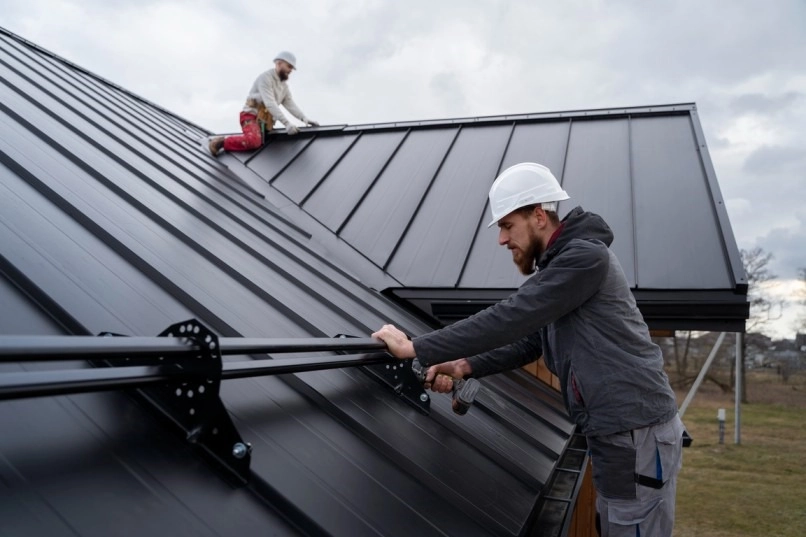
An affordable roofing contractor in Colorado is not the one with the lowest bid door-knocking your street after a hailstorm; it is a locally licensed, insured company that gives you a written scope, a fair price and a workmanship warranty you can actually use. Getting there takes three or four bids, a few license and insurance checks, and knowing the tricks storm-chaser crews use every hail season.
This guide walks through how to hire a roofing contractor on the Front Range without overpaying or getting stuck with a crew that skips town before the warranty period starts.
Storm Chasers and Colorado's Hail Season
Hail season on the Front Range runs mid-April through mid-September, and out-of-state roofing crews follow the storms into Denver, Aurora, Colorado Springs and the northern suburbs every year. Some of these companies do solid work; many set up a temporary local phone number, sign contracts fast, and are gone before a warranty claim ever comes in. A local company with a permanent Colorado address and a multi-year track record is easier to hold accountable a year or two after the job.
Licensing, Registration and Insurance
Colorado does not run a single statewide roofing license, so requirements vary by city and county. Denver, Aurora, Colorado Springs and most Front Range municipalities require contractors to register or hold a local license before pulling a permit. Confirm registration status with the specific city or county building department before signing anything.
- Ask for a certificate of insurance naming general liability and workers' compensation coverage, sent directly from the contractor's insurance agent.
- Confirm local registration with the city or county building department, not just the contractor's own paperwork.
- Get the business address and check that it is a real, established Front Range location, not a P.O. box or a truck.
- Ask how long the company has operated in the Denver metro under its current name.
Your Insurance Deductible Is Not Negotiable
It is illegal in Colorado for a roofing contractor to advertise that it will pay, waive or rebate any part of your insurance deductible as an inducement to sign a contract. A contractor offering to "cover your deductible" is either padding the invoice to your insurer to make up the difference, or breaking the law outright. Pay your full deductible as written in your policy, and treat any offer to cover it as a reason to get a second bid.
Getting a Fair, Affordable Bid
Get three to four written bids for any full roof replacement, and make sure each one covers the same scope: tear-off layer count, underlayment type, flashing replacement, and ridge and edge details. A bid that is dramatically lower than the others is missing a line item, not offering a better deal. Companies with a real local overhead, a permanent shop and trained crews price closer together than storm-chaser crews working out of a truck.
| Roof size / material | Typical installed cost, Denver metro |
|---|---|
| 2,000 sq ft, architectural asphalt shingle | $11,000 to $18,000 |
| 2,000 sq ft, Class 4 impact-rated asphalt | $13,000 to $21,000 |
| 2,000 sq ft, standing-seam metal | $22,000 to $34,000 |
| 2,400 sq ft, architectural asphalt shingle | $13,500 to $22,000 |
Some contractors, including national and regional companies such as the roofing team at Cascade Roofing in Portland, publish sample pricing and process guides worth reading for a general baseline. Get your actual bid from a Colorado-licensed local company; pricing, permit rules and material availability differ enough by region that an out-of-state estimate is a starting reference point, not a quote.
Questions to Ask Before Signing
A short list of direct questions separates a contractor worth hiring from one worth passing on. Ask each bidder the same questions and write down the answers, since a company that hedges on any of these is a company to cross off the list.
- How many roofs did your crew install in the Denver metro last year? A track record of local volume signals a real, ongoing local business.
- Who pulls the permit, and when? The contractor should pull it, not the homeowner, and it should happen before work starts, not after.
- What does the workmanship warranty cover, and for how long? Separate from the manufacturer's material warranty, this covers installation errors.
- Will the same crew be on-site the whole job, or is work subcontracted out? Subcontracted crews are not automatically a problem, but the general contractor should know exactly who is doing the work.
- What happens if hidden decking damage turns up once tear-off starts? A fair contractor has a per-sheet replacement price agreed to in writing before the job begins.
Financing a Roof Replacement in Colorado
Most Front Range roofing companies offer financing plans through a third-party lender, and some homeowners use a home equity line of credit instead, particularly when the replacement is not covered by an insurance claim. Compare the total cost including interest across a few financing options before signing, and confirm whether the contractor's price changes if you pay in cash versus through their financing partner. A roof replacement tied to an insurance claim is paid directly by the carrier in the two-part ACV and RCV structure described below, which changes the financing math considerably.
ACV vs. RCV on an Insurance-Paid Roof
Most Colorado homeowners policies pay a roof claim in two parts: an actual cash value (ACV) payment up front, with the remaining recoverable depreciation value (RCV) paid after the work is finished and the invoice is submitted. A roofing contractor who understands this process invoices the insurer directly and walks you through both payments instead of asking you to front the difference out of pocket.
Red Flags Worth Walking Away From
- A bid dramatically below the other three without an explanation of what is different in the scope.
- Pressure to sign the same day, especially before your insurance adjuster has inspected the roof.
- No permanent local address or a business only a few months old operating under a name that changed recently.
- A request for the full payment up front before materials are delivered or work starts.
- No written workmanship warranty separate from the manufacturer's material warranty.
Permits and HOA Approval
A licensed Front Range roofing contractor pulls the building permit as part of the job, not as an add-on fee. If your home sits inside an HOA, get Architectural Review Committee approval for material or color changes before the contract is signed; some communities require this even for a like-for-like shingle replacement. Build a week or two into your timeline for that approval so it does not delay the crew.
Where to go next
- Roof replacement in Colorado: costs, lifespan and materials
- Colorado hail and roof costs compared
- Roofing companies in Pueblo, Colorado
- Denver HOA rules and fees guide
- Which upgrades add value before selling a Colorado home
- Search every home for sale in Colorado
Talk to the Kenna Real Estate Group
The Kenna Real Estate Group keeps a working list of vetted, local Front Range contractors for sellers who need roofing work done before listing, and helps buyers read a roofing bid or an inspection report before closing. Call or text 303-955-4220. A live person answers. Not a robot, not a phone tree. Search every home for sale in Colorado.
Homes for sale that match this post
Guides
Questions about any home in Colorado? Call or text 303-955-4220. A live person answers.