New - Just Now
$190,000
Active
2
Beds
2
Baths
1200
Sqft
129.75
Acres
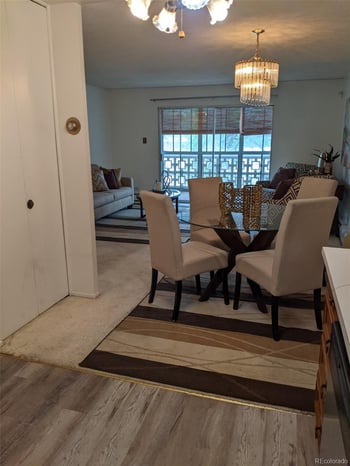
650 S Clinton St #5C, Denver, CO 80247
MLS#: REC3915197
.jpg)



Most Front Range home sellers owe no federal capital gains tax at all, because the home-sale exclusion wipes out the first $250,000 of gain for a single filer and $500,000 for a married couple. Above that line, Colorado does not add a second real estate-specific tax — it folds the gain into your regular state income tax return.
Only on gain that exceeds the exclusion. Gain is your sale price minus selling costs minus your cost basis (what you paid plus qualifying improvements). A couple who bought a Denver home for $400,000 and sells for $750,000 after $30,000 in closing costs has roughly $320,000 of gain — fully covered by the $500,000 married exclusion, so federal tax due is $0.
The federal home-sale exclusion shields up to $250,000 of gain for a single filer, $500,000 for a married couple filing jointly, on the sale of a primary residence. You qualify if you owned and lived in the home as your main home for at least 2 of the 5 years before the sale. You can use the exclusion again on a future sale, but not more than once every 2 years.
Colorado does not have a separate real estate capital gains tax. Any gain that survives the federal exclusion is included in your Colorado taxable income and taxed at the state's flat income tax rate on your Colorado return, same as any other income. There is no additional Colorado-specific real estate gains tax on top of that.
You can still qualify for a partial exclusion if you sold because of a job change, health reason, or another qualifying unforeseen circumstance under IRS rules — the exclusion is prorated based on the portion of the 2-year requirement you met. Without a qualifying reason, gain above your cost basis is taxable.
No. A 1031 exchange defers gain on investment and business property, not on the home you live in. If your home has been your primary residence, the home-sale exclusion is your tool, not a 1031.
Sell a Colorado rental or investment property, identify a replacement property within 45 days, and close on it within 180 days, and the gain rolls into the new property instead of being taxed now. This is common for Front Range landlords trading a single-family rental for a duplex or a share of a larger property. See the Colorado Real Estate Investing Guide for how Front Range investors structure this.
A new roof, a kitchen remodel, a finished basement, a new furnace or AC system, an addition, new windows, and permitted structural work all add to cost basis and reduce taxable gain. Routine repairs and maintenance — repainting, fixing a leak, replacing a broken appliance — do not count. Keep every permit, receipt and contractor invoice; you will want them at closing and at tax time.
Property inherited in Colorado gets a "stepped-up" basis to the home's fair market value on the date of the original owner's death, not what that owner originally paid. That step-up is why an heir who sells shortly after inheriting owes little or no capital gains tax in most cases, since the stepped-up basis erases most of the gain even if the original owner bought the home decades earlier for far less.
If part of the home was rented — a basement unit, an accessory dwelling unit, a house-hacked duplex half — the exclusion applies only to the portion used as your primary residence, and any depreciation you claimed on the rental portion is recaptured and taxed separately at the time of sale. Talk to a CPA before listing if this applies to you.
Most Front Range cities and counties do not charge a local real estate transfer tax. A handful of Colorado mountain resort towns — Aspen, Vail, Breckenridge and Telluride among them — do charge a local transfer tax under grandfathered home-rule authority. Confirm with the title company handling your closing if your sale involves one of those towns.
| Situation | Typical federal tax result |
|---|---|
| Primary home, gain under $250K/$500K, owned 2+ years | $0 tax, exclusion covers it |
| Primary home, gain above the exclusion | Gain above the exclusion is taxable, plus included in Colorado income |
| Inherited home sold soon after | Little to no gain in most cases, due to stepped-up basis |
| Rental or investment property | Full gain taxable unless a 1031 exchange defers it |
| Home with a rental unit or ADU | Partial exclusion; depreciation recapture on the rented portion |
If your sale proceeds fund your next down payment, get pre-approved before you list so your financing timeline lines up with your closing. Mike Oswald at Rate (NMLS 261003, Equal Housing Lender) walks Front Range sellers through how sale proceeds affect the next mortgage — you are free to use any lender. Review the Kenna Credit Care mortgage-readiness checklist while your home is on the market so you are not scrambling on financing once an offer comes in.
A seller with gain well above the exclusion — a long-held rental, an inherited property sold after significant appreciation, a home sale on top of a high-income year — can owe an estimated quarterly tax payment rather than waiting until the annual filing deadline, to avoid an underpayment penalty. A CPA can run the number from your closing statement within a day or two of your sale.
Some sellers skip repairs, showings and the exclusion math entirely by taking a cash offer from a cash home-buying company; Pro Buyer Haven is one national buyer of this kind. A cash offer is almost always lower than full market value, so compare it against a full listing before you decide — the Kenna Real Estate Group can run both numbers side by side for a Colorado home.
Before you list, the Kenna Real Estate Group can price your home, estimate your net proceeds after selling costs, and connect you with a CPA to confirm the exclusion applies cleanly to your situation. Call or text 303-955-4220. A live person answers. Not a robot, not a phone tree. Comparing a sale against buying your next home first? Search every home for sale in Colorado.
Questions about any home in Colorado? Call or text 303-955-4220. A live person answers.
If you received a 1099-S at closing, you still report the sale on your federal return in most cases even when the full gain is excluded; your CPA or title company can confirm whether one was issued.
Yes, the requirement is 2 years of ownership and 2 years of use as your main home within the 5 years before the sale, and the two 2-year periods do not have to be the same continuous stretch.
Each spouse can exclude up to $250,000 of their own share of the gain if they file separately and each meets the ownership and use test individually.
Claiming a home office deduction alone does not reduce the exclusion, but any depreciation you deducted for a home office is recaptured and taxed at sale, separate from the excluded gain.
A job-related move that meets IRS distance and timing tests can qualify you for a partial exclusion, prorated by how much of the 2-year period you actually met.
Yes. Real estate commission, title fees, and other selling costs reduce your net sale proceeds, which lowers your calculated gain before the exclusion is even applied.
No. Capital gains tax is calculated and paid when you file your tax return for the year of the sale, not withheld or paid at the closing table in Colorado.
Yes, especially if part of the home was rented, you inherited it, you are divorcing, or your expected gain is close to the exclusion limit — a CPA can confirm the numbers before you set a list price.