.jpg)


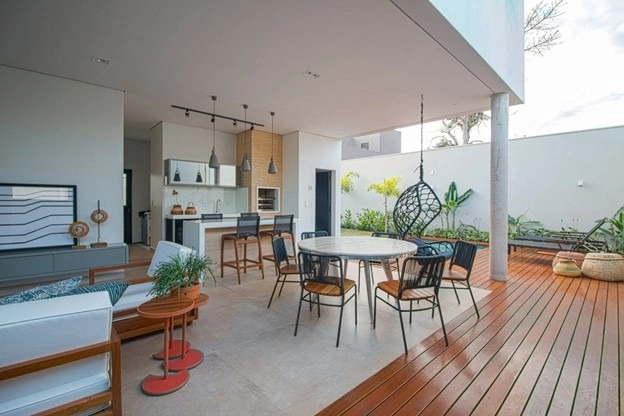
Deck installation cost on the Front Range runs from roughly $9,000 for a straightforward pressure-treated deck to $30,000 or more for a large composite deck with stairs, railing and site work. Size and material drive most of that range, but Colorado's soil, snow load and permit process add line items a milder-climate cost guide will not mention.
What's the Average Cost of Deck Installation in the Denver Metro?
A mid-size deck, roughly 300 square feet, in pressure-treated lumber runs $9,000 to $16,000 installed in the Denver metro, including a permit and standard railing. The same footprint in composite decking runs $18,000 to $28,000. Smaller decks under 150 square feet run proportionally less but still carry a fixed cost for permitting, footings and mobilization that does not scale down as fast as the square footage does.
What Factors Drive Deck Installation Cost the Most?
Square footage and decking material account for the largest share of the total, followed by site conditions, railing style, and whether the deck attaches to the house at a single level or steps down across a grade change. A flat, easy-access backyard with no grade change costs meaningfully less to build on than a sloped lot needing a taller, engineered structure.
Does Deck Cost Differ Across Front Range Cities?
Material and labor pricing stay fairly consistent across Denver, Aurora, Lakewood, Littleton, Colorado Springs and Fort Collins, since most builders serve multiple cities in the same trip radius. What differs is permit fees, snow load requirements at higher elevation, and demand-driven scheduling, with Denver metro builders commonly booked further out during peak spring and summer season than in Colorado Springs or Fort Collins.
How Much Does Labor Cost Versus Materials?
Labor runs roughly 45 to 55 percent of total project cost on a standard Front Range deck, with materials making up the rest. That split shifts toward materials on a composite or premium hardwood deck, since the decking itself costs more while the labor to install it stays close to the same per-square-foot rate as a pressure-treated build.
Does Site Grading and Access Affect Cost?
Yes, directly. A backyard with easy equipment access and level grade costs less to build on than a narrow side-yard access point or a steep grade change that needs additional excavation, retaining, or a taller support structure. Get a site walk from the builder before finalizing a quote; a phone estimate based on square footage alone commonly misses this cost driver entirely.
How Much More Does Composite Cost Than Pressure-Treated Wood?
Composite decking material runs roughly double the per-square-foot cost of pressure-treated pine, and the labor to install it runs similar or slightly higher because of hidden-fastener systems many composite products use. The tradeoff is maintenance: composite needs no staining, while pressure-treated wood needs resealing every 1 to 2 years on the Front Range to hold up to UV and hail.
What Does Installation Cost Include Beyond the Decking?
A full installation quote should cover footings and framing, the decking surface, railing, stairs if needed, permit fees, and site cleanup. Ask specifically whether the quote includes the permit and inspection process, since some lower bids exclude it and pass that cost, and the delay of pulling it separately, back to the homeowner later.
Does a Permit Add Much to the Total Cost?
Permit fees in most Front Range cities run a few hundred dollars, a small fraction of total project cost, but the review timeline, commonly 1 to 3 weeks, affects the project schedule more than the budget. Skipping the permit does not remove this cost; it shifts the risk to resale, where an unpermitted deck can surface during a buyer's inspection.
How Does a Sloped Lot Change Installation Cost?
A deck built on a sloped Front Range lot needs taller support posts, additional footings at varying depths, and commonly a staircase down to grade, all of which add labor and material cost beyond a flat-lot build of the same square footage. Budget 15 to 30 percent more for a sloped-lot deck compared with an equivalent flat-lot install.
Do Railing and Stair Requirements Add Cost?
A deck more than 30 inches off grade requires code-compliant guardrails in nearly every Front Range jurisdiction, which adds material and labor cost that a ground-level deck skips entirely. Stair requirements, including tread depth, riser height and handrail specs, follow the same code-driven cost regardless of which city the deck sits in.
Does Snow-Load Framing Add Cost Compared to a Milder Climate?
Yes, modestly. Denver metro building codes set ground snow load requirements around 30 pounds per square foot, higher at elevation, which calls for larger joists, tighter spacing, or additional footings compared with a deck built to a lower snow-load standard in a milder climate. The added framing cost is a small percentage of the total project but is not optional.
What Add-Ons Increase Installation Cost the Most?
Built-in seating, a pergola or shade structure, a hot tub pad rated for the additional weight, and multi-level designs each add their own framing and material cost on top of the base deck. A hot tub pad in particular needs engineering for the concentrated weight load, which a standard deck frame is not built to carry without modification.
Fixed-Price Bid or Cost-Plus Contract?
A fixed-price bid gives budget certainty and is the better fit for most homeowners, since it puts the risk of a material price swing or an underestimated labor hour on the builder rather than the homeowner. Cost-plus contracts make sense mainly for a highly custom design where scope changes once construction starts. Get the contract type in writing either way, along with what triggers a change order.
Does Deck Installation Cost Affect Resale Value?
What a deck returns at resale tracks its condition and how well it matches the home's finish level more than its original installation cost. An overbuilt deck on a modest home does not return its full cost any more than an underbuilt deck on a high-end home helps that home compete. Check what buyers in your specific ZIP code pay for outdoor living space through pricing your Colorado home to sell, and see how the deck installation in Toronto market prices the same size-and-material factors for comparison.
Is It Cheaper to Install a Deck in Spring or Fall?
Fall and early winter installation, once hail season has passed, commonly means shorter scheduling waits and more builder availability than the peak spring and early summer rush when every Front Range homeowner wants outdoor space ready at the same time. Material pricing itself does not swing much by season, but labor availability and project timeline do.
Where to go next
- Preparing and adding value before selling in Colorado
- Pricing your Colorado home to sell
- What a deck company's contract should include
- How to choose the right design for your outdoor deck
- Search homes for sale in Colorado Springs
- Search homes for sale in Fort Collins
Talk to the Kenna Real Estate Group
Whether you're budgeting a deck before listing or buying a home with a deck already in place, the Kenna Real Estate Group can tell you what it's worth to a Front Range buyer before you spend a dollar on it. Call or text 303-955-4220. A live person answers. Not a robot, not a phone tree. Search every home for sale in Colorado.
Homes for sale that match this post
Guides
Questions about any home in Colorado? Call or text 303-955-4220. A live person answers.